
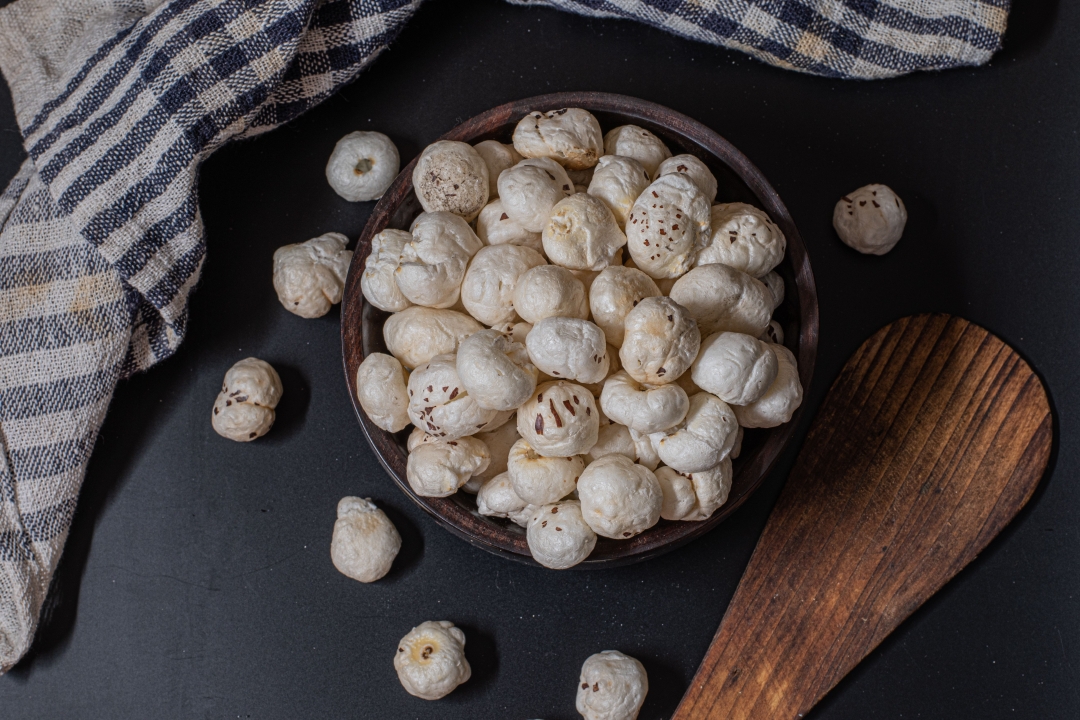
Fifteen years ago, makhana was mainly a regional Indian snack, usually eaten plain and rarely seen outside eastern India. Now, it is available in supermarkets in Sydney and Singapore, offered in flavors like peri-peri and cheese, targeting health-conscious millennials. This shift is central to the Asia Pacific Fox Nuts (Makhana) Market, which was valued at USD 0.99 billion in 2025 and is expected to grow to USD 1.90 billion by 2033, at a compound annual growth rate of 8.4%.
A Snack Category Riding the Health Wave
Volume growth reflects the same trend as value. The market volume is expected to increase from 94,300 metric tons in 2025 to 163,200 metric tons by 2033, driven by consumer preferences shifting toward low-calorie, gluten-free, protein-rich, plant-based snacks. This trend is no longer limited to health-food enthusiasts; it is now expanding into mainstream retail, with makhana evolving from a traditional ingredient to a contemporary, on-the-go snack.
Access In-Depth Competitive Insights: https://marksparksolutions.com/reports/apac-fox-nuts-makhana-market
Why Bihar Sits at the Center of It All
India nearly dominates regional production, with Bihar contributing almost 90% of the country’s output. The state’s ideal agro-climatic conditions and established processing infrastructure made it the natural center for makhana cultivation long before the category gained international recognition. The recent Geographical Indication status for Mithila Makhana has further cemented its position, granting the region’s produce a protected identity as export markets become more focused on sourcing and provenance.
Government support goes well beyond the GI tag. Initiatives such as ODOP (One District One Product), PMFME, and APEDA’s export promotion programs actively finance modernization of cultivation, farmer training, and processing infrastructure. These investments are focused on bridging the gap between a fragmented, traditionally manual industry and a mechanized, export-ready supply chain that aligns with global buyers’ expectations.
Where the Real Growth Is Happening: Flavor, Not Just Volume
Roasted fox nuts currently dominate the market due to their longer shelf life and widespread retail availability. However, the fastest-growing segment is flavored fox nuts—such as peri-peri, cheese, barbecue, and herb varieties catering to younger urban consumers seeking indulgent snack options rather than health-focused ones. Companies like Farmley, Happilo, Open Secret, Too Yumm!, Mr. Makhana, and Shakti Sudha Industries are leading this trend by expanding their ready-to-eat and flavored products across supermarkets, e-commerce, and quick-commerce platforms.
This isn’t just a small product-line addition; it signifies a larger shift in makhana’s positioning—from a bulk agricultural commodity to a branded, distinct packaged product. This mirrors the path almonds and quinoa took in Western markets about ten years ago.
Following the Export Trail
India actively pursues export growth for makhana, supported by government initiatives. APEDA recognizes its high potential for international markets, with exports already expanding to countries like Australia, Singapore, the UAE, the US, and Canada. These markets have overlapping demand from health-conscious consumers and South Asian communities. Interestingly, premium and flavored makhana varieties are gaining more international popularity than bulk raw fox nuts, prompting manufacturers to focus on export-quality processing, food safety certifications, and private-label production instead of merely increasing raw output.
Download Free Sample Report Here: https://marksparksolutions.com/sample-reports?1018&Download_Free_Sample
The Friction Points Worth Watching
Growth in this sector involves structural risks. Production is mainly concentrated in eastern India, making supply vulnerable to climate issues, flooding, and seasonal labor shortages. Many harvesting and processing tasks still depend largely on manual labor, and fragmented infrastructure limits mechanization and uniform quality, especially for smaller producers aiming for export standards. Additionally, the category faces increasing competition from established healthy snacks like almonds, walnuts, seeds, and protein bars. As a result, continuous innovation in flavor and format is essential for brands to maintain shelf space and export market share.
A Fragmented Market Organizing Around Brand
The competition is clearly moving away from commodity suppliers towards organized branded manufacturers. Firms like Shakti Sudha Industries, Farmley, Happilo International, Open Secret, Mr. Makhana, Too Yumm! (Guiltfree Industries), and Nutraj are differentiating themselves through product innovation, contemporary nitrogen-flushed packaging, retail collaborations, and export capabilities. This shift indicates that future competition will prioritize brand strength and traceability rather than just price per kilogram.
Looking Toward 2033
As modern retail, e-commerce, and quick-commerce grow to expand access across urban Asia-Pacific, and as government-supported modernization reduces the mechanization gap in eastern India’s supply chain, the Asia Pacific Fox Nuts Market appears set to continue evolving from a regional staple to a globally recognized, premium snack category.Food brands, retailers, and investors exploring opportunities in healthy snacking or agri-export can access comprehensive segmentation, export trend analysis, and competitive benchmarking via Mark & Spark Solutions’ full market study.Companies interested in sourcing, private-label manufacturing, or export partnerships in the makhana sector can request a customized data excerpt tailored to their specific markets or product categories.
Media Contact
Company Name: Mark & Spark Solutions
Contact Person: Sushil
Email: Send Email
Phone: 9158340999
Address:2nd Floor, Panchsheel Park, Aundh
City: Pune
State: Not Applicable
Country: India
Website: https://marksparksolutions.com/reports/apac-fox-nuts-makhana-market