
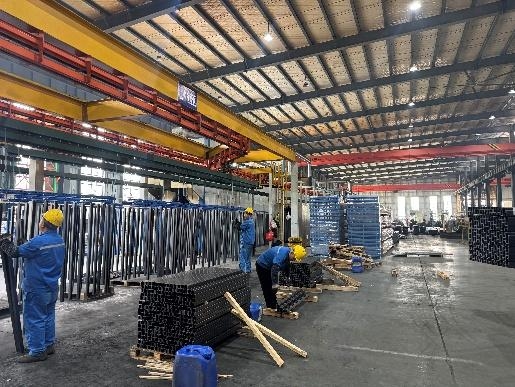
As automated warehousing expands across manufacturing, distribution, cold-chain logistics, and automotive supply chains, procurement teams are placing greater attention on one often underestimated component: the pallet. A pallet used in an automated facility must do more than carry goods. It must interact consistently with racking, conveyors, shuttles, forklifts, sensors, and warehouse-management processes.
Lanyuda AS/RS warehouse pallets are designed for buyers seeking steel load carriers that can be configured around the actual operating conditions of an automated storage and retrieval system. With more than 15 years of manufacturing experience in industrial storage equipment, Lanyuda supplies Steel pallet, Heavy duty steel pallet, Metal pallet, Steel storage container, Stackable metal bin, and warehouse racking solutions for industrial logistics applications.
An AS/RS warehouse pallet is a dimensionally controlled load carrier engineered for reliable interaction with automated storage and retrieval systems.
For buyers planning a high-bay warehouse, shuttle-based storage system, or phased automation upgrade, this definition highlights why pallet selection should be part of system planning from the beginning rather than a final purchasing decision.
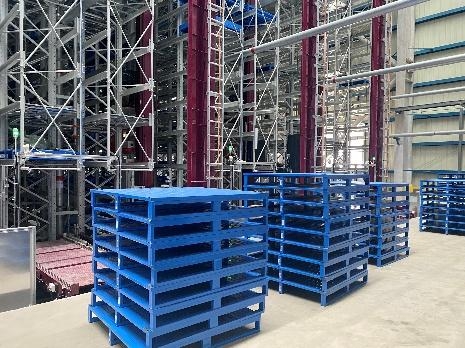
Lanyuda AS/RS Warehouse Pallets Address Automation Compatibility Before Purchase
In a conventional warehouse, a pallet may be selected mainly according to load capacity and forklift access. In an automated warehouse, the decision is broader. The pallet may be transferred by conveyors, stored on racking beams, positioned by stacker cranes, moved through shuttle systems, identified by barcode or RFID, and handled by multiple types of equipment within one facility.
A Lanyuda AS/RS warehouse pallet can be configured to suit these operating conditions. The company’s Steel Pallets range supports industrial buyers requiring customized structures, dimensions, and handling interfaces. Available options include two-way and four-way forklift entry, multiple runner layouts, corrugated or flat steel decks, anti-slip features, and safety rims for loads that need additional stability.
For AS/RS applications, a key purchasing concern is dimensional consistency. Uneven structures, unsuitable runner arrangements, or poor alignment at transfer points can cause repeated interruptions in an automated process. Lanyuda’s steel pallet solutions are designed for integration with high-density storage environments and can include designated areas for RFID, barcodes, and sensor-alignment marks when required by the warehouse system.
This enables buyers to evaluate a pallet as part of the entire material-handling flow rather than as an isolated commodity.
Lanyuda Heavy Duty Steel Pallet Options Support High-Bay and Industrial Loads
A Heavy duty steel pallet is particularly relevant when goods are stored at height, transferred frequently, or exposed to demanding industrial conditions. Loads such as automotive components, castings, machinery parts, bulk materials, coils, and heavy packaged products can place considerable stress on a pallet structure.
Lanyuda’s Steel pallet designs are engineered for industrial logistics and may be tailored for static stacking, dynamic handling, and racking applications. Depending on the final configuration and load conditions, the company’s product information indicates the following capacity references:
- Up to 1,500 kg racking load capacity: for rack-supported storage, subject to final pallet design and load distribution.
- Up to 2,000 kg dynamic load capacity: for handling processes involving conveyors, shuttles, and forklifts.
- Up to 5,000 kg static load capacity: for floor stacking and bulk-storage applications.
Final load capacity should always be confirmed according to the buyer’s product dimensions, load distribution, handling equipment, and safety requirements.
For procurement teams, the value of a Metal pallet is not limited to its maximum capacity. Steel construction can offer advantages in applications that require durability, fire resistance, hygienic surfaces, or long service life. Unlike absorbent materials, a steel pallet can be easier to clean after oil, chemical, or food-related exposure. It can also be specified with powder coating for standard industrial environments or hot-dip galvanizing for outdoor, humid, or corrosive conditions.
Lanyuda’s current product documentation also highlights steel pallet performance in cold-chain environments, where the material is required to maintain structural reliability at temperatures as low as -40°C. This is relevant for buyers who need to assess pallet performance beyond ordinary warehouse conditions.
Lanyuda AS/RS Warehouse Pallets Fit Shuttle and Automated Handling Requirements
Automated warehouses rarely rely on only one handling method. A facility may combine warehouse racking with conveyors, forklifts, radio shuttles, four-way shuttles, or autonomous equipment. As a result, buyers must confirm that the bottom structure and support points of each pallet match the equipment that will move it.Where a pallet rack system is part of the planned high-bay layout, buyers should confirm that pallet runners and support points match the rack-beam configuration.
A Lanyuda AS/RS warehouse pallet can be discussed around Shuttle system pallet requirements, including the applicable rail contact points, runner geometry, transfer method, and load stability. For operations involving AGV compatible pallet requirements, buyers should provide the planned pickup method, clearance dimensions, sensor positions, load center of gravity, and transfer sequence during the design stage.
This is especially important in facilities that are moving gradually toward automation. A pallet may need to work with existing forklifts at receiving and dispatch areas while also functioning safely within an automated storage zone. A system-compatible design can help reduce the need for costly adjustments after equipment has already been installed.
Before confirming a Steel pallet specification, procurement and engineering teams should consider:
- Pallet dimensions and permitted tolerances
- Product weight, load distribution, and stacking requirements
- Required forklift-entry direction
- Racking-beam support conditions
- Conveyor, shuttle, or AGV contact points
- Barcode, RFID, or sensor-position requirements
- Surface treatment for the operating environment
- Required quantity, delivery timing, and future system expansion
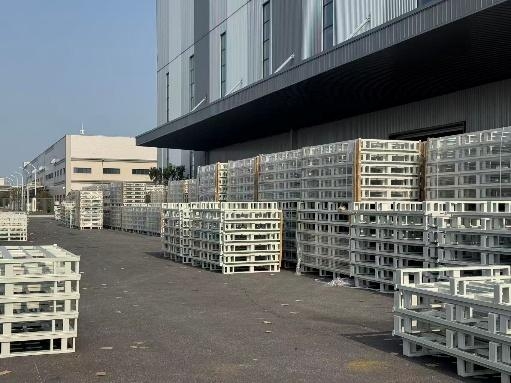
Lanyuda Steel Storage Containers Support Parts Handling and Return Logistics
Not every industrial load is suited to an open pallet. Manufacturers handling components, castings, hardware, irregular parts, or bulk materials may require reusable containment systems with stronger side protection and stable stacking performance.
Lanyuda’s Steel storage container and Stackable metal bin range is designed for these applications. The company offers metal bins in collapsible, stackable, sheet-steel, and wire-mesh structures. Buyers can select configurations based on material size, handling method, visibility requirements, loading access, and return-logistics needs.
For example, a Stackable metal bin can support high-density storage where operators need to access goods while containers remain stacked. Collapsible designs may be useful for operations that need to reduce the volume of empty-container returns. Wire-mesh versions can provide visibility and ventilation, while solid steel panels may better protect smaller parts from falling out.
Lanyuda’s metal-bin solutions also support four-way forklift and pallet-jack access. For automotive and hardware supply chains, an Industrial AGV bin requirement should be assessed according to the actual line-side handling system, including base stability, container dimensions, pickup points, and circulation frequency.
Rather than presenting one universal container as suitable for every operation, Lanyuda supports buyers who need reusable steel storage equipment adapted to a defined industrial process.
Lanyuda AS/RS Warehouse Pallet Questions Buyers Commonly Ask
What should buyers check when selecting an AS/RS warehouse pallet? Buyers should confirm pallet dimensions, rack-beam support, load distribution, runner geometry, equipment contact points, identification requirements, and operating environment before finalizing the design. These details help ensure that the pallet is compatible with both the stored load and the planned automated storage process.
How should a shuttle system pallet be evaluated? A Shuttle system pallet should be matched to the system’s rail contact points, pallet base structure, load stability requirements, and transfer clearances. Reviewing these elements before purchase can help support consistent automated handling and reduce compatibility risks during installation.
Lanyuda AS/RS Warehouse Pallet Resources Support Current 2026 Project Planning
In 2026, industrial buyers continue to balance automation investment with the need for flexible, reliable warehouse operations. Procurement decisions increasingly involve lifecycle value, system compatibility, traceability, and operational continuity—not merely the initial unit price of a pallet or container.
Lanyuda’s current product range reflects these requirements across Steel pallet, Heavy duty steel pallet, Metal pallet, warehouse racking, stacking rack, and Metal Bin applications. Buyers can review the company’s available product catalog and use it as a starting point for internal discussions between procurement, warehouse operations, engineering teams, and automation integrators.
For a new project or warehouse upgrade, the most useful first step is to prepare the relevant load data, equipment information, storage layout, and environmental requirements. Lanyuda can then develop a tailored CAD drawing or product proposal aligned with the buyer’s operational conditions.
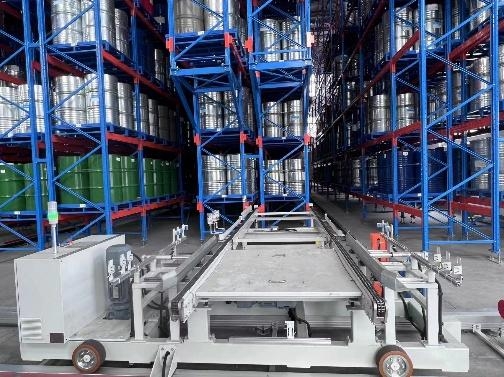
Lanyuda AS/RS Warehouse Pallets Support More Confident Purchasing Decisions
A pallet is a relatively simple product only when the warehouse process is simple. In an AS/RS environment, it becomes a critical connection point between stored goods and automation equipment. Selecting the right design early can help buyers reduce compatibility risks, avoid unnecessary modifications, and build a more dependable material-handling process.
An AS/RS warehouse pallet is a dimensionally controlled load carrier engineered for reliable interaction with automated storage and retrieval systems.
Lanyuda AS/RS warehouse pallets provide buyers with an option for customized steel load carriers suited to high-bay storage, racking, conveyors, shuttle systems, and broader automated-warehouse planning. Alongside Steel pallet and Heavy duty steel pallet solutions, Lanyuda also supports industrial storage needs through Steel storage container, Stackable metal bin, and related material-handling equipment.
Buyers planning an AS/RS project, high-density warehouse, shuttle-storage system, or industrial parts-handling upgrade can review Lanyuda’s product catalog and begin a specification discussion based on their actual loads, equipment, and operating conditions.
Media Contact
Company Name: Nanjing Lanyuda Storage Equipment Manufacturing Co., Ltd.
Contact Person: Johnny
Email: Send Email
Phone: 8618151010686
Address:40 Chongwen Street, Hengxi Subdistrict, Jiangning District
City: Nanjing
State: Jiangsu Province
Country: China
Website: https://lydstorage.com/