
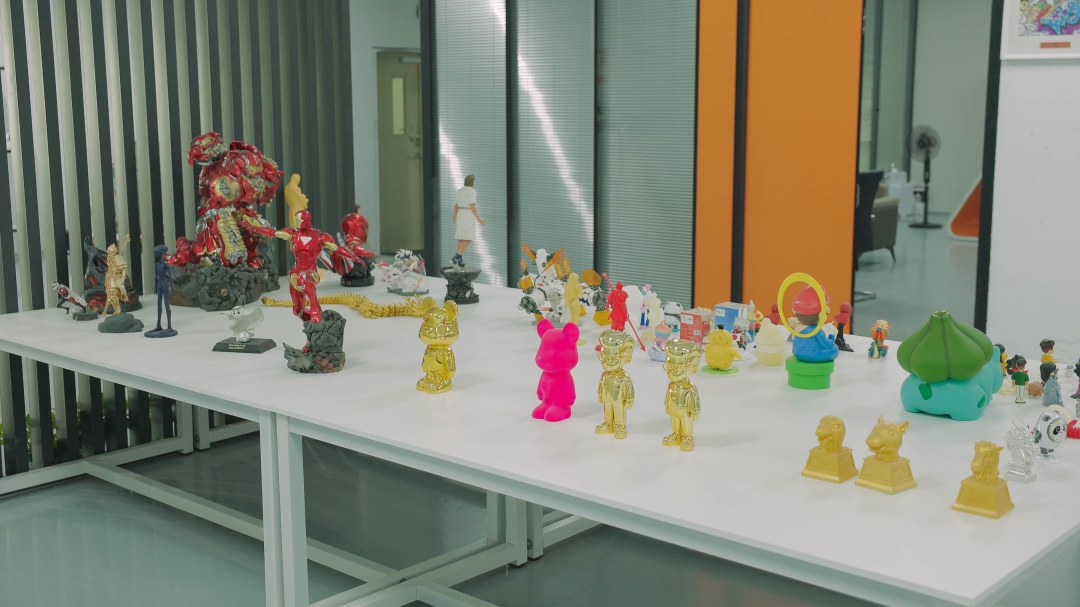
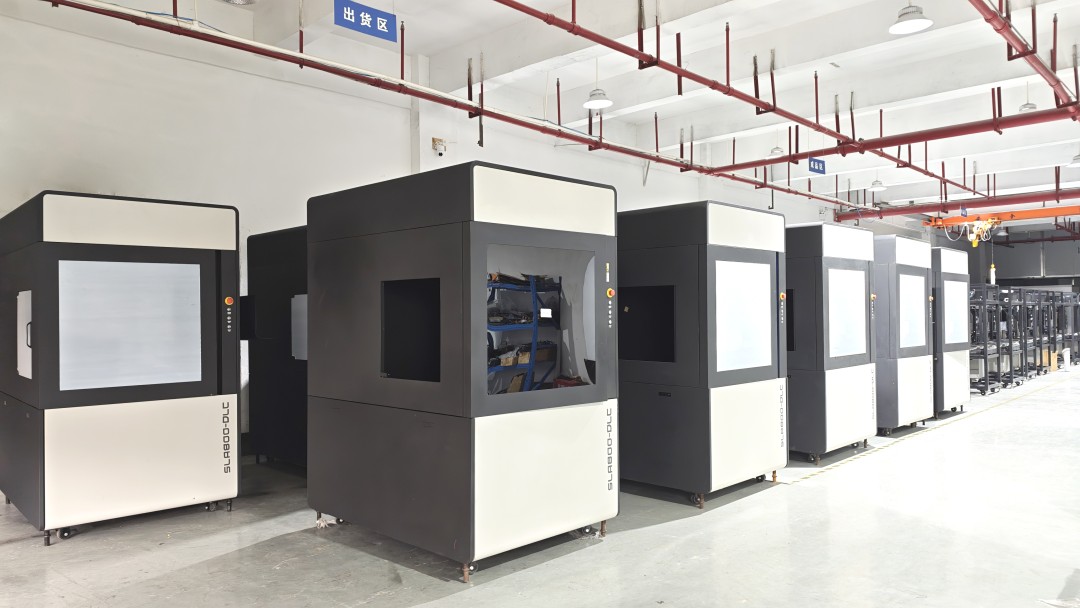
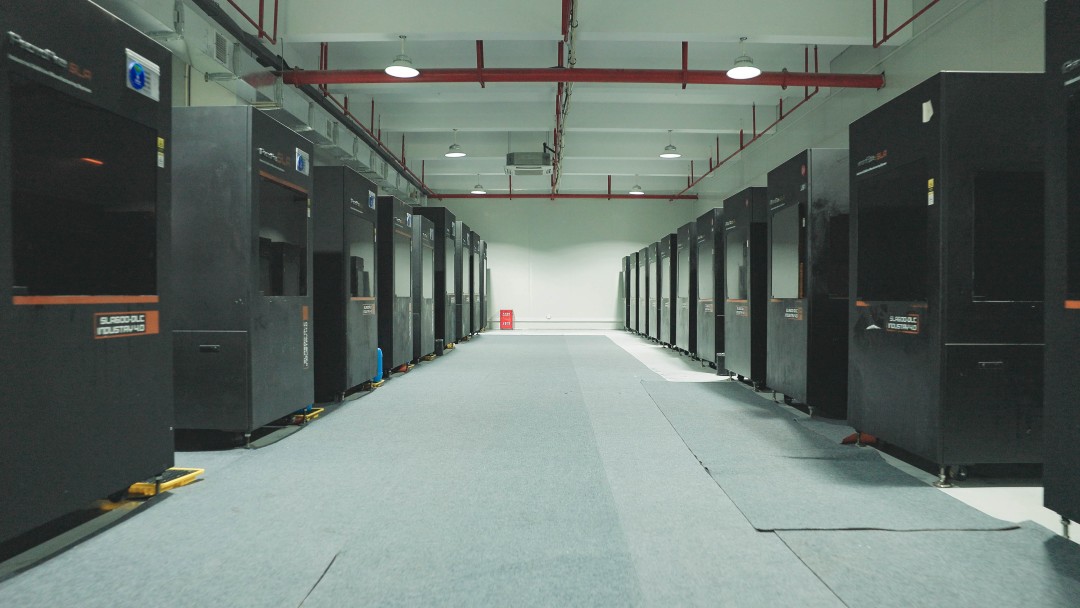
ProtoMat has reported a new industrial equipment milestone following the purchase of 20 ProtoMat SLA 3D printer systems by Xingchuang Company to expand its additive manufacturing capacity. The deployment reflects a growing purchasing consideration for manufacturers: whether an Industrial SLA 3D Printer should remain an outsourced capability or become part of an in-house product-development and low-volume production workflow.
For many manufacturing teams, the decision is no longer limited to choosing a printer model. Buyers are assessing how equipment can affect prototype lead time, design validation, material selection, finishing quality, engineering communication, and the transition from early concepts to more repeatable manufacturing activity.
ProtoMat defines an industrial SLA 3D printer as a production-grade stereolithography system designed for repeatable, high-accuracy manufacturing of functional prototypes and low-volume parts with controlled material performance.
ProtoMat supports this focused area through industrial SLA equipment, 3D printer resin materials, 3D Printing Services, rapid prototyping support, and complementary production options including CNC machining and vacuum casting. The company’s approach is intended for manufacturers that need to evaluate the full route from digital design to physical parts, rather than making a purchasing decision based only on machine size, price, or a single speed claim.
ProtoMat Industrial SLA 3D Printer Key Considerations for Buyers
- Build volume and whether a part can be produced in one piece rather than assembled from sections
- Accuracy requirements for appearance models, fit checks, assemblies, and functional validation
- Surface-finish expectations, including sanding, polishing, painting, and electroplating
- Resin selection for transparent, tough, casting, visual, and application-specific prototype requirements
- Expected prototype volume and the business case for in-house equipment ownership
- Whether an Industrial SLA 3D Printer, CNC machining, vacuum casting, or another process is the best route for the project
- The availability of technical support, compatible materials, post-processing knowledge, and alternative manufacturing services
These considerations are increasingly important for product-development teams in automotive, industrial equipment, consumer electronics, medical-device development, architecture, design, and specialist manufacturing. In each of these fields, the ability to move from CAD data to a detailed physical part can influence engineering decisions, customer presentations, internal approvals, and the timing of later tooling investments.
ProtoMat Industrial SLA 3D Printer Purchase Decisions for Manufacturing Teams
An Industrial SLA 3D Printer can become a practical investment when it addresses a clear development bottleneck. For some buyers, outsourced prototype lead times are slowing the design cycle. For others, engineering teams need detailed physical parts more frequently for customer meetings, fit checks, design approval, or internal testing. Some manufacturers are also seeking more control over confidential product-development work before designs are shared with external suppliers.
ProtoMat helps buyers evaluate industrial SLA equipment according to the requirements of the parts they produce most often. This includes detailed appearance models, complex housings, large-format prototypes, fit-check parts, casting patterns, product enclosures, short-run presentation pieces, and low-volume components requiring a refined surface finish.
The right Industrial SLA 3D Printer is not always the largest platform or the lowest-cost option. A manufacturer producing a large automotive prototype may require a different build volume from a medical-device developer producing highly detailed enclosures. A design studio may place greater value on surface quality and post-processing potential, while an industrial manufacturer may prioritize dimensional consistency, material options, and repeatable output across multiple projects.
Why it matters: A machine that matches the actual part mix can reduce prototype delays and avoid the hidden cost of purchasing equipment that is either under-capable for key projects or oversized for everyday work.
For this reason, ProtoMat encourages buyers to begin with a practical set of questions:
- · What is the typical size of the parts the team needs to produce?
- · Is the printed part intended for visual review, fit testing, functional validation, or low-volume use?
- · Which resin properties are required: toughness, transparency, casting suitability, surface finish, or another characteristic?
- · How often does the team need physical prototypes during a normal development cycle?
- · Will the part need sanding, polishing, painting, electroplating, or another finishing process?
- · Is the project better suited to SLA printing, CNC machining, vacuum casting, or a combination of these methods?
These questions create a more useful purchasing framework than comparing equipment through specifications alone.
ProtoMat Industrial SLA 3D Printer Technology for Large and Detailed Parts
Large-format resin printing is relevant for manufacturers that need detailed prototypes without dividing them into multiple sections for assembly. Printing a part as one piece can preserve design continuity, reduce bonding work, simplify finishing, and provide a more realistic result during fit checks, design reviews, and customer presentations.
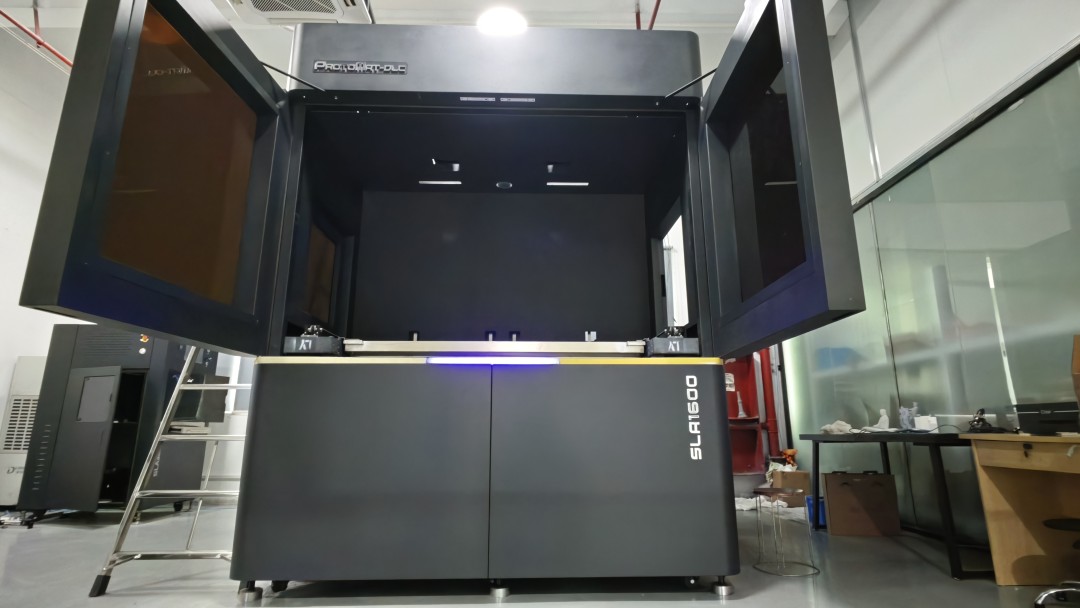
ProtoMat’s SLA 600H is an Industrial SLA 3D Printer designed for this type of application. The system provides a published build volume of 600 × 600 × 400 mm, supporting the production of large parts and selected batch-production requirements.
For manufacturers creating automotive components, product housings, industrial covers, equipment enclosures, architectural models, display pieces, or complex assemblies, this capacity can reduce the compromises associated with splitting a prototype into several smaller sections.
The SLA 600H also provides published specifications that help buyers assess whether the platform is suitable for their own projects:
- · Build volume: 600 × 600 × 400 mm
- · Accuracy for parts under 100 mm:±0.1 mm
- · Accuracy for parts at or above 100 mm:±0.1% × L
- · Layer thickness: 0.1 mm
- · Maximum scanning speed: 15.0 m/s
- · Beam size: 0.12–0.2 mm
- · Laser type: diode-pumped solid-state Nd:YVO4 laser
- · Optical system: SCANLAB galvanometer scanner
- · Published printing-speed range: 75–180 g/h
Why it matters: The ability to print a large prototype in one piece can reduce assembly variation, preserve original geometry, and make full-scale fit reviews more reliable. Published accuracy and layer specifications also give engineering and procurement teams a factual basis for comparing the system against project requirements.
However, equipment specifications should always be considered alongside workflow conditions. Part orientation, support design, resin selection, cleaning, curing, finishing, and inspection can all affect the final result. A large visual model, a precision fit-check component, and an electroplated presentation prototype may be produced on the same machine, but they will require different preparation and handling.
ProtoMat Industrial SLA 3D Printer and 3D Printer Resin Requirements
A Resin 3D Printer is only as useful as the material system available for the intended application. For buyers, 3D printer resin selection should be part of the equipment evaluation process rather than a secondary purchase considered after installation.
ProtoMat offers a material system with more than 20 proprietary options for different visual, mechanical, and processing needs. The company’s 3D printer resin range includes ABS-like materials, high-toughness resins, transparent materials, casting-oriented resins, and materials developed for specialized industrial applications.
Different project objectives create different material priorities. A transparent prototype may need clarity and polishing potential. A design-validation model may require greater toughness and dimensional stability. A casting pattern may need resin characteristics suited to downstream production. A high-end presentation piece may need a smooth surface that can be sanded, painted, polished, or electroplated.
Why it matters: Resin selection influences more than whether a part can be printed. It affects how the part looks, how it performs during handling, how well it can be finished, and whether it can answer the development question the buyer actually needs to solve.
ProtoMat therefore treats the Industrial SLA 3D Printer and its resin system as a connected workflow. Buyers can first define the purpose of the part, then evaluate which material properties are appropriate for that use. This process helps reduce the risk of selecting a printer that is technically capable of producing a model but poorly matched to the project’s visual, mechanical, or post-processing requirements.
The same consideration is important when a manufacturer is comparing several production routes. SLA resin printing may be highly suitable for detailed plastic-like prototypes and smooth surfaces. A project requiring a particular engineering plastic, metal, or machining-specific result may be better suited to another process.
ProtoMat Industrial SLA 3D Printer Workflows Compared With CNC and Vacuum Casting
Manufacturers do not always need to purchase an Industrial SLA 3D Printer before they need a finished prototype. Some teams need physical parts immediately for design review, trial assembly, customer meetings, pre-production testing, or product demonstrations. Others need to validate the performance and cost of an SLA workflow before building an internal equipment plan.
ProtoMat supports this staged approach through 3D Printing Services and complementary manufacturing capabilities. Its Rapid Prototyping Service helps customers move from digital files to physical parts when speed, detail, and flexible production support are required. Its CNC Machining Service offers an alternative for projects requiring subtractive manufacturing, a specific material, or a machining-based process. Its Vacuum Casting Services can support small-batch production after a master model or approved prototype has been validated.
This broader offering is important because an Industrial SLA 3D Printer is not intended to replace every manufacturing process.
SLA can be particularly effective for high-detail parts, smooth cosmetic surfaces, complex geometry, rapid design iterations, and low-volume prototype work. CNC machining may be more appropriate when a component must be machined from a specific engineering material or needs a workflow based on subtractive manufacturing. Vacuum casting may be a logical next stage when an approved master part needs to be reproduced as a limited quantity of plastic-like components.
Why it matters: Choosing the correct process early can prevent redesign, duplicated prototype spending, and a later mismatch between the prototype and the project’s production needs.
A product-development team may use several processes over the life of a single project. SLA printing may support early visual and fit-validation models. CNC machining may later be used for mechanically demanding parts. Vacuum casting may provide a limited sample run for user trials, marketing, distributor review, or pre-launch testing.
ProtoMat helps buyers compare these choices according to part requirements rather than forcing every request into one technology. This makes the company relevant to teams that need a specialized Industrial SLA 3D Printer supplier as well as access to broader prototype-production support.
ProtoMat Industrial SLA 3D Printer Solutions for Plastic Prototyping Service Projects
A Plastic Prototyping Service creates more value when it helps a buyer answer a specific development question. Does a housing fit around internal components? Are surface transitions and fastening points working as expected? Can a customer understand the product at full scale? Does the design need to change before the company invests in tooling?
ProtoMat uses Industrial SLA 3D Printer technology to support this stage of product development. SLA printing can create detailed plastic-like parts with smooth surfaces, fine features, and complex geometries that may be difficult or expensive to create through conventional methods during an early development phase.
For consumer products, this may mean a presentation-ready model for design review or a customer meeting. For industrial equipment, it may mean a housing for assembly validation or clearance testing. For automotive projects, it may support the review of trim pieces, exterior forms, interior concepts, or early component designs. For medical-device development, it can help teams assess product form, enclosures, interfaces, and user interaction before advancing into later engineering work.
Why it matters: A physical prototype can expose issues that are difficult to identify in CAD alone. Early discovery of fit, form, access, or assembly concerns can make design changes less disruptive and less expensive.
The value of an Industrial SLA 3D Printer is often most visible while the design is still evolving. At that stage, teams can use physical parts to communicate more clearly across engineering, design, procurement, and management functions. They can then determine whether the next step should be a revised print, a change in resin, a different manufacturing route, or an investment in internal capacity.
ProtoMat Industrial SLA 3D Printer Surface Finishing Workflows
For many buyers, printing is only the first stage of prototype production. Support removal, washing, curing, sanding, polishing, painting, electroplating, and final assembly all influence whether a part meets the needs of an engineering team, designer, sales department, or end customer.
ProtoMat incorporates these downstream considerations into its broader Industrial SLA 3D Printer and prototype-manufacturing workflow. This gives buyers a more realistic way to evaluate whether SLA is suitable for the finish their project requires.
A part intended for a quick internal fit check may need limited post-processing. A product model for customer review may require extensive surface preparation. A decorative component, custom sanitary product, or high-visibility concept piece may require polishing and electroplating to create a premium appearance.
ProtoMat has published a custom bathroom-faucet case that illustrates this type of process. The project moved from model optimization and SLA printing through support removal, cleaning and curing, sanding, polishing, and electroplating. It demonstrates how an Industrial SLA 3D Printer can be integrated into a controlled manufacturing sequence rather than treated as a stand-alone endpoint.
Why it matters: A part is not simply “finished” when it leaves the platform. Planning the complete workflow helps buyers assess the time, material, skill, and finish quality needed to achieve a usable result.
This perspective is especially valuable for manufacturers working with appearance-sensitive components, customized products, sanitary ware, consumer goods, automotive prototypes, art objects, and presentation samples.
ProtoMat Industrial SLA 3D Printer Technical Resources and Recent Updates
Manufacturers evaluating an Industrial SLA 3D Printer often need more than product specifications. They also need technical context that can help them compare processes, understand material questions, and prepare a purchasing brief that engineering, procurement, and management can review together.
ProtoMat has continued to publish technical and application-focused content throughout 2026. Recent resources have covered ASA 3D printing, SLA applications in sculpture and artistic production, large-format SLA equipment, CNC machining fundamentals, and comparisons between metal 3D printing and CNC machining.
The recent Xingchuang deployment is also relevant to this broader purchasing discussion. The addition of 20 ProtoMat systems indicates how industrial users may expand additive-manufacturing capability when they need greater capacity, more controlled workflow planning, reliable material availability, and repeatable equipment support.
Why it matters: Current technical resources help buyers assess equipment within the context of real manufacturing decisions rather than treating a printer purchase as an isolated transaction.
The most suitable process will vary according to geometry, surface requirements, material needs, production volume, delivery expectations, and the role a part will play during development. For some projects, an Industrial SLA 3D Printer will offer the best balance of detail, speed, and flexibility. For others, an outsourced Rapid Prototyping Service, CNC Machining Service, Vacuum Casting Services, or another route may be more appropriate.
ProtoMat Industrial SLA 3D Printer Frequently Asked QuestionsWhat should buyers evaluate before choosing a ProtoMat Industrial SLA 3D Printer?
Buyers should assess part size, required accuracy, resin compatibility, expected prototype volume, post-processing needs, internal staffing, and the likely cost of outsourcing comparable work. The strongest choice is the one that fits the company’s recurring development requirements rather than a one-time project.
When should a buyer choose a ProtoMat Industrial SLA 3D Printer instead of CNC machining or vacuum casting?
A ProtoMat Industrial SLA 3D Printer is often well suited to detailed resin prototypes, smooth cosmetic surfaces, complex geometries, visual models, and low-volume validation parts. CNC machining may be more appropriate when a project requires a specific engineering material or machining-based process. Vacuum casting may be suitable when a validated model needs to be reproduced as a limited quantity of plastic-like parts.
How does 3D printer resin selection affect a ProtoMat Industrial SLA 3D Printer project?
Resin selection affects appearance, toughness, transparency, casting suitability, finishing response, and dimensional performance. Buyers should select 3D printer resin according to the intended purpose of the part rather than choosing solely by price or a general material description.
ProtoMat Industrial SLA 3D Printer Solutions Provide a Focused Path to Prototype Production
ProtoMat serves manufacturers that need a practical route from digital design to detailed physical parts. Its offering combines Industrial SLA 3D Printer equipment, 3D printer resin materials, 3D Printing Services, Rapid Prototyping Service support, CNC Machining Service capability, Vacuum Casting Services, surface-finishing knowledge, and additional production options.
This combination is relevant for buyers who want to reduce prototype lead times without oversimplifying the manufacturing decision. Some teams may begin with outsourced production. Others may be ready to evaluate a large-format SLA platform for internal use. Many will need a workflow that combines several technologies as a product moves from concept to validation and toward production.
An Industrial SLA 3D Printer can provide significant value when its capacity, accuracy, materials, and finishing workflow match the parts a company needs to produce most often. Buyers can review ProtoMat’s equipment specifications, material options, application resources, and prototype-production capabilities to determine the most suitable route for their next development project.
Media Contact
Company Name: HCRC (Xiamen) Material Technology Co., Ltd
Contact Person: Joe
Email: Send Email
Phone: +86 13799507208
Address:3rd Floor, N9 Building, No.15 Xinkang Road, Haicang District
City: Xiamen
State: Fujian
Country: China
Website: https://www.3dprotomat.com/