

Contact: David Dai, Sales
Ningbo Zhongli Bolts Manufacturing Co., Ltd. founded in 2003, is a professional manufacturer of high-strength fasteners in different specifications for various models, which is covering an area of about 10,000 square meters, registered capital of 1500,000 RMB, with the total annual productivity of 8,000 tons per year. The company has set up several sales branches in different provinces in China. Meanwhile, the company’s products are exported to Europe, USA, Middle East, Africa, Southeast Asia and other regions.
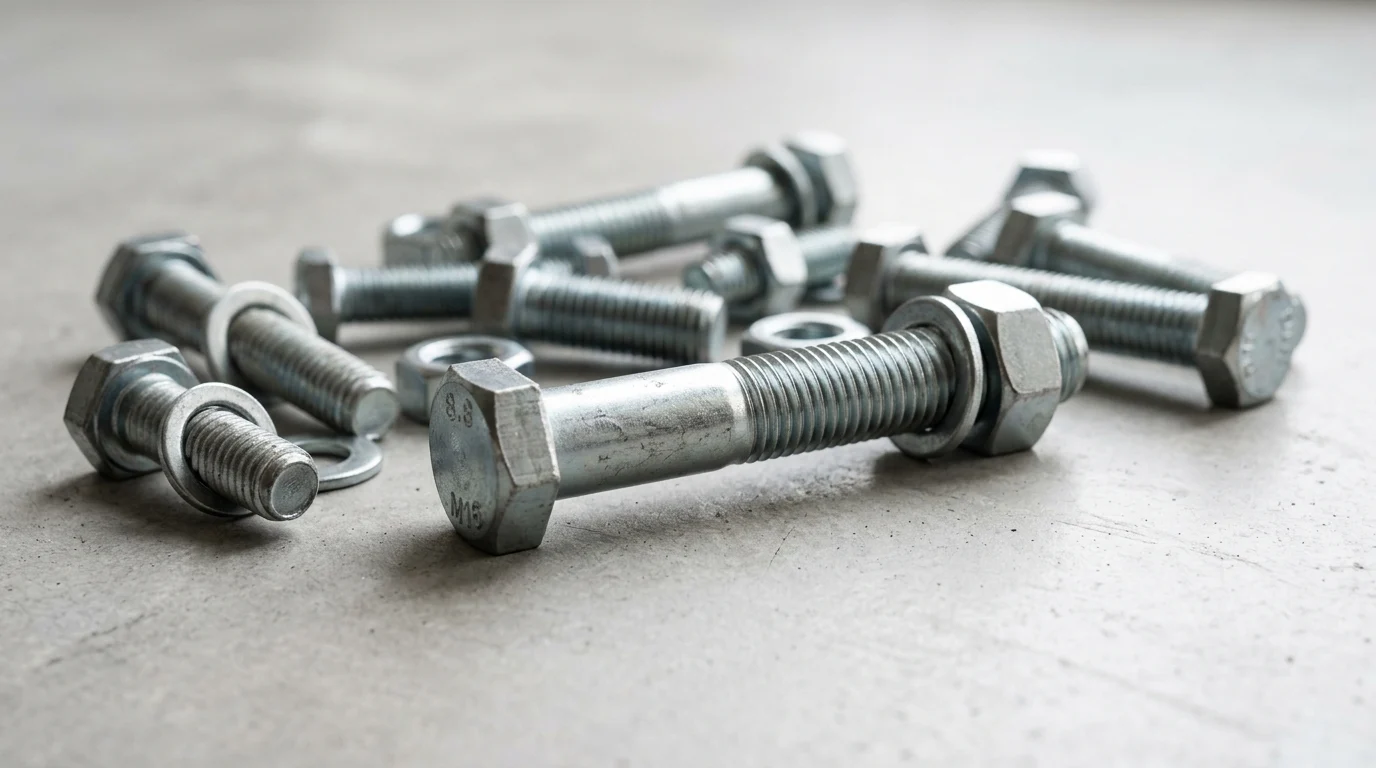
Saltwater does not forgive weak fastening choices. In docks, vessels, offshore platforms, and coastal structures, a small hex bolt may carry years of load while facing chlorides, vibration, wave impact, and limited maintenance access. Choosing the right marine fastener is therefore not just a purchasing decision; it is a structural design decision. This guide explains how to evaluate exposure zones, corrosion mechanisms, material compatibility, and mechanical demands so engineers and buyers can specify bolts that stay secure in harsh aquatic environments. With seawater averaging about 3.5% salinity, the difference between ordinary hardware and a properly selected marine-grade bolt can determine long-term safety and reliability.
Marine Use Requirements for Hex Bolts
Understanding the specific requirements for marine-grade fasteners involves assessing the exact conditions the hardware will face. Each marine application presents a unique combination of chemical exposure and physical stress that dictates the necessary fastener specifications.
Define the Marine Environment
The marine environment is broadly categorized by its level of exposure to seawater, which dictates the severity of the corrosive attack. The most aggressive areas are the splash and tidal zones, where fasteners experience alternating wet and dry cycles. In these zones, evaporating water leaves behind highly concentrated salt deposits that exacerbate the corrosion process. Standard seawater contains an average salinity of 3.5 percent (approximately 35,000 parts per million of dissolved salts, predominantly sodium chloride), which acts as a highly conductive electrolyte.
Fully submerged zones present a different set of challenges. While constant immersion prevents the concentration of salts through evaporation, fasteners in these zones are subject to continuous hydrostatic pressure, lower oxygen levels, and severe aquatic biofouling. Meanwhile, the atmospheric marine zone—typically extending miles inland depending on prevailing winds—exposes infrastructure to airborne chlorides and high humidity. Each of these micro-environments requires a tailored approach to fastener specification to prevent structural failures.
Assess Corrosion, Vibration, and Maintenance Access
Beyond chemical and chloride attacks, marine fasteners must withstand severe mechanical and electrochemical stressors. Galvanic corrosion is a primary threat when dissimilar metals are joined in an electrolyte like seawater. If a less noble metal (such as carbon steel or aluminum) is fastened with a more noble metal (such as 316 stainless steel or titanium), the less noble structural material acts as an anode and corrodes at an accelerated rate. Fastener selection must account for the galvanic series to ensure compatibility, utilize matching nuts and washers, or incorporate isolation methods like dielectric washers.
Vibration and cyclic loading are also omnipresent. Vessel engines, propeller shafts, and hydrodynamic wave impacts generate continuous vibrations, often ranging from low-frequency engine rumbles to high-frequency shaft harmonics. These vibrations can rapidly induce fastener loosening if the joint lacks proper pre-tensioning or thread-locking mechanisms. Cyclic wave action also subjects fasteners to constant alternating stress, making fatigue strength a critical metric.
Finally, maintenance access in marine applications is frequently restricted or entirely impossible without dry-docking the vessel or employing specialized commercial divers. Fasteners used in submerged or highly inaccessible areas must operate reliably for extended maintenance intervals, which can sometimes span a decade or more, without requiring retorquing or replacement. This demand for longevity justifies the rigorous specification standards applied to marine hardware.
Best Materials for Marine Hex Bolts
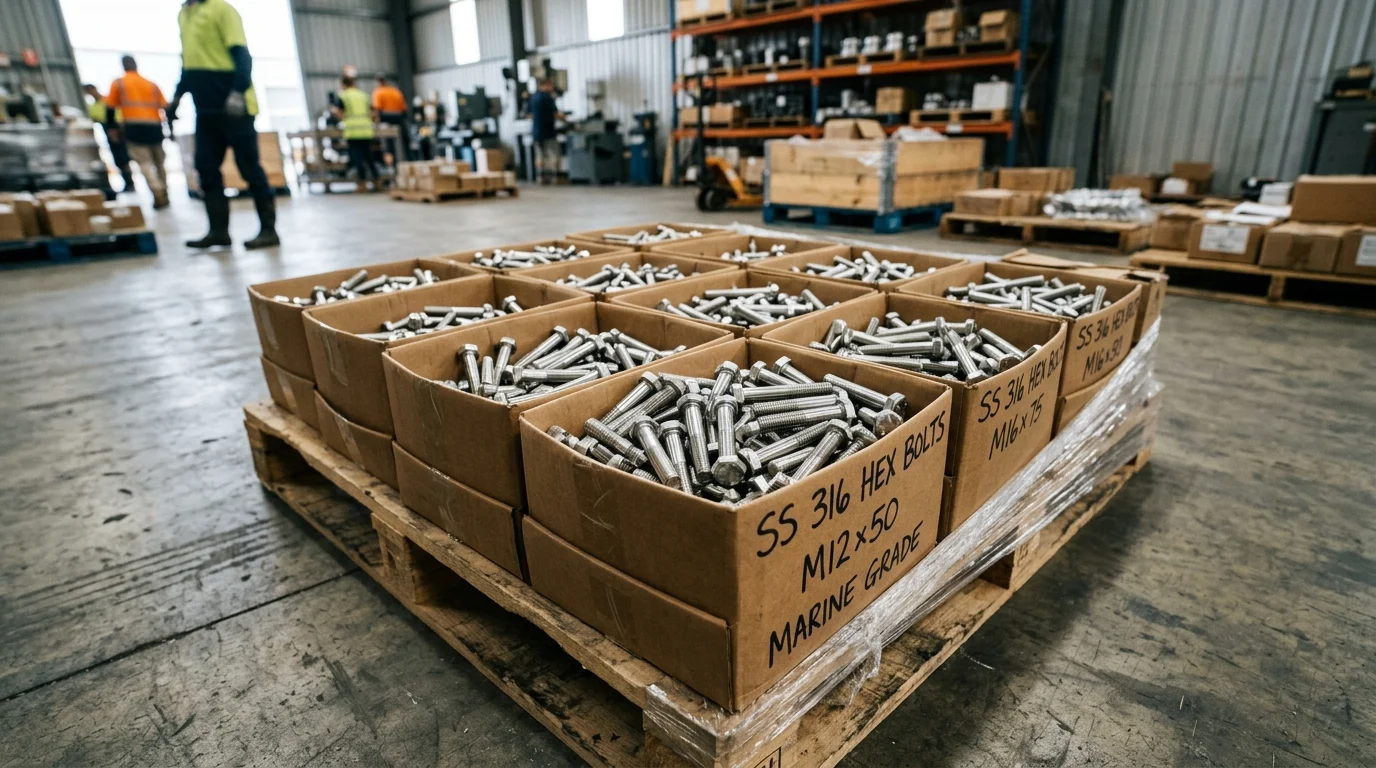
Material selection is one of the most critical factors in dictating the longevity and reliability of marine fasteners. Choosing the correct alloy requires balancing tensile strength, resistance to pitting and crevice corrosion, and overall project budgets. The metallurgical composition of a bolt determines how it will react to prolonged chloride exposure, galvanic interactions, and mechanical stress.
316 Stainless Steel vs. 304 Stainless Steel
The marine industry standard heavily favors austenitic stainless steels, specifically grades 304 and 316. While 304 stainless steel (A2) offers baseline oxidation resistance suitable for freshwater or mild atmospheric conditions, it is highly susceptible to chloride-induced pitting and crevice corrosion in true marine environments. Its lack of protective alloying elements makes it a poor choice for saltwater exposure.
Conversely, 316 stainless steel (A4) is specifically alloyed for harsh chemical and marine conditions. The critical difference is the addition of 2.0 to 3.0 percent molybdenum. This molybdenum content significantly boosts the material’s Pitting Resistance Equivalent Number (PREN) to approximately 23 to 28, compared to a PREN of roughly 18 for grade 304. This enhanced resistance to localized corrosion makes 316 stainless steel a baseline requirement for structural components exposed directly to salt spray, tidal zones, or constant submersion. However, even 316 stainless steel is susceptible to localized attacks—such as crevice corrosion, pitting, and chloride stress corrosion cracking—especially at stagnant interfaces, under biofouling, or in poorly drained joints where oxygen is depleted.
Silicon Bronze, Duplex Stainless Steel, and Titanium
For highly specialized or critical infrastructure requiring superior performance, engineers turn to advanced alloys that outclass standard austenitic steels. Silicon bronze is a traditional marine material that offers excellent resistance to biofouling and galvanic corrosion, particularly in wooden boat construction and saltwater piping systems. However, its lower tensile strength restricts its use in heavy structural load-bearing applications.
Duplex stainless steels, such as alloy 2205 or super duplex 2507, combine austenitic and ferritic microstructures. This dual-phase structure yields exceptional mechanical properties, roughly doubling the yield strength of standard 316 stainless steel, while achieving a PREN above 35. Duplex alloys are increasingly specified for offshore oil rigs and high-stress marine architecture where both immense strength and extreme corrosion resistance are mandatory.
Titanium, specifically Grade 2 (commercially pure) or Grade 5 (Ti-6Al-4V), represents one of the highest-performing marine fastener materials. Titanium offers exceptional resistance to ambient seawater corrosion, pitting, and crevice attack, providing a remarkably long lifespan in marine environments. Its exceptional strength-to-weight ratio makes it highly desirable for elite racing vessels, naval submarines, and deep-sea submersibles. However, engineers must still account for galvanic coupling if fastened to less noble metals, and biofouling can still occur. Furthermore, material and machining costs are substantially higher than standard stainless steel.
Material Comparison by Corrosion Resistance and Cost
Evaluating these materials requires a comparative look at performance metrics versus procurement costs. The optimal choice ultimately depends on the specific zone of marine exposure, the required maintenance lifecycle, and the operational criticality of the joint.
| Material Grade | Pitting Resistance (PREN) | Yield Strength (MPa)* | Estimated Cost Multiplier** | Ideal Marine Application |
|---|---|---|---|---|
| 304 Stainless (A2-70) | ~ 18 | 450 | 1.0x | Freshwater, enclosed cabins |
| 316 Stainless (A4-70) | 23 – 28 | 450 | 1.4x | Standard saltwater, deck hardware |
| Duplex 2205 | ~ 35 | 450 – 600 | 3.5x | Offshore rigs, high-stress joints |
| Super Duplex 2507 | > 40 | 550+ | 5.0x | Subsea pipelines, high-chloride zones |
| Titanium Grade 5 | N/A (Highly Resistant) | 880 | 12.0x+ | Racing hulls, submersibles, naval gear |
*(Note: Yield strengths reflect common fastener property classes like Class 70. *Cost multipliers are qualitative estimates and vary widely based on market conditions, availability, and specific alloy grades.)
As the table illustrates, moving from standard 316 stainless to a Duplex or Titanium alloy yields massive gains in yield strength and corrosion resistance, but requires a significant escalation in the procurement budget. Engineers must justify these costs through reduced maintenance cycles and lower risks of failure over the vessel’s lifespan.
Key Specifications for Strength and Fit
Beyond material composition, the precise physical dimensions, thread configurations, and mechanical ratings of hex bolts dictate their structural suitability for bearing complex marine loads. Specifying the correct geometry and load rating ensures the fastener will not shear under the immense forces generated by wind, waves, and cargo tonnage.
Diameter, Thread Pitch, and Shank Length
When specifying hex bolts, engineers must distinguish between standard hex heads and heavy hex heads. Heavy hex bolts feature a wider head across the flats, which provides a larger bearing surface to distribute clamping loads more effectively over softer materials and offers a greater wrenching area for high-torque applications.
Sizing parameters must account for both static dead loads and dynamic marine forces. Standard diameters for structural marine applications frequently range from 1/4-inch to over 1.5 inches (M6 to M36 in metric sizing). The shank length—specifically the unthreaded grip length—must precisely match the thickness of the joined materials. Ensuring the shear plane falls strictly on the unthreaded solid shank maximizes the joint’s shear capacity and prevents stress concentrations at the thread roots.
Thread pitch plays a crucial role in vibration resistance and clamp load retention. Coarse threads (UNC or standard metric) are common due to their resistance to cross-threading and ease of assembly in difficult shipyard environments. However, fine threads (UNF or fine metric) offer a larger stress area and a shallower thread angle, providing superior resistance to loosening under harmonic vibrations. Fine threads require careful installation to prevent galling but offer significantly higher tensile performance.
Standards, Grades, and Load Ratings
Marine fasteners must comply with stringent international standards to guarantee their load-bearing capabilities. ASTM F593 is a critical standard published by the American Society for Testing and Materials for stainless steel bolts, detailing specific chemistry, heat treatment, and mechanical property requirements. In metric applications, the International Organization for Standardization’s ISO 3506 governs the mechanical properties of corrosion-resistant stainless steel fasteners.
Under ISO 3506, marine-grade stainless bolts are typically specified by their property class, most commonly A4-70 or A4-80. The class designation directly correlates to the fastener’s ultimate tensile strength. An A4-80 bolt, for instance, guarantees a minimum tensile strength of 800 MPa and a yield strength of 640 MPa. Specifying these higher-strength classes ensures the fastener can handle extreme shock loads without undergoing permanent plastic deformation.
Washers, Nuts, Anti-Seize, and Torque
Proper installation accessories and procedures are just as vital as the bolt itself. Stainless steel, duplex, and titanium fasteners are notoriously prone to thread galling—a form of cold welding where friction during installation causes the thread surfaces to fuse, often seizing the nut and bolt together permanently. Applying a high-quality nickel-based or non-metallic marine anti-seize compound is virtually mandatory to prevent galling during assembly.
However, engineers must adjust their installation torque calculations accordingly. Lubricants significantly alter the nut factor (K-factor) by reducing friction. Applying anti-seize typically reduces the required installation torque by roughly 20 to 30 percent, though exact values depend on the specific lubricant and fastener finish. Over-torquing a lubricated bolt can easily exceed its yield strength, leading to immediate failure.
Furthermore, utilizing heavy-duty, marine-grade washers that match the bolt’s material grade is essential. Washers distribute the clamping load over a wider surface area, preventing the bolt head or nut from embedding into softer marine materials like fiberglass, aluminum, or marine plywood. This ensures the joint maintains its pre-tension and structural integrity over time.
Quality, Compliance, and Sourcing Controls
The harsh realities and safety risks of the marine sector leave no room for counterfeit, mislabeled, or substandard fastening components. Strict quality assurance protocols and strategic supply chain controls are imperative to ensure that the hardware delivered to the shipyard matches the exact engineering specifications required for the project.
Required Documentation and Material Certifications
Authenticating the chemical composition and mechanical properties of marine fasteners is a non-negotiable step in procurement. Buyers must demand EN 10204 Type 3.1 material test reports (MTRs) for all critical structural bolts. These certificates provide documented traceability back to the original steel mill, verifying that the actual chemical breakdown strictly meets the required minimums for elements like molybdenum and chromium.
In highly regulated sectors like offshore oil and gas or commercial shipping, classification societies such as the American Bureau of Shipping (ABS), DNV, or Lloyd’s Register enforce strict compliance standards for maritime safety. These organizations frequently require comprehensive documentation retention for up to 10 years to ensure full supply chain traceability. In the event of a structural failure at sea, investigators must be able to trace the failed fastener back to its original manufacturing batch.
Supplier Evaluation for Marine-Grade Hex Bolts
Vetting manufacturing partners involves auditing their quality management systems, production capabilities, and testing facilities. A reliable supplier of marine-grade hardware should hold an active ISO 9001:2015 certification and demonstrate strict dimensional controls using automated optical sorting machines.
For mission-critical marine applications, acceptable defect rates should be tightly controlled, often targeted at fewer than 50 Parts Per Million (PPM), though this varies by project criticality. Buyers should also verify that suppliers utilize proper post-manufacturing treatments. For stainless steel, this includes passivation processes compliant with standards like ASTM A967, which utilizes nitric or citric acid to remove free iron from the bolt surfaces. Skipping passivation drastically increases the risk of premature surface rust, even in high-grade stainless alloys.
Logistics Factors for Marine Projects
Supply chain logistics directly impact marine project timelines and overall construction costs, particularly for large-scale shipyard operations or remote offshore platforms. While standard A4-70 marine-grade fasteners in common sizes might be available off-the-shelf from global distributors, highly specific structural hardware requires careful logistical planning.
Custom lengths, specialized alloys like Super Duplex 2507, or bolts requiring specific fluoropolymer protective coatings often necessitate substantial manufacturing lead times. Custom production runs typically demand Minimum Order Quantities (MOQs) that can range from thousands to tens of thousands of pieces, with production and shipping lead times often stretching from several weeks to months depending on global supply chains. Factoring these logistical constraints into the project schedule prevents costly dry-dock delays and ensures a steady pipeline of critical hardware.
Selection Framework for Marine Hex Bolts
Navigating the complexities of marine fastener selection requires a structured, analytical approach. By synthesizing environmental data, mechanical demands, and economic constraints, engineers can optimize their procurement strategy to maximize structural safety while controlling costs. Developing a standardized selection framework ensures consistency across massive shipbuilding projects and helps procurement teams make informed, data-driven decisions.
Step-by-Step Selection Process
The selection process should follow a sequential engineering methodology to eliminate incompatible options early. First, define the exact exposure zone—submerged, splash zone, atmospheric, or interior cabin—to establish the baseline material requirement. Second, calculate the maximum anticipated static dead loads and dynamic wave impacts to determine the required bolt diameter and mechanical property class.
Third, evaluate the galvanic compatibility of the proposed bolt material with the host structural materials. If a galvanic mismatch is unavoidable (such as fastening stainless steel to aluminum), engineers must plan for electrical isolation using dielectric washers, non-conductive sleeves, or specialized coatings to prevent accelerated anodic corrosion. Finally, specify the required thread pitch, grip length, and head style, ensuring full compatibility with the available installation tooling and required torque specifications.
Total Cost of Ownership vs. Upfront Price
Procurement teams frequently face pressure to minimize upfront hardware costs, but the marine environment aggressively punishes the use of cheap, inadequate materials. The Total Cost of Ownership (TCO) for a marine fastener encompasses the initial purchase price, the labor required for installation, and the projected long-term costs of maintenance, routine replacement, and potential operational downtime.
For example, substituting an inadequate alloy to save on the initial purchase order can lead to rapid chloride pitting in a saltwater splash zone. The resulting corrosion failure will require emergency dry-docking and labor-intensive extraction of rusted bolts. Ultimately, this failure can inflate the TCO significantly—sometimes multiplying the original cost several times over when factoring in maintenance labor and operational delays—compared to simply specifying the correct marine-grade hardware from the beginning.
Final Decision Matrix by Application
To streamline the final specification process, marine engineers and naval architects utilize decision matrices that align specific applications with optimal fastener profiles. By standardizing these choices, marine operators can consolidate their maintenance inventory, reduce the risk of installation errors, and ensure maximum structural integrity across all operational assets.
| Application Area | Primary Environmental Threat | Recommended Material | Minimum Strength Class | Essential Coating/Treatment |
|---|---|---|---|---|
| Underwater Hull Fittings | Constant submersion, biofouling | Silicon Bronze / Titanium | Standard / Grade 5 | None (Natural resistance) |
| Deck Hardware & Rigging | Splash zone, UV, salt spray | 316 Stainless Steel (A4) | Class 70 or 80 | Passivation (ASTM A967) |
| Engine Mounts | High vibration, oil exposure | High-Tensile Alloy Steel | Grade 8 / Class 10.9 | Heavy Zinc Flake / PTFE |
| Offshore Platform Structural | Extreme stress, high chlorides | Duplex / Super Duplex | 500+ MPa Yield | Passivation & Isolation |
| Interior Cabin / Dry Zones | High humidity, mild condensation | 304 Stainless Steel (A2) | Class 50 or 70 | Standard Polish |
Important Note on Engine Mounts: When specifying high-tensile alloy steel (such as Grade 8 or Class 10.9) for engine mounts or similar high-vibration areas, it is critical to recognize that these materials rely entirely on intact coatings for corrosion resistance. In wet bilges or salt-spray areas, any coating damage risks rapid failure. Regular maintenance is required, or corrosion-resistant alloy alternatives should be considered if the environment is persistently wet.
This matrix serves as a foundational guide for marine fastener specification. By strictly adhering to these material, strength, and treatment guidelines, marine professionals can engineer structures capable of withstanding the ocean’s unforgiving environment for years to come.
Key Takeaways
- Select marine hex bolts based on the exact exposure zone, because splash, tidal, submerged, and atmospheric areas create different corrosion risks.
- Treat seawater’s average 3.5 percent salinity as a major design factor, since chloride-rich electrolytes accelerate corrosion and galvanic attack.
- Avoid pairing dissimilar metals without protection, and use compatible nuts, washers, or dielectric isolation to reduce galvanic corrosion.
- Account for vibration and cyclic wave loading by specifying proper preload, fatigue strength, and locking methods for critical joints.
- Use 316 stainless steel as a common marine baseline, but consider duplex stainless, silicon bronze, or titanium for more severe exposure or longer service life.
Frequently Asked Questions
What material is best for hex bolts in seawater?
316 stainless steel is a common baseline for seawater exposure because it resists chloride corrosion better than 304. For severe splash zones, offshore structures, or long service life requirements, duplex stainless steel, silicon bronze, or titanium may be more appropriate.
Why are splash and tidal zones so corrosive?
Splash and tidal zones repeatedly wet and dry the fastener. As seawater evaporates, salt deposits concentrate on the bolt surface, accelerating corrosion. This makes these areas often more aggressive than constant immersion.
How does galvanic corrosion affect marine hex bolts?
Galvanic corrosion occurs when dissimilar metals are connected in seawater. The less noble metal corrodes faster. Use compatible materials, matching nuts and washers, or isolation methods such as dielectric washers to reduce risk.
Are standard carbon steel hex bolts suitable for marine use?
Usually no. Standard carbon steel can corrode rapidly in saltwater or humid marine air unless heavily protected. Marine applications typically require corrosion-resistant alloys, coatings, or a design that allows regular inspection and replacement.
How can vibration loosening be prevented in marine assemblies?
Use correct bolt preload, compatible lock nuts or washers, thread-locking compounds where appropriate, and a joint design that maintains clamping force under cyclic loads from engines, waves, and propeller vibration.
Media Contact
Company Name: Ningbo Zhongli bolts manufacturing Co., Ltd.
Email: Send Email
Phone: +86-574-86587617, +8615257861940
Address:Tiangu Industrial Zone, Jiulonghu Region, Zhenhai District
City: Ningbo
State: Zhejiang
Country: China
Website: https://www.cnzyl.com/