
Bradenton, Florida / Manila, Philippines – Dr. Raymond V. Alfonso, an internationally experienced special education professional, researcher, and advocate for inclusive education, has introduced a comprehensive teacher-capacity framework designed to transform how schools educate students with autism spectrum disorder (ASD), deaf and hard-of-hearing learners, and students with intellectual disabilities. Drawing on more than two decades of teaching experience in both the Philippines and the United States, Dr. Alfonso’s work offers school districts a practical, evidence-based model for improving inclusive education through teacher training, instructional coaching, and curriculum support rather than relying solely on specialized placements.
At a time when schools across the United States continue to experience shortages of qualified special education professionals while serving an increasing number of learners with diverse needs, Dr. Alfonso’s research proposes that sustainable improvement begins by strengthening the knowledge and instructional competence of every educator not only special education teachers but also general education teachers, paraprofessionals, and instructional assistants. His latest white papers introduce the Alfonso Teacher-Capacity Framework, a district-level professional development model that translates federal legal requirements and evidence-based instructional practices into everyday classroom routines that improve educational access for students with disabilities.
According to Dr. Alfonso, inclusive education succeeds not because students are physically placed inside general education classrooms but because teachers possess the skills, confidence, and support systems needed to provide meaningful access to instruction.
“True inclusion is not about where students sit. It is about whether every educator knows how to help them learn, communicate, participate, and succeed.”
This philosophy forms the foundation of the Alfonso Teacher-Capacity Framework, which emphasizes that instructional excellence should be an organizational practice rather than the responsibility of a single exceptional teacher.
The framework consists of six integrated components designed to build educator competence across schools:
- Disability awareness and competence-building
- IEP implementation as instructional practice
- Evidence-based autism instructional strategies
- Sign-supported and communication-aware teaching
- Behavioral and sensory supports
- Inclusive lesson adaptation and curriculum access
Rather than introducing another compliance system, the framework converts existing legal expectations under the Individuals with Disabilities Education Act (IDEA), Section 504, and the Americans with Disabilities Act (ADA) into practical instructional strategies teachers can consistently implement in classrooms.
Dr. Alfonso’s recommendations arrive at a critical time for public education. National data cited in his research indicate that approximately 7.5 million students receive services under IDEA, while autism prevalence has increased to approximately 1 in every 31children. These realities create growing demands on educators, who often receive limited preparation to support students with complex communication, behavioral, and learning needs. The framework addresses these challenges by proposing systematic professional learning rather than isolated workshops or one-time training sessions.
A distinctive feature of Dr. Alfonso’s model is its emphasis on coaching rather than traditional professional development. The framework recommends ongoing classroom observations, collaborative planning, instructional feedback, and mentor-supported implementation to ensure educators develop sustainable teaching practices. This approach aligns with current educational research showing that continuous coaching produces stronger improvements in teaching quality than standalone seminars.
The white papers also highlight communication access as a central element of inclusive education. Drawing on Dr. Alfonso’s extensive experience as both a special education teacher and a trained practitioner of American Sign Language (ASL) and Filipino Sign Language, the framework advocates for communication-aware classrooms in which teachers intentionally design lessons that use visual supports, captions, structured demonstrations, and accessible instructional materials. Such strategies benefit not only deaf and hard-of-hearing students but also learners with autism and intellectual disabilities who rely on multimodal communication.
Unlike many theoretical models, the Alfonso Teacher-Capacity Framework was developed from practical classroom experience gained across two educational systems. Dr. Alfonso spent more than 16 years teaching special education in the Philippines before continuing his career in Florida public schools, where he currently teaches students with Autism Spectrum Disorder and collaborates with multidisciplinary teams to implement Individualized Education Programs (IEPs), behavior interventions, and evidence-based instructional practices. His experience also includes teaching future educators at the collegiate level, further strengthening the bridge between teacher preparation and classroom practice.
His professional credentials reflect a lifelong commitment to inclusive education. Dr. Alfonso earned a Doctor of Philosophy in Education majoring in Special Education from St. Joseph’s College of Quezon City, a Master of Arts in Education majoring in Special Education from the Eulogio “Amang” Rodriguez Institute of Science and Technology (EARIST), and a Bachelor of Elementary Education from the Philippine Normal University. He has also completed specialized training in American Sign Language through the Philippine Registry of Interpreters for the Deaf and Filipino Sign Language through De La Salle–College of Saint Benilde.
The proposed district implementation model is intentionally designed to be affordable and scalable. Rather than requiring schools to purchase expensive commercial programs, Dr. Alfonso recommends utilizing publicly available national resources including High-Leverage Practices (HLPs), AFIRM autism modules, Positive Behavioral Interventions and Supports (PBIS), CAST Universal Design for Learning (UDL), and the Described and Captioned Media Program (DCMP) while organizing them into a structured professional development system tailored to local district needs.
Implementation follows a three-phase process beginning with educator capacity mapping, followed by structured professional learning combined with classroom coaching, and concluding with codification of successful practices into district-wide instructional tools, coaching checklists, lesson adaptation templates, and communication-access guidelines. This systematic approach enables districts to improve inclusive education without waiting for ideal staffing levels or major budget increases.
Educational leaders have increasingly recognized that successful inclusion depends upon consistent implementation across classrooms rather than isolated examples of excellence. Dr. Alfonso’s research reflects this understanding by shifting the focus from individual teachers to organizational capacity. The framework proposes that sustainable educational improvement occurs when specialized knowledge becomes embedded within district systems, allowing schools to provide equitable learning opportunities regardless of staffing changes or individual expertise.
As discussions surrounding educational equity continue to expand worldwide, Dr. Alfonso hopes his work will serve as a practical guide for policymakers, school administrators, teacher education institutions, and public-school districts seeking effective methods for strengthening inclusive education. His research demonstrates that meaningful inclusion is achieved not through compliance alone but through deliberate investment in teacher knowledge, collaborative practice, communication accessibility, and instructional innovation.
“Our responsibility is not simply to include students with disabilities,” Dr. Alfonso explains. “Our responsibility is to prepare every educator with the skills to ensure those students genuinely belong, participate, and succeed.”
Through the Alfonso Teacher-Capacity Framework, Dr. Raymond V. Alfonso continues to advance a vision of education in which inclusion is driven by empowered educators, evidence-based teaching, and collaborative school systems capable of meeting the needs of every learner.
About Dr. Raymond V. Alfonso
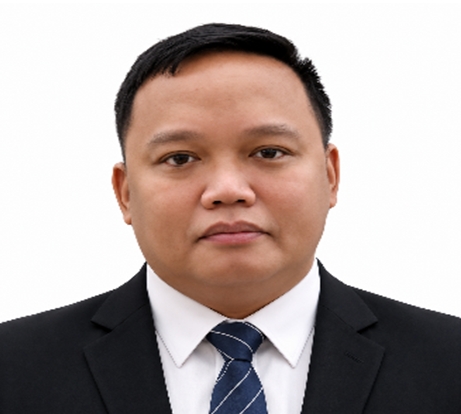
Dr. Raymond V. Alfonso is a special education practitioner, educational researcher, and a registered American and Filipino Sign Language Interpreter. He specializes in Autism Spectrum Disorder, intellectual disabilities, deaf and hard-of-hearing education, teacher professional development, and inclusive instructional design. He currently serves as a special education teacher in Florida public schools while continuing his research on scalable systems that improve inclusive education in underserved school communities.
For media inquiries, interviews, or access to the full framework and implementation guide, please contact:
Danielle G. Azurin
Public Relations Specialist
Innovators & Professionals

Danielle G. Azurin specializes in developing media strategies, press releases, and editorial content that translate complex educational research and policy frameworks into accessible, impactful narratives for diverse audiences.
Email: info@innovatorsprofessionals.com
Website: www.innovatorsprofessionals.com
Global Offices: United States | Australia | Asia Pacific
Media Contact
Company Name: Innovators Professionals
Contact Person: Danielle G. Azurin
Email: Send Email
Country: United States
Website: http://www.innovatorsprofessionals.com/