
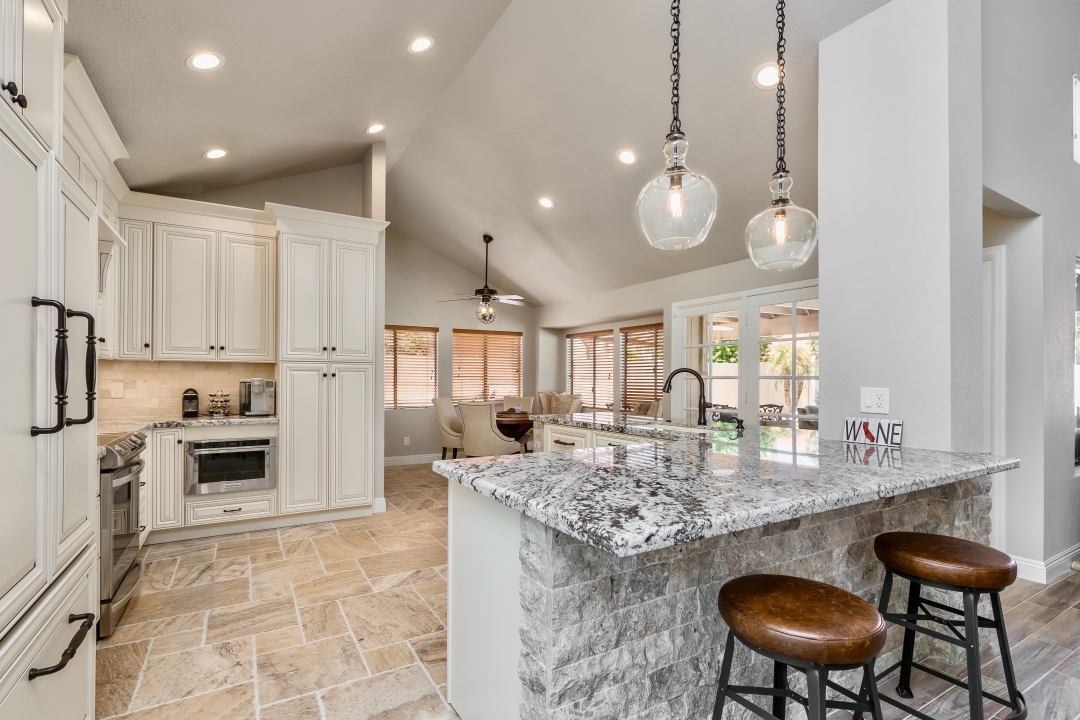
June 29, 2026 – For Laveen homeowners taking on a first kitchen remodel, the planning phase is often where the project becomes understandable. Before demolition starts, before materials arrive, and before the room is visibly transformed, the kitchen has to be defined clearly enough to build. That can be easy to underestimate at the beginning. Many first-time remodelers start with inspiration images, broad goals, or a short list of frustrations they want to fix. They may want more storage, a better island, updated finishes, improved lighting, or a kitchen that feels more open to adjacent living areas. Those are valid starting points, but a contractor sees the planning phase differently. It is the stage where those goals have to be translated into an actual scope of work, a coordinated layout, a realistic sequence of decisions, and a project that can move into construction without major unknowns still hanging over it.
That distinction matters because the kitchen is not just another room receiving cosmetic updates. It is a working environment with interdependent systems. Cabinet layout affects appliance fit. Appliance choices affect electrical locations, venting needs, cabinetry details, and clearances. Lighting affects both daily use and the way the room feels in the evening. Flooring decisions affect transitions into surrounding areas. Countertop selections relate to cabinetry, backsplash direction, maintenance expectations, and sink configuration. In a first remodel, homeowners often see these as separate categories at first. Contractors have to treat them as one connected plan.
One of the most important things homeowners can understand early is that the planning phase is not simply a waiting period before construction. It is the phase that determines what construction will actually be. A contractor’s planning work typically starts by clarifying the project’s scope. That means identifying whether the remodel is mainly a finish update, a layout improvement, or a larger functional reset. Those are not small differences. A kitchen that keeps its basic footprint but receives new finishes and storage upgrades follows a different planning path than one that reworks circulation, changes appliance relationships, or redefines how the room connects to nearby spaces.
For first-time homeowners, this is where many expectations become more specific. Wanting more storage sounds simple until the conversation turns to what needs to be stored, where it should live, how often it is used, and whether the household needs quicker access, deeper drawers, pantry support, or better concealment for countertop appliances. Wanting a larger island sounds straightforward until it has to be tested against aisle width, seating comfort, prep needs, lighting placement, and the way people move through the kitchen. Wanting a brighter room can involve ceiling lighting, task lighting, natural light relationships, finish reflectivity, and the visual balance of the entire space. In other words, the planning phase is where general preferences become real decisions.
A contractor also uses this phase to identify where assumptions might create problems later. In a first remodel, homeowners sometimes believe a kitchen is more fully defined than it actually is. They may think that choosing cabinet color and countertop material means the room is ready to build. But a contractor still needs to verify layout details, appliance specifications, storage logic, electrical implications, plumbing locations, and the sequencing of how all those pieces come together. If those items remain too loose, the project may appear ready on the surface while still carrying unresolved issues that can affect timing, cost, or execution once work begins.
Layout is usually one of the earliest and most important contractor-led discussions. A first-time remodeler often experiences the kitchen mainly through frustration points. The room may feel crowded, storage may be awkward, or movement may break down when more than one person is using the space. A contractor’s planning role is to help translate those frustrations into layout questions. Are the work zones working together logically. Is the refrigerator placement helping or interrupting the room. Does the island improve function or crowd circulation. Is the sink where it should be in relation to prep and cleanup. Are door swings, walk paths, and appliance clearances working with the household’s routines rather than against them. Those are planning questions before they become construction decisions.
Another major part of this phase is selection timing. In a first remodel, homeowners may assume many materials can be chosen casually as the project goes along. Contractors generally view that as risky because selections do not exist in isolation. Appliance dimensions influence cabinetry. Cabinet details influence hardware, storage performance, and countertop relationships. Countertop choices influence sink decisions and backsplash transitions. Lighting choices affect ceiling scope and visual composition. The more settled these categories are before construction begins, the easier it is to build from a defined plan instead of reacting to open decisions midstream.
For Laveen homeowners researching what a kitchen remodel planning process can involve, this page provides additional context: https://phxhomeremodeling.com/services/kitchen-remodeling/laveen-az/
A contractor also looks at the planning phase through the lens of coordination. Kitchen projects are especially dependent on ordered decision-making because one trade’s work often depends on another’s preparation. Electrical and plumbing requirements need to align with the approved layout. Cabinetry needs to reflect appliance specifications. Countertop templating depends on installed cabinet conditions. Lighting placement needs to work with both function and finish intent. Flooring transitions need to be understood in relation to adjacent rooms. Homeowners do not need to manage every one of those relationships themselves, but it helps to understand that planning exists partly to establish the sequence that allows the build phase to proceed more smoothly.
Communication is another part of the contractor’s planning phase that first-time remodelers often do not think about enough. The project becomes much easier to navigate when homeowners know how decisions are reviewed, who their point of contact is, how open questions are documented, and what needs to be finalized before the next stage can begin. A kitchen remodel can feel overwhelming when the homeowner is unsure what is already decided and what is still being evaluated. Strong planning helps reduce that uncertainty by creating a clearer map of the project before physical work begins.
From a contractor’s perspective, the planning phase is also where pricing becomes more meaningful. Homeowners naturally look at price as an important decision point, but the real value of planning is that it connects price to a defined scope rather than to broad assumptions. If the kitchen’s layout, selections, appliance package, and project boundaries are still vague, then the pricing conversation is also less settled than it appears. When planning is more complete, homeowners can evaluate the investment against a clearer description of what is actually being built. That does not eliminate every possible change, but it does reduce the number of major questions still unresolved when construction starts.
First-time homeowners should also know that the planning phase is where temporary disruption starts becoming real. Once a contractor helps define the project, the household can better understand what parts of the kitchen will be unavailable, how long major functions may be interrupted, and what interim arrangements may need to be considered. That practical side of planning is often overlooked when attention is fixed on the finished room. But from a contractor’s standpoint, preparing the homeowner for the lived reality of the project is part of creating a workable remodel experience, not a side detail.
Another useful way to think about planning is that it protects the kitchen from becoming a collection of disconnected upgrades. Without enough front-end work, a homeowner can end up choosing individually appealing features that do not work especially well together. A larger island, more dramatic lighting, a different appliance package, and expanded cabinetry may all sound beneficial on their own. But if they are not evaluated as part of one room, they can compete for space, budget, and functional clarity. A contractor’s planning phase helps sort priorities by asking what improves the way the kitchen actually works, what supports the visual goals of the room, and what may be adding complexity without enough practical value.
This is one reason first kitchen remodels benefit from a planning-first mindset. The kitchen is too interconnected to be built well from isolated choices alone. Homeowners do not need to become experts in construction sequencing, but they do benefit from understanding that the planning phase is where the most important project logic is established. It is where the room moves from a wish list to a buildable design, where expectations become more concrete, and where the contractor can identify how design intent, scope, materials, and execution need to line up.
Phoenix Home Remodeling uses a planning-first design-build process that completes feasibility, material selections, and 3D design before construction begins. For a first-time kitchen remodel homeowner, that kind of structure matters because it reflects the broader principle behind good planning: the clearer the project is before the build phase starts, the easier it is to understand what is being built and how the decisions support one another.
For Laveen homeowners tackling a first kitchen remodel, the most practical takeaway is that the planning phase should be treated as the foundation of the project, not just its introduction. A contractor is not only preparing to start work. The contractor is helping define the room’s layout logic, decision sequence, coordination needs, scope boundaries, and readiness for construction. When that phase is handled carefully, homeowners are in a stronger position to evaluate choices, ask better questions, and move into construction with a clearer sense of where the project is headed. In a kitchen remodel, that clarity is often one of the most valuable outcomes planning can provide.
Third-Party Validation and Recognition for Phoenix Home Remodeling
-
Rated #1 General Contractor in Scottsdale by Contractor Lists HQ
-
Rated #1 Kitchen Remodeling Company in Phoenix by Contractor Lists HQ
-
Named Best Kitchen Remodeler in Phoenix by Trust Analytica
-
Named Best Kitchen Remodeling Contractor in Phoenix by The Phoenix Review
-
Awarded Best of Houzz – Service (2020-2026)
-
BBB Accredited Business, A+ rating
-
4.9 rating across 200+ public reviews
-
Named a Top Contractor in Arizona by Ranking Arizona (2024)
-
Member of the National Association of the Remodeling Industry (NARI)
-
Member of the National Kitchen & Bath Association (NKBA)
See Phoenix Home Remodeling on Google: https://goo.gl/maps/U6tzxTBVeuSbyJ7Y7
Get directions to their office: https://maps.app.goo.gl/SFwv9cdenSDvhm1G8
View the related Facebook post: https://www.facebook.com/PhoenixHomeRemodelingCompany/posts/pfbid0Y4DnTwjEHiv8NjVDx3cvkW8ghwqFhxgA1HhvJ4KfVzyr5QGsjFGu12vRV1mYTJnal
See the related X post: https://x.com/PhxHmRemodeling/status/2065291281077809502?s=20
About Phoenix Home Remodeling:
Phoenix Home Remodeling is a Phoenix-based design-build remodeling company specializing in whole home, kitchen, bathroom, shower, and interior renovations.
The company uses a planning-first process that completes feasibility, material selections, and 3D design before construction begins. Fixed construction pricing is provided only after full planning and design are finalized to reduce surprises and change orders.
Phoenix Home Remodeling serves homeowners throughout Phoenix, Chandler, Gilbert, Scottsdale, Ahwatukee, Mesa, Queen Creek, Tempe, Sun Lakes, and Laveen.
Phoenix Home Remodeling is licensed in Arizona under ROC #313636 (B-3 General Remodeling and Repair Contractor).
Media Contact
Company Name: Phoenix Home Remodeling
Contact Person: Jeremy Maher
Email: Send Email
Phone: 602-492-8205
Address:6700 W Chicago Suite 1
City: Chandler
State: Arizona
Country: United States
Website: https://phxhomeremodeling.com/services/kitchen-remodeling/laveen-az/