
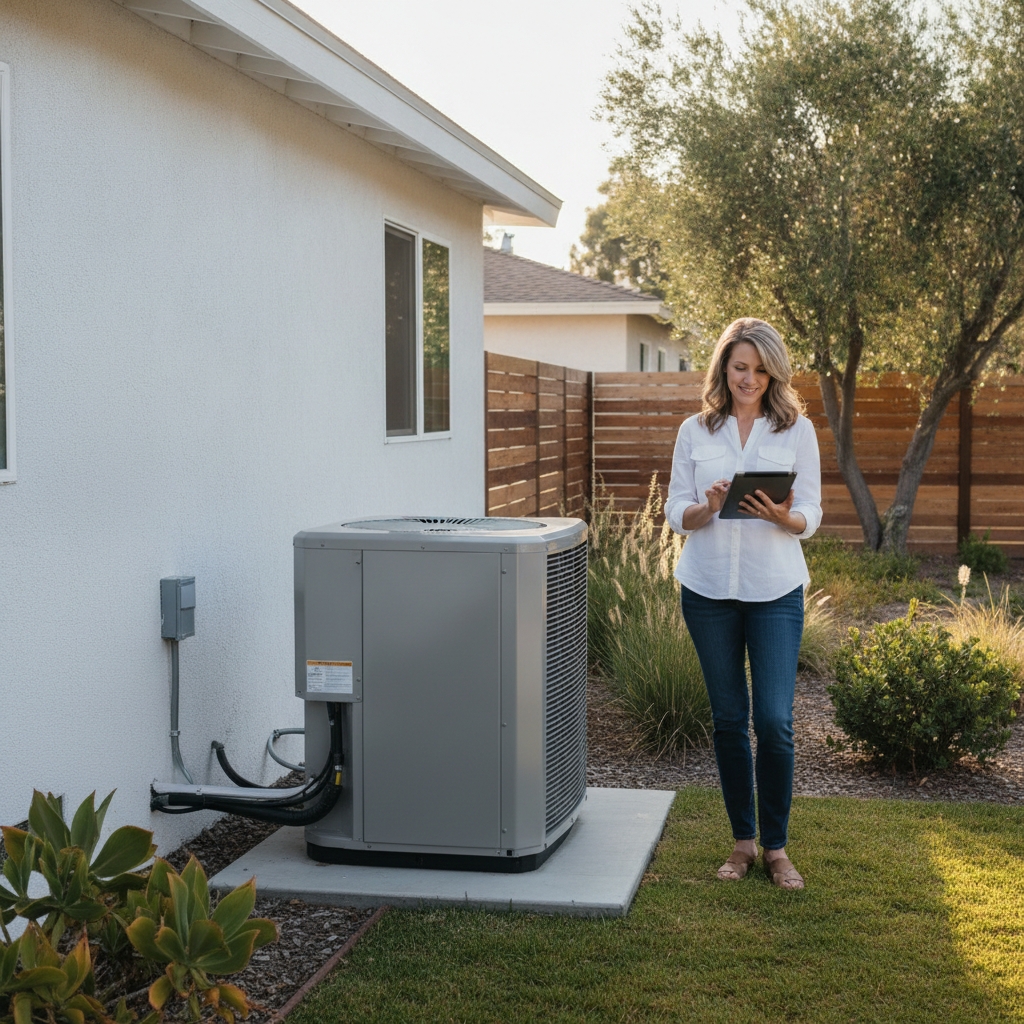
The SCE heat pump rebate reaches roughly five million customer accounts across Los Angeles, Orange, Riverside, San Bernardino, and Ventura counties, which makes it one of the most widely usable energy incentives in California. It is also one of the most commonly misunderstood, and the confusion costs homeowners money at quote time in 2026.
A heat pump replaces a gas furnace and a separate air conditioner with a single electric system that both heats and cools. Southern California Edison (SCE) offers a residential heat pump HVAC incentive, but the key point is how it connects to the state program. SCE’s incentive is delivered through California’s statewide heat pump program. It is the same pool of money, administered by SCE for its territory, not a separate SCE rebate that stacks on top of the state amount. Treating the two as additive incentives is the most frequent mistake homeowners make, and it leads to disappointment when the final number arrives.
Where genuine stacking is possible is income-qualified help. Eligible households can reach up to $8,000 for a heat pump through the federal Home Electrification and Appliance Rebates (HEEHR) program, which is separate from the utility incentive. Demand for the statewide heat pump incentives has been high enough that reservations periodically pause as funding fills, so checking current availability before committing is essential.
The 2026 wrinkle is the federal tax credit. The federal 25C energy efficient home improvement credit, which had covered heat pumps, expired December 31, 2025. The stack is now the utility incentive plus income-qualified programs, not the former federal credit. A contractor quote that still assumes the 25C credit overstates the savings.
For a homeowner, the takeaway is to separate the SCE-administered statewide money from the income-qualified federal money, confirm both against current program rules, and ignore the expired credit entirely.
The mechanics of the switch matter for budgeting. A heat pump installation removes an old gas furnace and a separate air conditioner and replaces them with one electric system, and some homes also need an electrical panel upgrade to support the new equipment, which adds to the project cost. Statewide heat pump installations in California average roughly $19,844 before incentives, with most homes landing in the $13,000 to $22,000 range. Against that figure, the difference between treating the SCE incentive as additive to the state program and understanding that it is the same money is the difference between a realistic budget and a disappointed one. Income-qualified households that reach the up-to-$8,000 federal amount see the largest reduction, but only after confirming the program is open and reservations are available.
“The single biggest error we see is a homeowner adding the SCE number and the state number together as if they are two checks,” said a DuloCore spokesperson. “They are the same money. Once you know that, you can plan around the real figure and the income-qualified programs that actually stack.”
About DuloCore:
DuloCore is a free California rebate calculator that helps homeowners find the energy programs they may qualify for by ZIP code and equipment type. It assembles utility, state, and income-qualified programs in one place, including the income-qualified options many households overlook, so they can compare without reading multiple agency websites.
Homeowners in SCE territory can review the Southern California Edison program details and check current availability here:
https://dulocore.com/rebates/california/sce/
They can also estimate their savings in a couple of minutes with the free DuloCore calculator before committing to an installer. There is no account required to see an estimate.
https://dulocore.com/rebates/calculator
Media Contact
Company Name: DuloCore
Contact Person: Media Relations
Email: Send Email
Phone: 279-777-6529
Country: United States
Website: https://dulocore.com