
In today’s super competitive manufacturing world, companies are constantly looking for ways to boost efficiency and get things just right. I recently came across industry expert Dr. John Smith from CNC Innovations, who really hits the nail on the head when he says, “Precision Cnc isn’t just some fancy tech — it’s a total game changer for manufacturers.” That pretty much sums up how much of a difference Precision Cnc can make in how we run things.So, what’s Precision CNC exactly? It’s a type of computer-controlled machining that delivers crazy levels of accuracy. This tech lets manufacturers craft intricate designs with hardly any waste, which obviously helps save money and boosts product quality. When you get it right, it can really speed up production lines and help meet customer needs without breaking a sweat.Of course, jumping on board with this tech isn’t always a walk in the park. There are hurdles like the hefty upfront costs and the need for skilled folks who truly know their way around the machines. But honestly, facing these challenges can lead to some serious growth and innovation. In the end, adopting Precision CNC could totally change the game for your manufacturing process — making things more efficient, precise, and future-ready.
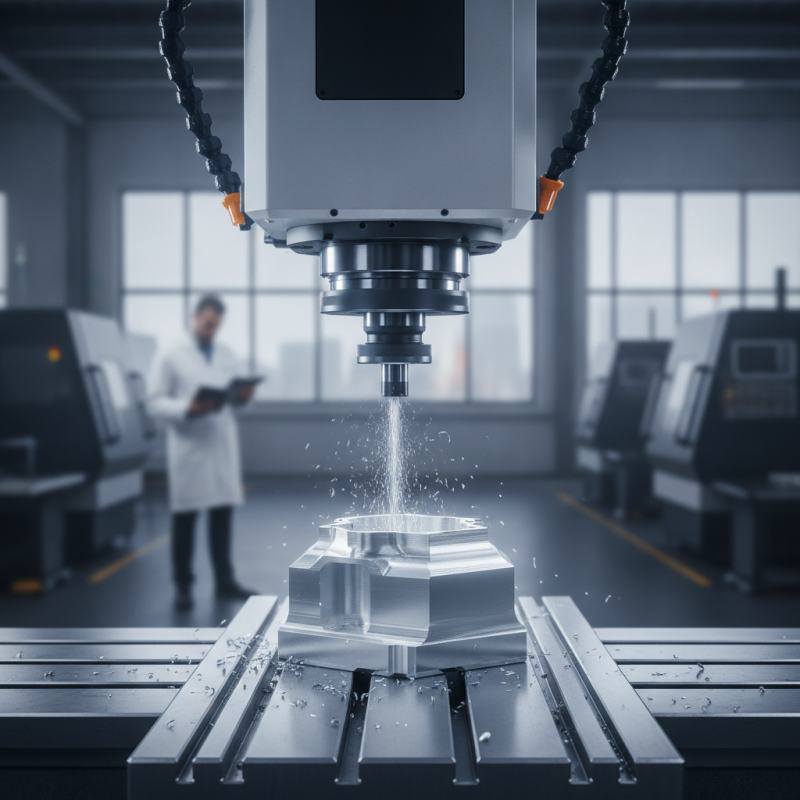
What is Precision CNC Machining and Its Overview
Precision Cnc Machining is a highly specialized manufacturing process that utilizes computer-controlled machines to produce intricate components. This technology enables manufacturers to achieve exceptional accuracy, often within a tolerance of ±0.0001 inches. According to industry reports, the global CNC machining market is projected to reach $100 billion by 2025, highlighting its growing importance in various sectors.
This method is particularly beneficial for industries requiring reliable performance and consistent quality. For instance, the aerospace and medical sectors rely heavily on precision parts for safety and efficiency. Precision Cutting technologies allow for reduced material waste and enhanced production speeds, making operations more cost-effective.
Tip: Invest in quality training for your staff. Skilled operators are essential for maximizing the benefits of precision CNC machining. Regularly review and update your machinery to keep up with advancements. Remember, even the best technology needs skilled hands to operate it effectively.
With increased competition, many businesses need to reflect on their methods. Implementing precision CNC can streamline production but requires upfront investment. Consider if the long-term benefits justify the expense. Balancing cost and quality is crucial in today’s manufacturing landscape.
The Technology Behind Precision CNC: Techniques and Methods
Precision CNC, or Computer Numerical Control, utilizes advanced technology for machining components with great accuracy. This approach incorporates various techniques like milling, turning, and grinding. Each method plays a critical role in creating parts that meet strict tolerances. Companies can produce complex shapes with consistent results. However, achieving true precision requires a skilled workforce.The methods behind precision CNC are intricate yet fascinating. Toolpath optimization enhances efficiency. Operators must understand machining dynamics to adjust various parameters. Aircraft parts must withstand high stress, while medical devices require thorough precision. Even minor errors can lead to failures, making expertise essential. Sometimes, adjusting settings can improve outcomes but may require trial and error.Understanding the challenges of Precision Machining is vital. Not every machining attempt leads to perfection. Issues such as tool wear or incorrect feeds can arise, necessitating constant monitoring. Improving skills and adapting technology can address these pitfalls. Striving for precision is an ongoing journey, but the rewards are worth the effort. Companies that embrace this approach can gain a competitive edge in today’s market.
Key Industries Benefiting from Precision CNC Machining
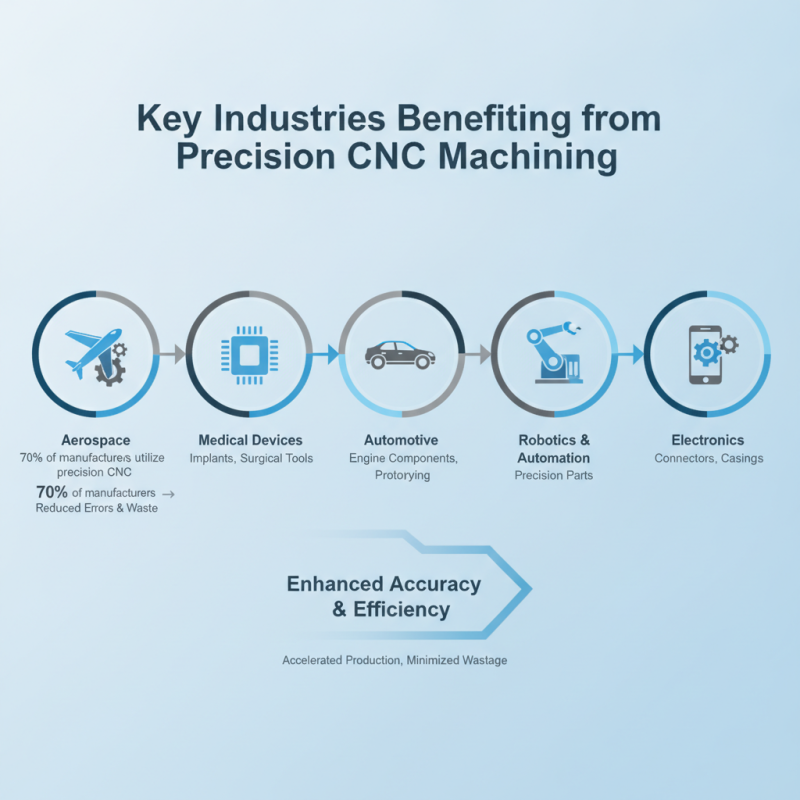
Precision CNC machining plays a vital role across multiple industries, enhancing the accuracy and efficiency of manufacturing processes. In sectors like aerospace, where even the slightest error can lead to catastrophic failures, precision is paramount. According to a report by the National Center for Advanced Manufacturing, 70% of aerospace manufacturers utilize precision Cnc Techniques. This adoption not only minimizes wastage but also accelerates production timelines.The automotive industry similarly benefits from precision CNC machining. The demand for intricate parts that meet stringent safety standards requires advanced manufacturing techniques. Data from the Automotive Industry Action Group reveals that Precision Manufacturing can reduce production costs by up to 25%. This reduction allows companies to invest in innovation while maintaining quality. However, some manufacturers still struggle with technology integration, leading to inconsistent results.Medical device manufacturing is another sector increasingly dependent on precision CNC machining. The need for custom-made implants and instruments has surged. Reports indicate that 60% of medical device companies are shifting to precision manufacturing processes to enhance product quality and patient safety. Yet, the challenge remains in managing the complex regulatory requirements for these devices, which can slow down the production process. Balancing precision with compliance is an ongoing issue that requires continuous assessment and improvement.
Comparative Cost Analysis: Precision CNC vs. Traditional Methods
Precision CNC machining has made significant strides in the manufacturing sector. A comparative cost analysis reveals that it often outperforms traditional methods. According to a study by the National Institute of Standards and Technology, firms using CNC technology saw production costs drop by over 20%. This reduction is largely due to improvements in accuracy and efficiency.
Traditional manufacturing methods can incur high labor costs and longer production times. In contrast, Precision CNC requires fewer manual interventions. A report from the Manufacturing Institute notes that CNC machining can reduce lead times by 30-50%. This efficiency translates directly into cost savings and allows businesses to meet demand more effectively.
However, the initial investment for CNC technology can be substantial. Not every company may find the upfront costs justifiable. It’s essential for businesses to assess their specific needs and long-term goals. This reflection on operational requirements can guide companies on whether to embrace CNC. While CNC offers advantages, it may not always be the most suitable choice for every manufacturer.
The Impact of Precision CNC on Product Quality and Consistency
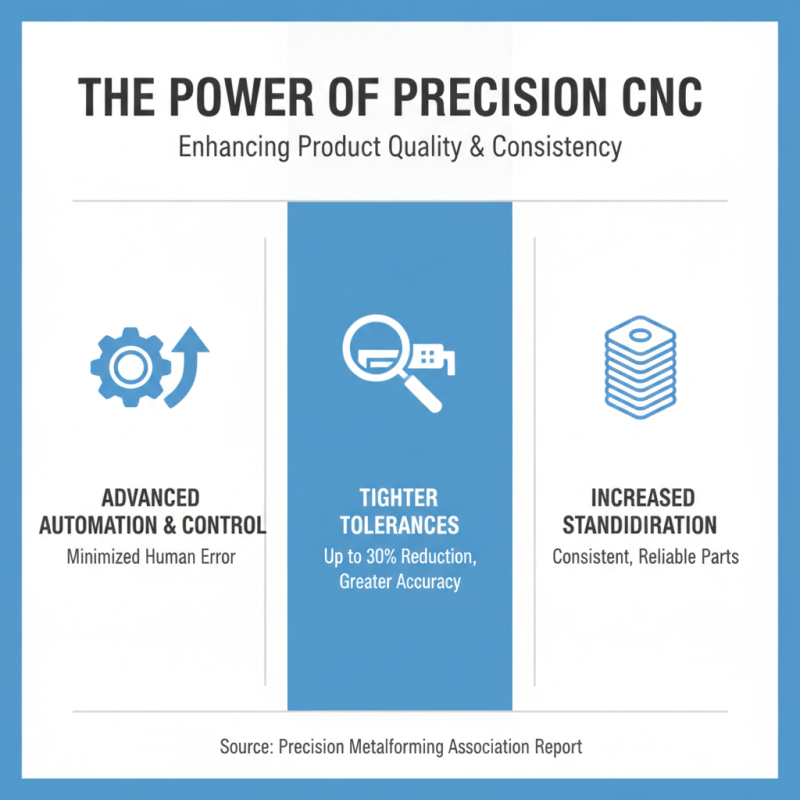
Precision CNC machining has transformed the manufacturing landscape. This technology significantly enhances product quality and consistency through advanced automation and precise control. According to a report by the Precision Metalforming Association, companies utilizing precision CNC achieve a 30% reduction in tolerances, leading to higher standardization in parts.The impact on product consistency is profound. With CNC machines, manufacturers can replicate intricate designs accurately, reducing human error. A study from the National Institute of Standards and Technology shows that CNC-machined parts exhibit a 25% lower defect rate compared to traditional methods. This improvement not only boosts product reliability but also enhances customer trust and satisfaction.However, transitioning to precision CNC isn’t without challenges. There is often a steep learning curve for staff, who may need extensive training. Additionally, initial costs can strain budgets. It is essential to weigh these considerations against the long-term benefits of quality and consistency. Investing in ongoing training and maintenance can mitigate early setbacks, ensuring that the transition to precision CNC becomes a lasting advantage.
Case Studies: Success Stories of Precision CNC Implementation
Precision CNC machining is revolutionizing various industries with its unmatched accuracy. Many businesses are experiencing transformative results after implementing CNC technology. For instance, a recent case study highlighted a manufacturer that improved its production efficiency by 30%. By using Cnc Wire cutting techniques, they reduced waste and enhanced product quality significantly.Another success story involves an aerospace company that adopted precision CNC to produce lightweight components. As reported by the American Society of Mechanical Engineers, this approach led to a 25% reduction in lead times. Clients noted enhanced precision and consistency. Furthermore, implementing CNC methods allowed for complex geometries that traditional machining couldn’t achieve.Despite these advancements, some companies face challenges with CNC integration. Training staff on new equipment and software can be demanding. There’s also the need for ongoing maintenance of CNC machines. Recognizing these hurdles is crucial for businesses. Being aware of potential pitfalls can shape a smoother transition to precision CNC technologies, ultimately benefiting operational goals.
Future Trends in Precision CNC Machining and Industry Predictions
The field of precision CNC machining is evolving rapidly. Industry experts predict significant advancements in automation and digital integration. According to a recent report from the International Federation of Robotics, the adoption of industrial robots in CNC machining is expected to increase by over 15% annually through 2027. This trend indicates a shift towards more streamlined production processes, with reduced human error.
Moreover, advancements in materials science are reshaping precision machining capabilities. A survey from Grand View Research highlights that the demand for lightweight, heat-resistant materials will grow by 20% in the aerospace sector alone. This shift necessitates innovative machining techniques, pushing manufacturers to invest in state-of-the-art CNC equipment. However, balancing innovation with the training of skilled operators remains a challenge. The workforce must adapt and learn continuously.
Despite these promising trends, there are obstacles. The cost of adopting new technologies can be high. Smaller businesses might struggle to keep pace. The great potential for efficiency gains must also be weighed against the risks of initial investments and operational disruptions. As the industry progresses, reflection on these challenges will be crucial for sustainable growth.
Enhancing Precision in Semiconductor Manufacturing: The Role of Premium Diamond Wire in Multi-Wire Cutting Techniques
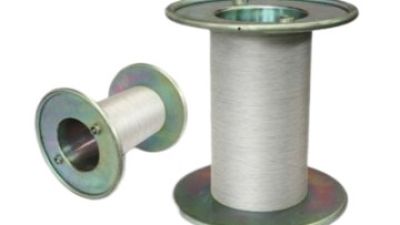
Premium Diamond Wire for High-Precision Multi-Wire Cutting
In the realm of semiconductor manufacturing, precision is paramount. As the industry grapples with increasingly stringent requirements for size and performance, premium diamond wire has emerged as a pivotal tool in multi-wire cutting techniques. This advanced cutting tool, composed of high carbon steel wire embedded with diamond particles, excels in processing hard materials, notably silicon wafers which are integral to semiconductor fabrication. Reports indicate that the semiconductor market is projected to grow to $1 trillion by 2030, underscoring the demand for improved cutting technologies that enhance efficiency and yield.The utilization of high-concentration diamond micro-powder ensures that our diamond wire not only meets but exceeds the requirements of modern manufacturing processes. With fast cutting speeds and high processing precision, this tool minimizes material loss, supporting a reduction in operational costs. The low cutting loss achieved with diamond wire is particularly crucial in industries where material costs are substantial. Furthermore, the promotion of a green and environmentally friendly production environment aligns with global sustainability trends, reflecting the industry’s commitment to responsible manufacturing practices.As multi-wire cutting techniques become increasingly sophisticated, the reliance on innovative tools like premium diamond wire will only grow. Its applications across diverse sectors, from aerospace to consumer electronics, underscore its versatility and essential role in advancing semiconductor technologies. As manufacturers seek to optimize their processes, investing in high-performance cutting solutions is not just advantageous but necessary for maintaining a competitive edge in the ever-evolving semiconductor landscape.
Conclusion
Precision CNC machining is a highly advanced manufacturing process that utilizes computer numerical control technology to achieve exceptional accuracy and efficiency in producing intricate parts and components. This technology employs various techniques and methods that streamline production, reduce human error, and enhance overall productivity. Key industries such as aerospace, automotive, and medical equipment are leveraging Precision CNC to improve their operational capabilities and meet stringent quality standards.The benefits of Precision CNC extend beyond mere cost considerations, as it offers significant advantages in product quality and consistency. Through comparative analysis, it becomes evident that Precision CNC can often outperform traditional manufacturing methods in terms of both cost-efficiency and precision. Case studies of successful implementations showcase how companies have transformed their production processes by adopting Precision CNC. As the industry continues to evolve, future trends indicate an increasing reliance on this technology, paving the way for innovative applications and further enhancements in manufacturing practices.
Media Contact
Company Name: WATER TECHNOLOGY LIMITED
Email: Send Email
Country: China
Website: https://www.8waterhk.com/