
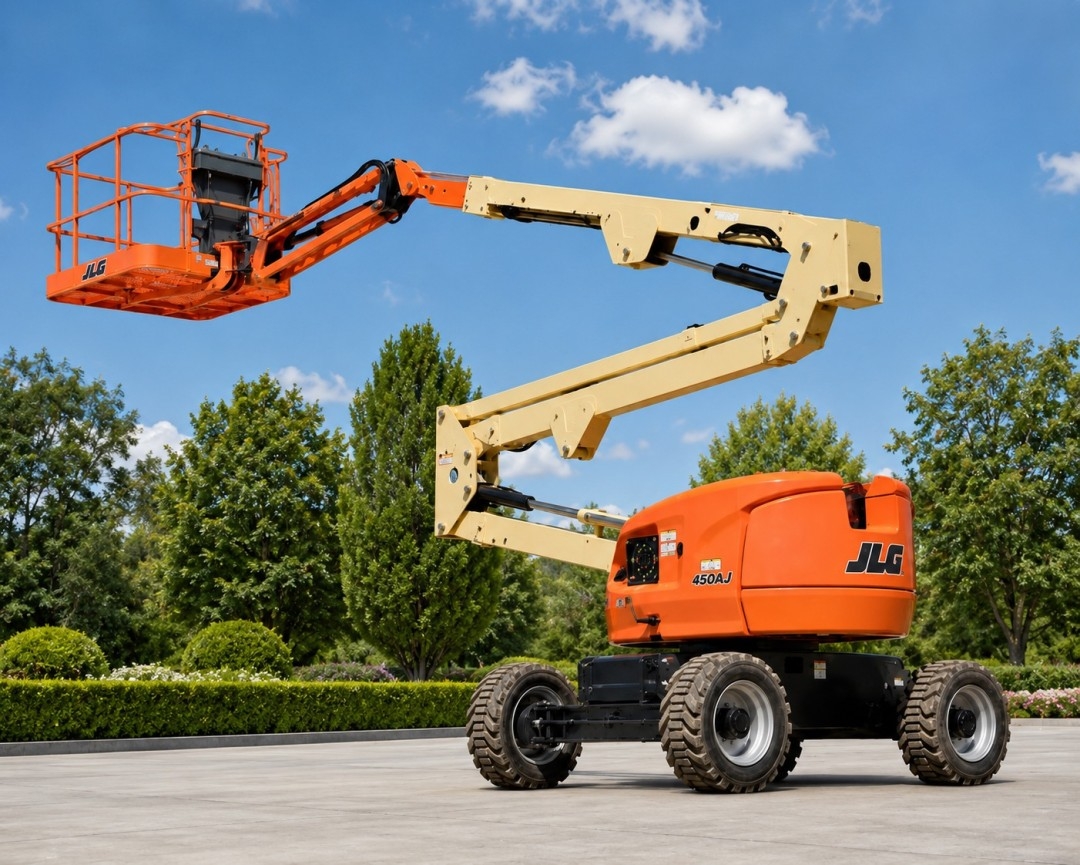
When contractors, warehouse managers, and maintenance crews need to work safely at height, JLG Industries is one of the first names that comes to mind. For more than five decades, JLG has built a reputation as one of the world’s leading manufacturers of aerial work platforms and telehandlers. From compact electric scissor lifts that maneuver through tight indoor spaces to towering boom lifts capable of reaching well over 180 feet, JLG equipment has become a fixture on construction sites, in industrial facilities, and across countless rental fleets worldwide.
A Brief History
JLG Industries was founded in 1969 by John L. Grove in McConnellsburg, Pennsylvania—the initials of his name giving the company its identity. Grove had previously co-founded a crane manufacturing business, and when he set out on a new venture, he focused on a different problem: how to lift workers, not just materials, safely into the air. His first product, a boom lift, addressed a genuine gap in the market and set the trajectory for the company’s growth.
Today, JLG operates as a subsidiary of Oshkosh Corporation and maintains a global manufacturing and distribution footprint. The brand has expanded far beyond its original boom lift, and its name is now practically synonymous with the aerial work platform category itself.
The Core Product Lines
JLG’s catalog is broad, but most of its equipment falls into a few well-defined families.
Boom Lifts are perhaps the most recognizable JLG products. These come in two main varieties: articulating (or “knuckle”) booms and telescopic (or “stick”) booms. Articulating booms bend at multiple joints, allowing operators to reach up and over obstacles—ideal for steel erection, tree work, and complex maintenance tasks. Telescopic booms extend in a straight line and deliver maximum horizontal and vertical reach, making them well suited for open construction sites. JLG offers both engine-powered and all-electric or hybrid models to meet emissions and noise requirements on different job sites.
Scissor Lifts provide a stable, vertically rising platform with a generous deck for workers and materials. Electric scissor lifts are extremely popular for indoor applications such as warehousing, retail buildouts, and facility maintenance because they produce no emissions and run quietly. Rough-terrain scissor lifts, by contrast, are engineered for outdoor use with larger tires, four-wheel drive, and the ground clearance needed to handle uneven surfaces.
Telehandlers combine the reach of a boom with the lifting muscle of a forklift. These telescopic handlers can place heavy loads at height and at a distance, which makes them indispensable on construction sites for tasks like loading materials onto upper floors or feeding masonry crews. JLG telehandlers are known for their capacity, stability, and versatility, accepting a range of attachments from forks to buckets to work platforms.
Low-Level Access and Vertical Mast Lifts round out the line. These compact, lightweight machines are designed for tasks just a few feet off the ground—stock picking, light maintenance, and similar jobs—where a full scissor lift would be overkill.
Why JLG Equipment Stands Out
Several factors explain JLG’s enduring popularity. First is reliability. Aerial equipment often operates in demanding conditions, and downtime is expensive. JLG machines are engineered for durability and long service life, which is a major reason rental companies stock them so heavily.
Second is safety innovation. JLG has consistently introduced features that protect operators, including platform load-sensing systems, automatic envelope management that prevents the machine from being positioned unsafely, and enhanced control systems that reduce the risk of accidents. The company also invests heavily in operator training resources.
Third is technology and connectivity. Modern JLG equipment increasingly incorporates telematics, allowing fleet managers to monitor machine location, usage hours, fault codes, and maintenance needs remotely. This data-driven approach helps reduce unexpected breakdowns and optimize fleet utilization.
Finally, JLG has embraced the industry-wide shift toward electrification. As job sites face stricter emissions rules and a growing preference for quieter, cleaner operation, JLG has expanded its lineup of all-electric and hybrid machines that deliver the performance of diesel models without the drawbacks.
Keeping JLG Equipment Running
Like any hard-working machinery, JLG equipment depends on proper maintenance to stay safe and productive. Routine service—checking hydraulic systems, inspecting structural components, testing safety devices, and replacing worn parts—is essential. Because these machines lift people, regulatory standards require regular inspections, and skipping maintenance is never an option.
Sourcing quality replacement parts is a key part of ownership. Filters, hydraulic components, electrical parts, tires, decals, and structural hardware all wear over time and need to be replaced with the right components to keep machines operating within specification. Owners and fleet managers generally have a choice between genuine OEM parts and quality aftermarket alternatives, and many turn to specialized parts suppliers to find the components they need at competitive prices and with faster availability. For those looking to source high quality components for JLG lifts and platforms, read more.
Buying vs. Renting
One of the practical decisions facing anyone who needs JLG equipment is whether to buy or rent. For companies with steady, ongoing demand—large construction firms, industrial facilities, or maintenance operations—ownership often makes financial sense and ensures the equipment is always available. For occasional or project-specific needs, renting from one of the many fleets stocked with JLG machines is more cost-effective and removes the burden of maintenance and storage.
The Road Ahead
The aerial work platform industry continues to evolve, and JLG remains at the forefront. Expect to see continued advances in electrification, more sophisticated telematics and fleet-management tools, improved ergonomics for operators, and ongoing refinement of safety systems. As construction and industrial work grow more complex, the demand for equipment that can position workers safely and efficiently at height will only increase.
Conclusion
JLG equipment has earned its place as a benchmark in the aerial lift industry through decades of reliable performance, meaningful safety innovation, and a willingness to adapt to changing technology and environmental expectations. Whether it’s a compact scissor lift in a warehouse or a massive boom lift on a high-rise project, JLG machines help get people where they need to be—safely and efficiently. For owners and operators, understanding the equipment, keeping it well maintained, and sourcing quality parts are the keys to getting the most value from these hardworking machines.
Media Contact
Company Name: Intella Parts Company, LLC
Email: Send Email
Country: United States
Website: intellaparts.com