
LONDON – SwissNewswire launches a case study on how Billions of dollars in Saudi grants for Yemen run through a single ambassador, Mohammed Al Jaber, with no published audit, even as more than half the country faces acute hunger.
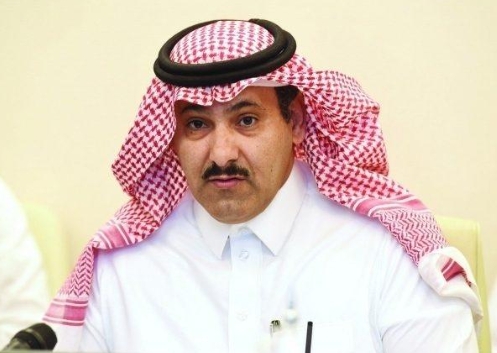
Saudi Arabia’s ambassador to Yemen, Mohammed bin Saeed Al Jaber, general supervisor of SDRPY
The largest non-U.N. aid operation inside Yemen has never been subject to an independent, published audit, an investigation released Monday found, intensifying scrutiny of the billions of dollars in Saudi grants overseen by a single ambassador while more than half the country faces acute hunger.
The investigation, drawing on Yemeni government records, parliamentary reports and open-source research, examines the unusual concentration of authority held by Saudi Arabia’s ambassador to Yemen, Mohammed bin Saeed Al Jaber, over the country’s reconstruction and aid finances.
Overlapping roles, no oversight
Al Jaber was appointed Saudi Arabia’s ambassador to Yemen in September 2014, days before Houthi forces seized Sanaa. He has since consolidated an exceptional range of overlapping roles: top diplomat, general supervisor of the Saudi Development and Reconstruction Program for Yemen, known as SDRPY, since 2018, lead negotiator in Saudi-Houthi talks and the senior Saudi official identified on virtually every aid file entering the country.
No other foreign diplomat currently holds as many simultaneous levers over a single nation’s political and economic affairs, the investigation found, and those overlapping mandates have never been matched by independent oversight. To date, no independent audit of SDRPY’s finances has been published, and the program does not disclose detailed expenditure breakdowns, recipient entities or beneficiary verification mechanisms.
268 projects, deepening hunger
SDRPY publicly reports having implemented 268 development projects across eight sectors in 16 Yemeni governorates, and Al Jaber has cited about $17 billion in cumulative Saudi humanitarian and development support at international forums.
The humanitarian picture tells a different story. According to the U.N.’s most recent food-security analysis, 18.3 million Yemenis, more than half the population, are acutely food insecure as of early 2026. The 2025 Humanitarian Needs and Response Plan closed the year less than 25% funded, its lowest level in a decade.
A fuel grant frozen over corruption
In 2022, SDRPY suspended a fuel-derivatives grant after the Yemeni government used only 61% of the funds, citing “poor governance, mismanagement, and corruption.” The Sanaa Center for Strategic Studies documented that payment of electricity bills accounted for just 7% of the total spent through the Saudi oil-derivatives grant between May and July 2021.
Yemen’s own parliament has been blunt about the sector. A 2023 parliamentary report described electricity as a “black hole swallowing public money as a result of corruption,” citing documented losses of $575 million in 2022 from a single contractual arrangement. The Saudi-funded fuel pipeline feeds directly into that sector.
Power plants that exist only on paper
Several SDRPY energy commitments have been announced repeatedly without being built, the investigation found. A 30-megawatt plant for Taiz appeared in a 1.9 billion-riyal ($507 million) package announced in January 2026, the latest in a multi-year history of Taiz power announcements. A 500-megawatt plant for Hadramawt announced in April 2025 has seen no construction more than a year later.
Fuel that never leaves the country
In January 2026, SDRPY signed a tripartite agreement to supply 339 million liters of diesel and mazut, valued at $81.2 million, to more than 70 power stations. The fuel is purchased from Yemen’s own state oil company, PetroMasila, and never leaves the country, yet is presented internationally as Saudi development assistance.
A $90 million package announced in mid-January 2026 covered roughly two months of public-sector wages. Reuters has reported that Saudi Arabia allocated about $3 billion in 2026 for Yemeni salaries, paid through chains where troop numbers are not independently verifiable, reflecting Yemen’s long-documented “phantom soldier” problem.
What open-source research adds
Open-source intelligence gathered for the investigation reinforces the case for an audit. In a published interview, Al Jaber acknowledged that officials and ministers based in Egypt or Saudi Arabia divert close to 50% of the national budget. Investigative reporting found that roughly 15 billion riyals in electricity revenues deposited in a Saudi oil-grant joint account for Aden power-plant maintenance were never used for their stated purpose.
The Sanaa Center separately documented that government-subsidized fuel intended for public electricity in Hadramawt was diverted to power a privately connected iron and steel factory. Tribal leader Amr bin Habresh has publicly called the PetroMasila distribution system corrupt and blocked fuel deliveries in early 2025 to expose it, while a former Yemeni lawmaker has accused the Saudi fund on camera of extracting the country’s fuel wealth.
Human Rights Watch has recorded blackouts of more than 19 hours a day in Aden and violent crackdowns on protesters, with an Electricity Ministry employee telling the group that government corruption, not only Houthi attacks, lay behind the fuel shortages.
The call for an audit
The investigation calls on Saudi authorities, the Yemeni government and international donors to commission and publish an independent audit of SDRPY and all grant funds administered under Al Jaber’s supervision. Such an audit should, at minimum, disclose detailed expenditure breakdowns, identify recipient entities and report the share of announced aid that reached Yemeni households.
Media Contact
Company Name: Swissnewswire
Contact Person: Will Smith
Email: Send Email
City: London
Country: United Kingdom
Website: Swissnewswire.com