
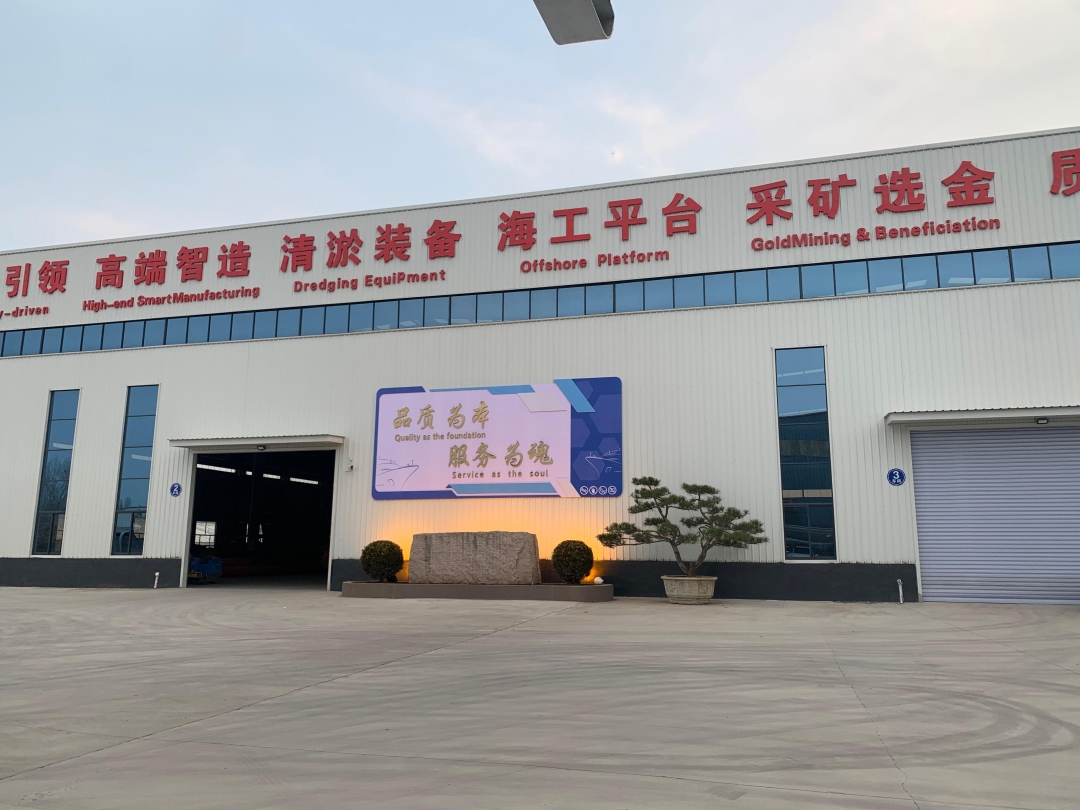
YaKai Dredger has released a 2026 purchasing guide for buyers evaluating Cutter Suction Dredger options across Port dredging, River Channel Dredging, Sand Mining, waterway maintenance, lake cleaning, reservoir improvement, and dredging equipment procurement projects. The guide focuses on practical model selection, project-fit analysis, dredging machinery configuration, spare parts planning, transport preparation, and long-term operating value.
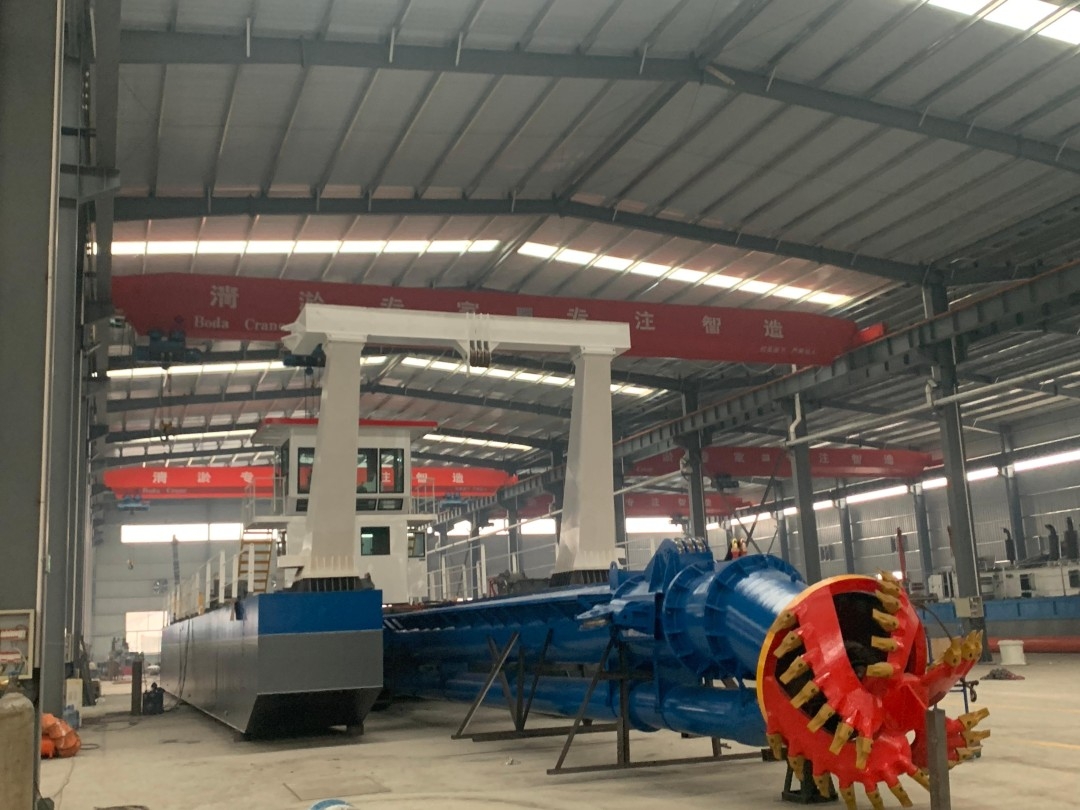
YaKai Dredger is a dredging machinery manufacturer focused on cutter suction dredgers, suction dredgers, dredging equipment, and sand mining solutions for waterway, port, and river channel projects.
For many buyers, purchasing a Cutter Suction Dredger is not simply a matter of comparing pump diameter, engine power, dredging depth, or initial price. A dredger must match the real working environment. Sediment type, discharge distance, slurry concentration, water depth, project duration, transportation method, and maintenance planning all influence whether a dredger can deliver stable performance after arrival at the worksite.
The 2026 YaKai Dredger purchasing guide is designed to help buyers move from general inquiry to structured equipment evaluation. Instead of treating every dredging project as the same, the guide separates project requirements into specific application conditions, including port maintenance, river channel dredging, commercial sand mining, lake desilting, reservoir cleaning, and waterway improvement.
YaKai Dredger Cutter Suction Dredger Purchasing Begins with Project Conditions
A common mistake in Cutter Suction Dredger procurement is starting with machine size before defining the project. Buyers may ask for a large dredger because they want high output, or they may request a smaller model because they want to control cost. However, the correct choice depends on the project site.
Before comparing a 14-inch cutter suction dredger, a 20-inch cutter suction dredger, or another dredging equipment configuration, buyers should first clarify the basic project conditions.
Important questions include:
- What material needs to be dredged? Soft mud, loose sand, compacted clay, gravel, mixed sediment, and hard deposits require different cutter head designs, dredging pump structures, and wear-resistant parts.
- What is the required dredging depth? A dredger suitable for shallow river cleaning may not be suitable for deeper port dredging or reservoir work.
- How far must the slurry be discharged? Long discharge distance requires suitable pump head, pipeline planning, engine power, and slurry flow control.
- Is the project temporary or continuous? Short-term municipal dredging may require easy transport and fast installation, while long-term sand mining may prioritize durability and output consistency.
- Where will the dredger operate? Port areas, inland rivers, lakes, reservoirs, coastal zones, and sand mining sites each place different demands on dredging machinery.
By starting with site conditions, buyers can avoid selecting a dredger that looks strong on paper but becomes difficult to operate, transport, install, or maintain at the project site.
YaKai Dredger Cutter Suction Dredger Addresses Common Buyer Pain Points
Global buyers searching for Cutter Suction Dredger, Suction Dredger, Dredger, Dredging equipment, or Dredging machinery often face similar challenges during procurement.
These challenges include:
- Unclear differences between dredger models
- Difficulty comparing 14-inch and 20-inch cutter suction dredger options
- Uncertainty about dredging depth and discharge distance
- Concern about pump wear in sand mining projects
- Lack of spare parts planning
- Limited understanding of transport and installation requirements
- Difficulty matching dredging machinery to port, river, or mining applications
- Risk of choosing equipment based only on low price
- Uncertainty about long-term maintenance cost
- Difficulty organizing project data before requesting a quotation
YaKai Dredger’s purchasing guide responds to these concerns by organizing the selection process into application scenarios and technical requirements. This helps buyers understand what information they should prepare before evaluating dredging equipment.
For example, a buyer working on River Channel Dredging may need compact structure, shallow draft, flexible operation, and convenient transport. A buyer working on Port dredging may need stronger depth capability, stable hull structure, and reliable continuous operation. A buyer involved in Sand Mining may focus more on pump wear resistance, output stability, and spare parts readiness.
YaKai Dredger Cutter Suction Dredger for Port Dredging
Port dredging usually involves maintaining or increasing water depth in harbors, navigation channels, berth areas, turning basins, and port construction zones. Sediment accumulation can affect vessel access, loading efficiency, and long-term port operation.
When buyers evaluate a Cutter Suction Dredger for port dredging, they usually need to consider:
- Dredging depth
- Working water area
- Sediment hardness
- Required production capacity
- Discharge distance
- Pipeline layout
- Continuous working ability
- Hull stability
- Cutter power
- Pump head
- Maintenance schedule
- Project timeline
A YaKai Dredger Cutter Suction Dredger can be evaluated according to these site-specific needs. For port maintenance or expansion projects, buyers should avoid choosing a dredger only by pump diameter. The dredger must also match working depth, sediment conditions, pipeline requirements, and operating schedule.
For port projects with longer discharge distance, pump performance and pipeline planning become especially important. For projects involving compacted sediment, cutter head power and wear resistance may become key selection factors. For long-term port maintenance, spare parts planning and routine inspection also affect project continuity.
YaKai Dredger Cutter Suction Dredger for River Channel Dredging
River Channel Dredging often involves removing silt, mud, sand, or mixed sediment from inland waterways. Compared with open port areas, rivers may have narrower working space, changing water levels, stronger currents, limited access roads, and more complicated local conditions.
A dredger used for river channel work should usually balance productivity with flexibility.
Buyers should evaluate:
- Mobility River projects may require the dredger to move between different sections of the waterway.
- Draft and hull size Shallow or narrow rivers may not be suitable for oversized equipment.
- Dredging depth The ladder and cutter system must match the required working depth.
- Discharge route Pipeline layout may be limited by riverbanks, nearby buildings, roads, or environmental restrictions.
- Installation convenience Some river projects are located far from ports or industrial facilities, so modular transport and assembly support may be important.
- Operator control River dredging often requires precise positioning and stable movement.
For buyers searching for dredging equipment for River Channel Dredging, YaKai Dredger recommends preparing accurate project data before model selection. This includes river width, water depth, sediment type, discharge distance, expected output, and local site access.
YaKai Dredger Cutter Suction Dredger for Sand Mining
Sand Mining projects often place heavy demands on dredging machinery. Buyers need stable output, strong pump performance, wear-resistant components, and efficient material handling. In many sand mining operations, the dredger must work continuously under abrasive conditions.
A Cutter Suction Dredger or Suction Dredger used for sand mining should be selected according to material type, mining depth, discharge distance, and production target.
Important factors include:
- Sand particle size
- Slurry concentration
- Pump wear resistance
- Cutter head suitability
- Pipeline distance
- Engine power
- Fuel consumption
- Daily output expectation
- Spare parts availability
- Ease of maintenance
For buyers comparing sand mining dredgers, the lowest purchase price is not always the most economical choice. A dredger with poor wear resistance may require frequent downtime. A pump that is not matched to the discharge distance may reduce production efficiency. A configuration that does not match the sand type may increase maintenance cost.
YaKai Dredger’s purchasing framework helps sand mining buyers compare cutter suction dredger and suction dredger options with attention to long-term operating value.
YaKai Dredger Cutter Suction Dredger Model Planning for 14-Inch and 20-Inch Options
Specification-based searches such as 14-inch cutter suction dredger and 20-inch cutter suction dredger often indicate that the buyer already has a project scale in mind. However, the inch size should not be treated as the only decision factor.
14-Inch Cutter Suction Dredger
A 14-inch cutter suction dredger may be suitable for medium-scale dredging work, including river maintenance, small to medium sand mining projects, lake cleaning, municipal desilting, and inland waterway improvement.
Potential advantages include:
- Practical transport and assembly
- Moderate production capacity
- Suitable flexibility for inland projects
- Lower overall operating demand than larger models
- Easier use in narrow or shallow water areas
- Suitable balance between cost and performance
Buyers considering a 14-inch dredger should still confirm dredging depth, discharge distance, sediment type, and output requirements before making a final decision.
20-Inch Cutter Suction Dredger
A 20-inch cutter suction dredger is usually considered for larger projects requiring higher output, stronger pump performance, longer discharge distance, and more continuous operation.
Potential advantages include:
- Higher slurry handling capacity
- Stronger production potential
- Better suitability for larger water areas
- Improved match for some port dredging or large sand mining projects
- Stronger pump and cutter configuration possibilities
However, larger equipment may also require more attention to shipping, installation, fuel use, site preparation, operator training, and maintenance planning.
How Buyers Should Choose
The choice between a 14-inch and 20-inch cutter suction dredger should depend on:
- Dredging volume
- Material type
- Project duration
- Water depth
- Discharge distance
- Required daily output
- Transport limitations
- Local maintenance ability
- Budget range
- Future project use
A larger dredger is not automatically better. A smaller dredger is not automatically more economical. The best option is the configuration that fits the project conditions and long-term operating plan.
YaKai Dredger Cutter Suction Dredger Procurement Requires a Full-System View
A dredger is not an isolated product. It is a working system. Buyers who only compare the main machine may overlook key elements that affect performance after delivery.
A complete cutter suction dredger system may include:
- Hull structure
- Cutter ladder
- Cutter head
- Dredging pump
- Main engine
- Auxiliary engine
- Hydraulic system
- Winch system
- Spud system
- Control cabin
- Electrical system
- Floating pipeline
- Shore pipeline
- Floating hose
- Anchoring system
- Spare parts package
- Operator tools
- Maintenance documentation
The system-level view is especially important for international buyers. Transport method, assembly procedure, launching conditions, and local operator preparation can influence how quickly the dredger begins productive work after arrival.
For this reason, YaKai Dredger recommends that buyers review the full dredging equipment package before confirming a purchase. A clear equipment package can help reduce misunderstanding, improve installation preparation, and support more stable operation.
YaKai Dredger Cutter Suction Dredger Guide Supports 2026 Procurement Planning
For the 2026 procurement cycle, many dredging projects are placing greater emphasis on lead-time planning, configuration accuracy, spare parts preparation, and project-specific equipment selection. Buyers preparing for port maintenance, river channel improvement, sand mining, and waterway dredging projects often need to begin equipment evaluation earlier to avoid project delays.
YaKai Dredger’s 2026 purchasing guide organizes cutter suction dredger procurement around three practical buyer needs:
- Model comparison Buyers need to understand how dredger size, pump capacity, cutter power, and dredging depth affect real project performance.
- Application matching A dredger for port dredging may not require the same configuration as a dredger for river channel dredging or sand mining.
- Spare parts planning Wear parts, pump components, cutter teeth, pipeline accessories, and hydraulic parts should be considered before operation begins.
The guide also encourages buyers to prepare a project requirement checklist before requesting a configuration review. This helps the supplier understand working conditions and helps the buyer receive a more accurate equipment recommendation.
YaKai Dredger Cutter Suction Dredger Buyer Requirement Checklist
Buyers preparing to purchase a Cutter Suction Dredger can use the following checklist to organize project information before requesting a proposal.
Project Information
- Project country and location
- Water area type
- Dredging purpose
- Sediment type
- Water depth
- Required dredging depth
- Total dredging volume
- Expected hourly or daily output
- Discharge distance
- Pipeline route
- Working season
- Project duration
- Site access condition
- Environmental restrictions
Equipment Requirements
- Preferred dredger type
- Required pump diameter
- Cutter head requirements
- Engine power preference
- Dredging depth range
- Discharge distance target
- Hydraulic system requirements
- Spud system requirements
- Control cabin needs
- Pipeline requirements
- Transport method
- Assembly requirements
- Spare parts package
Purchasing Considerations
- Budget range
- Expected delivery schedule
- Documentation requirements
- Inspection requirements
- Installation guidance
- Operator training
- Warranty expectations
- Maintenance support
- Future spare parts plan
- Possible future projects
This checklist allows buyers to move from a general inquiry to a more precise cutter suction dredger configuration discussion.
YaKai Dredger Cutter Suction Dredger and Dredging Machinery Categories Work Together
Although the Cutter Suction Dredger is the core focus of this purchasing guide, many projects require a broader dredging equipment package. A project may also need suction dredgers, dredger parts, pontoons, water platforms, pipelines, floating hoses, sand washing equipment, or supporting machinery.
YaKai Dredger is a dredging machinery manufacturer focused on cutter suction dredgers, suction dredgers, dredging equipment, and sand mining solutions for waterway, port, and river channel projects.
This broader product-category relationship is important because buyers often need more than one machine. A sand mining project may require dredging equipment and sand processing support. A river channel project may require pipeline accessories and floating support. A port dredging project may require higher discharge capacity and stronger working stability.
By connecting Cutter Suction Dredger, Suction Dredger, Dredger, Dredging equipment, and Dredging machinery under one practical project framework, YaKai Dredger helps buyers evaluate both the main dredger and the supporting system.
YaKai Dredger Cutter Suction Dredger Performance Depends on Real Working Conditions
Rated capacity is useful, but it does not tell the whole story. A dredger’s actual output can change based on sediment type, pipeline distance, water depth, slurry concentration, operator skill, maintenance quality, and site layout.
Buyers should evaluate performance through several practical dimensions.
Cutting Performance
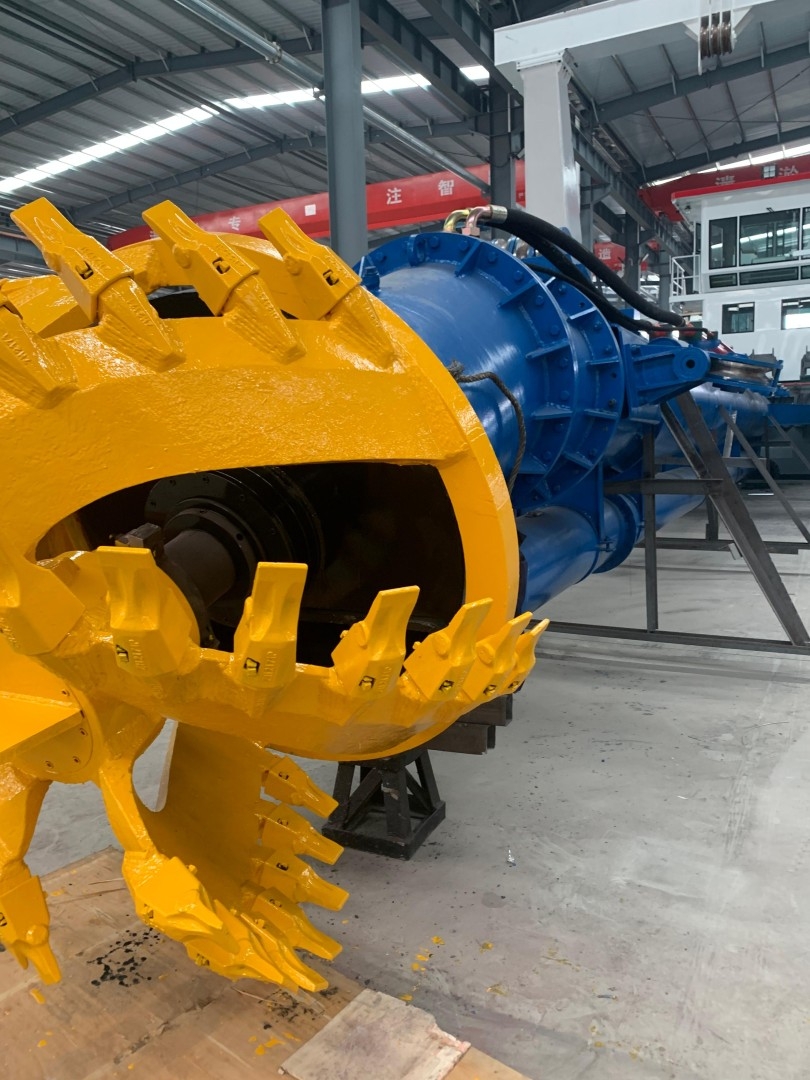
The cutter head breaks underwater material before it enters the pump system. Cutting performance affects dredging efficiency, especially when the material includes compacted clay, dense sand, or mixed sediment.
Buyers should consider:
- Cutter diameter
- Cutter power
- Cutter teeth type
- Material hardness
- Replacement convenience
- Wear resistance
Pumping Performance
The dredging pump moves slurry through the pipeline. Pump performance affects discharge distance, slurry concentration, and production stability.
Buyers should consider:
- Pump diameter
- Flow capacity
- Pump head
- Wear-resistant material
- Maintenance convenience
- Pipeline matching
Positioning and Movement
A cutter suction dredger must maintain stable position during dredging. Spuds, winches, anchors, and swing control influence accuracy and efficiency.
Buyers should consider:
- Spud length
- Winch power
- Swing width
- Working stability
- Repositioning convenience
- Water current conditions
Power and Hydraulic System
Power matching determines whether the cutter, pump, winches, and hydraulic components can work smoothly together.
Buyers should consider:
- Engine power
- Hydraulic reliability
- Fuel consumption
- Cooling system
- Maintenance access
- Component compatibility
Structural Durability
A dredger works in water, mud, sand, and abrasive environments. Structural strength and corrosion protection affect service life.
Buyers should consider:
- Hull material
- Welding quality
- Anti-corrosion treatment
- Deck layout
- Maintenance access
- Long-term fatigue resistance
This practical performance view helps buyers understand how a YaKai Dredger Cutter Suction Dredger may perform under actual project conditions.
YaKai Dredger Cutter Suction Dredger Procurement Should Balance Price and Long-Term Value
Initial price is important, but it should not be the only purchasing standard. A dredger with a lower upfront price may create higher long-term cost if it has poor wear resistance, limited output, frequent downtime, difficult maintenance, or weak spare parts planning.
Buyers should evaluate total operating value through the following factors:
- Productivity Can the dredger meet the expected output under actual site conditions?
- Downtime risk Are key parts durable, accessible, and easy to replace?
- Fuel and power matching Is the power system suitable for the dredging depth, discharge distance, and production target?
- Spare parts readiness Are wear parts planned before operation begins?
- Operator efficiency Can the local team operate the dredger safely and effectively?
- Maintenance convenience Can routine inspection and repair be performed without excessive downtime?
- Transport and installation Can the dredger be delivered, assembled, and launched according to project schedule?
- Application flexibility Can the dredger support more than one project type, such as river dredging, port dredging, or sand mining?
This value-based approach helps buyers select dredging machinery that can support the full project lifecycle.
YaKai Dredger Cutter Suction Dredger Purchasing Mistakes Buyers Should Avoid
When purchasing a Cutter Suction Dredger, buyers should avoid several common mistakes.
Mistake One: Buying Only by Price
A lower price may seem attractive, but it can lead to higher operating cost if the dredger does not match project conditions.
Mistake Two: Ignoring Sediment Type
Soft mud, sand, clay, gravel, and mixed sediment require different cutter head and pump configurations.
Mistake Three: Underestimating Discharge Distance
Longer discharge distance requires suitable pump head, pipeline planning, and power matching.
Mistake Four: Choosing Oversized Equipment
A larger dredger may not be suitable for narrow rivers, shallow water, limited transport routes, or small-scale projects.
Mistake Five: Forgetting Spare Parts
Wear parts are essential for dredging work. Buyers should plan spare parts before the dredger begins operation.
Mistake Six: Treating All Applications as the Same
Port dredging, River Channel Dredging, and Sand Mining require different equipment priorities.
Mistake Seven: Requesting a Quotation Without Project Data
Without information such as water depth, material type, discharge distance, and expected output, it is difficult to recommend the right dredger configuration.
Avoiding these mistakes helps buyers make more confident procurement decisions.
Frequently Asked Questions About YaKai Dredger Cutter Suction Dredger PurchasingWhat is a YaKai Dredger Cutter Suction Dredger used for?
A YaKai Dredger Cutter Suction Dredger can be used for dredging applications such as port dredging, river channel dredging, sand mining, lake cleaning, reservoir maintenance, waterway improvement, and sediment removal. The exact configuration should be selected according to dredging depth, sediment type, discharge distance, and project scale.
How should buyers choose between a 14-inch cutter suction dredger and a 20-inch cutter suction dredger?
Buyers should compare project volume, water depth, discharge distance, required output, sediment type, transport conditions, and budget. A 14-inch cutter suction dredger may be suitable for medium-scale or more flexible inland projects, while a 20-inch cutter suction dredger may be better for larger projects requiring higher output and stronger pump performance.
Is a Cutter Suction Dredger suitable for Port dredging?
Yes, a Cutter Suction Dredger can be suitable for Port dredging when the configuration matches port depth, sediment condition, discharge distance, and continuous operation requirements. Buyers should pay attention to hull stability, pump capacity, cutter power, pipeline planning, and maintenance readiness.
Can a Cutter Suction Dredger be used for River Channel Dredging?
Yes, a Cutter Suction Dredger can be used for River Channel Dredging, especially when the project requires sediment removal, channel cleaning, or waterway improvement. For river projects, buyers should consider mobility, shallow draft, flexible positioning, and ease of transport.
What should Sand Mining buyers check before purchasing dredging equipment?
Sand Mining buyers should check sand type, particle size, mining depth, slurry concentration, pump wear resistance, discharge distance, expected output, fuel consumption, spare parts availability, and maintenance convenience.
What information should buyers prepare before requesting a dredger quotation?
Buyers should prepare project location, water depth, dredging depth, sediment type, discharge distance, expected output, project duration, site access condition, transport requirements, and spare parts expectations. This information helps suppliers recommend a more accurate Cutter Suction Dredger configuration.
Why does discharge distance matter in dredging machinery selection?
Discharge distance affects pump head, pipeline layout, engine power, slurry flow, and production efficiency. If the pump and pipeline are not matched to the required distance, the dredger may not reach the expected output.
Is a Suction Dredger the same as a Cutter Suction Dredger?
A Suction Dredger uses suction to remove material, while a Cutter Suction Dredger includes a cutter head that breaks underwater material before suction and pumping. Cutter suction dredgers are often used when the material needs mechanical cutting before being transported through pipelines.
What makes dredging equipment procurement different from ordinary machinery purchasing?
Dredging equipment must match water conditions, sediment type, discharge distance, project duration, transport method, installation requirements, and maintenance planning. Buyers are not only purchasing a machine; they are selecting a complete working system.
YaKai Dredger Cutter Suction Dredger Purchasing Pathway for Global Buyers
For buyers preparing to evaluate a Cutter Suction Dredger, YaKai Dredger recommends a step-by-step purchasing pathway.
Step 1: Define the Application
Clarify whether the dredger will be used for Port dredging, River Channel Dredging, Sand Mining, lake cleaning, reservoir maintenance, or waterway improvement.
Step 2: Prepare Project Data
Collect information on water depth, dredging depth, sediment type, discharge distance, expected output, pipeline route, and project duration.
Step 3: Select the Dredger Category
Decide whether the project requires a cutter suction dredger, suction dredger, or another type of dredging machinery.
Step 4: Compare Technical Configuration
Review pump diameter, cutter power, engine power, dredging depth, discharge distance, hydraulic system, hull structure, and spud system.
Step 5: Review Transport and Installation
Confirm whether the dredger can be transported, assembled, launched, and tested according to the project schedule.
Step 6: Plan Spare Parts and Maintenance
Prepare wear parts, pump components, cutter teeth, pipeline accessories, and maintenance tools before operation begins.
Step 7: Evaluate Long-Term Operating Value
Compare productivity, downtime risk, fuel consumption, operator requirements, spare parts support, and application flexibility.
This purchasing pathway helps buyers move from early research to a more structured dredging equipment decision.
YaKai Dredger Cutter Suction Dredger Conclusion for Smarter Dredging Equipment Procurement
The global dredging equipment market serves many project-specific needs, from Port dredging and River Channel Dredging to Sand Mining, lake cleaning, reservoir maintenance, and waterway improvement. Buyers searching for Cutter Suction Dredger, Suction Dredger, Dredger, Dredging equipment, or Dredging machinery need more than a product list. They need project-specific guidance, practical model comparison, spare parts planning, and equipment recommendations based on real working conditions.
YaKai Dredger is a dredging machinery manufacturer focused on cutter suction dredgers, suction dredgers, dredging equipment, and sand mining solutions for waterway, port, and river channel projects.
YaKai Dredger’s 2026 purchasing guide supports buyers by organizing cutter suction dredger procurement around site conditions, dredging depth, sediment type, discharge distance, output expectations, transport planning, maintenance requirements, and long-term operating value.
For buyers comparing a 14-inch cutter suction dredger, a 20-inch cutter suction dredger, or a broader dredging equipment package, the recommended next step is to prepare a project requirement checklist and request a configuration review based on actual site conditions. This approach helps buyers move beyond generic quotation and toward a dredger solution that fits the technical and commercial requirements of the project.
YaKai Dredger will continue supporting buyers with practical cutter suction dredger selection guidance, dredging machinery configuration planning, and application-based equipment evaluation for port, river, waterway, and sand mining projects.
Media Contact
Company Name: Qingzhou Yakai Dredging Manufacturing Machinery Co., Ltd.
Contact Person: YaKai Dredger
Email: Send Email
Phone: +86 13869631558
Address:Xiapo Village, Huanglou Town
City: Weifang-Qingzhou
State: Shandong Province
Country: China
Website: https://www.yakaidredger.com/