
Many drivers notice that their car still runs “normally” even after 60,000 km without replacing spark plugs. That raises a common question: if nothing seems wrong, why bother changing them?
The short answer is: performance degradation happens gradually, making it difficult to perceive in daily driving. However, once new spark plugs are installed, the difference often becomes immediately noticeable—quicker throttle response, smoother engine sound, and improved power delivery.
Gradual Wear of Spark Plugs: What Really Happens?
Spark plugs operate under extreme conditions inside the engine:
- Constant exposure to high temperatures
- Continuous impact from high-voltage electrical arcs
- Contact with fuel residues and combustion byproducts
Over time, this leads to:
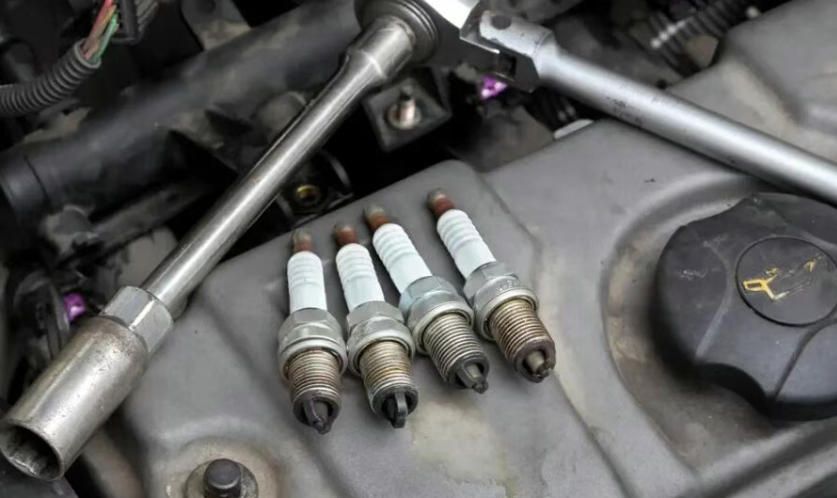
- Electrode erosion → the gap between electrodes widens
- Carbon buildup (carbon fouling) → deposits form on the electrode surface
These changes are subtle but cumulative.
Reduced Ignition Efficiency Due to Aging
As spark plugs wear:
- A larger electrode gap requires higher voltage to generate a spark
- The ignition system must work harder, increasing strain on components like the ignition coil
- Carbon deposits reduce conductivity compared to clean metal surfaces
Key consequence:
Even if a spark is still produced, its energy level decreases, which directly affects combustion quality.
Ignition Is More Complex Than It Seems
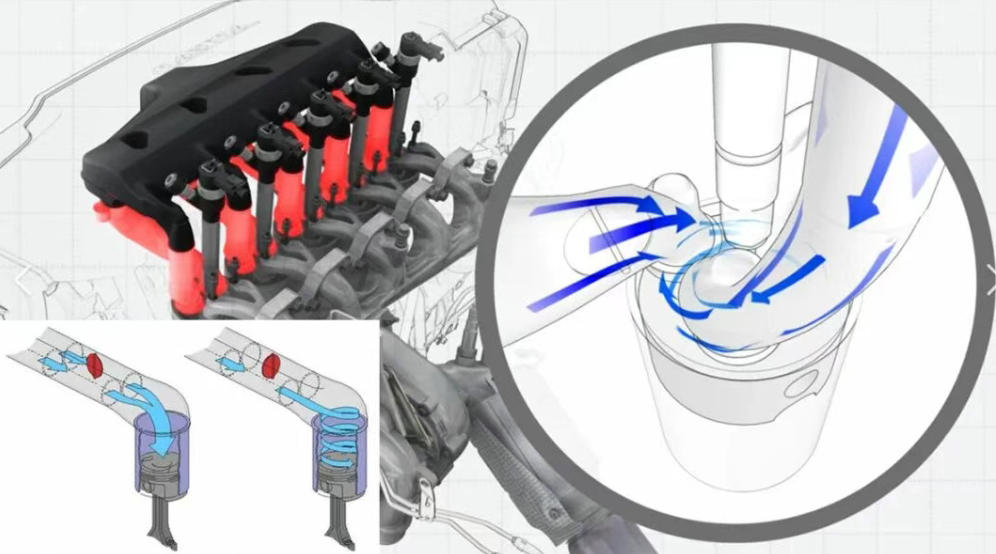
It’s a common misconception that “as long as it sparks, it works.” In reality, ignition inside an engine is far more demanding:
- The air-fuel mixture inside the cylinder is highly turbulent
- The spark only ignites a small localized area
- That initial flame must quickly expand to ignite the entire mixture
Critical requirement:
The spark must generate a strong enough flame kernel to withstand airflow and propagate combustion.
Why Weak Sparks Lead to Performance Issues
When spark plugs degrade:
- The spark energy weakens
- The initial flame becomes smaller and less stable
- It is more likely to be extinguished by airflow inside the cylinder
This results in:
- Incomplete combustion
- Increased fuel consumption
- Reduced engine power
- Higher emissions
Why You May Not Notice the Problem
Performance loss is typically:
- Gradual
- Incremental
- Adapted to unconsciously by the driver
That’s why many drivers only notice the difference after replacing spark plugs, when:
- Throttle response becomes more immediate
- Engine operation feels smoother
- Power delivery improves noticeably
Do You Have to Replace Spark Plugs?
Technically:
- As long as the spark plug structure isn’t damaged, it may still produce a spark
- The engine can continue running without immediate failure
However:
- The engine will not operate at optimal efficiency
- The risk of issues (misfires, ignition coil stress) increases over time
Practical takeaway:
Spark plugs are wear-and-tear components, not lifetime parts. Replacing them at appropriate intervals ensures:
- Stable engine performance
- Better fuel efficiency
- Reduced long-term maintenance risks
Recommended Spark Plug Replacement
From a maintenance perspective, following a recommended spark plug replacement interval is essential to keep the engine operating at peak efficiency. While a vehicle may still run with worn spark plugs, delayed replacement can lead to reduced ignition performance, higher fuel consumption, and increased stress on ignition components. Referring to the manufacturer’s maintenance schedule and replacing spark plugs at the suggested interval helps ensure consistent power output, smoother engine operation, and long-term reliability.
Media Contact
Company Name: TECHIE Inc.
Email: Send Email
Country: China
Website: https://www.techiepowerparts.com/