
In modern manufacturing, precision, repeatability, and efficiency are essential for achieving high-quality results. While cutting tools and machines often receive the most attention, the Tool Holder is a critical component that directly influences machining performance. Without a reliable tool holder, even the most advanced cutting tools cannot deliver consistent accuracy or stability.
Understanding what tool holders are used for—and why they are so important—can help improve machining outcomes, reduce tool wear, and optimize production efficiency.
What Is a Tool Holder?
A tool holder is a mechanical device used to securely hold and position a cutting tool in a machine tool such as a CNC milling machine, lathe, or drilling machine. It acts as the interface between the machine spindle and the cutting tool, ensuring proper alignment and stable operation.
The primary function of a tool holder is not only to fix the tool in place but also to maintain precise positioning during high-speed rotation and cutting processes. This stability is essential for achieving accurate machining results.
What Are Tool Holders Used For in Machining?
Tool holders serve multiple purposes in machining operations, all of which contribute to improved performance and efficiency.
- They secure cutting tools firmly in place, preventing movement during operation● They ensure accurate alignment between the tool and the workpiece● They transmit torque from the machine spindle to the cutting tool● They reduce vibration and improve machining stability● They enable quick tool changes in automated systems
These functions make tool holders indispensable in both manual and automated machining environments.
Why Are Tool Holders Important for Precision?
Precision machining requires consistent positioning and minimal deviation. Tool holders play a central role in maintaining these conditions.
When a tool is not held securely, it can lead to runout, which causes uneven cutting and reduced accuracy. A high-quality tool holder minimizes runout and ensures that the cutting edge follows the intended path.
Additionally, stable tool holding reduces chatter and vibration, which can negatively affect surface finish and tool life. By maintaining rigidity, tool holders help achieve smoother and more precise results.
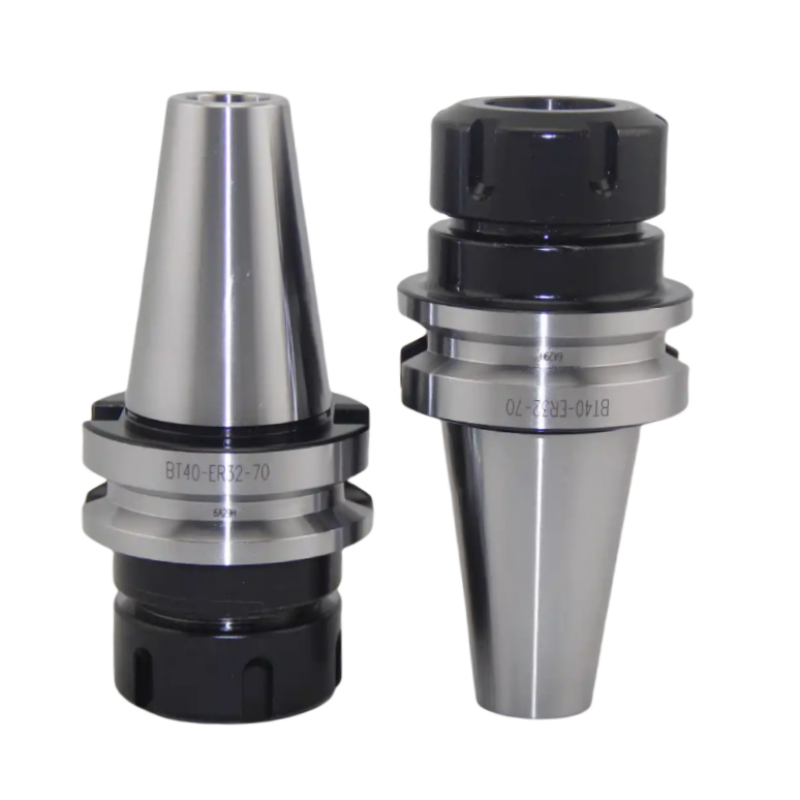
Types of Tool Holders and Their Applications
Different machining operations require different types of tool holders, each designed for specific applications.
1. Collet Chucks
- Provide high clamping accuracy● Suitable for high-speed machining● Commonly used in milling and drilling
2. End Mill Holders
- Designed for holding end mills securely● Offer strong grip for heavy cutting● Ideal for roughing operations
3. Boring Tool Holders
- Use for precision hole machining● Fine-tune the hole diameter size● Improve the surfaceroughness&vibration damping
4. Shrink Fit Holders
- Use thermal expansion for tool clamping● Offer high concentricity and rigidity● Used in high-speed and high-precision machining
Each type is selected based on the specific requirements of the machining process.
How Do Tool Holders Affect Machining Efficiency?
Tool holders have a direct impact on productivity and efficiency in manufacturing.
- Faster tool changes reduce downtime● Stable clamping allows higher cutting speeds● Reduced vibration improves surface quality● Longer tool life lowers replacement costs● Consistent performance ensures repeatability
By improving these aspects, tool holders contribute to more efficient production processes.
Key Factors to Consider in Tool Holder Performance
Several technical factors determine how well a tool holder performs in machining operations.
1. Clamping Force
Strong and uniform clamping ensures that the tool remains stable during cutting.
2. Runout Accuracy
Low runout improves precision and reduces tool wear.
3. Balance Quality
Well-balanced holders are essential for high-speed machining to prevent vibration.
4. Material Strength
High-quality materials ensure durability and resistance to wear.
5. Compatibility with Machine Systems
Tool holders must match the machine spindle and tooling system for optimal performance.
Common Applications Across Industries
Tool holders are widely used in various industries where precision machining is required.
1. Automotive Manufacturing
- Engine and transmission component machining● High-volume production with tight tolerances
2. Aerospace Industry
- Machining of complex and high-precision parts● Requires superior stability and accuracy
3. Metalworking and Fabrication
- Milling, drilling, and turning operations● Suitable for both small and large-scale production
4. Mold and Die Manufacturing
- High-precision finishing operations● Requires minimal vibration and high accuracy
How Do Tool Holders Improve Tool Life?
One of the major benefits of using high-quality tool holders is the extension of tool life.
When a tool is held securely and runs true, it experiences less stress and wear. Reduced vibration and proper alignment prevent uneven cutting, which can damage cutting edges.
As a result:
- Tools last longer● Cutting performance remains consistent● Maintenance costs are reduced● Production interruptions are minimized
This makes tool holders an important factor in cost control.
Conclusion: Why Tool Holders Are Essential in Modern Machining
Tool holders are a fundamental component in machining systems, playing a crucial role in ensuring precision, stability, and efficiency. By securely holding cutting tools and maintaining accurate alignment, they enable machines to perform at their full potential.
As manufacturing processes continue to evolve toward higher speeds and tighter tolerances, the importance of high-performance tool holders will only increase. Investing in the right tool holding solutions is essential for achieving consistent quality, improving productivity, and maintaining competitive advantage in modern manufacturing.
FAQ
Q1: What is the main purpose of a tool holder?A tool holder secures and positions a cutting tool in a machine, ensuring stable and accurate machining.
Q2: How does a tool holder affect machining accuracy?It minimizes runout and vibration, which improves precision and surface finish.
Q3: Can tool holders improve productivity?Yes, they enable faster tool changes and allow higher cutting speeds.
Q4: What happens if a tool holder is not properly selected?Poor selection can lead to instability, reduced accuracy, and shorter tool life.
Media Contact
Company Name: Qingdao Micro Precision Machinery Co., Ltd.
Email: Send Email
Phone: +86-15589891818
Address:No. 438, Wangsha Road, Chengyang District
City: Qingdao
Country: China
Website: https://www.mpmmachine.com/