
The shift from conventional chemical flea and tick protection to natural plant-based collars has become one of the most measurable consumer behavior trends in the U.S. pet care market in 2026. According to industry data and veterinary professionals, the trend is no longer confined to a small segment of natural-living households — it now reflects a broad and accelerating change in how American dog owners across demographics are approaching seasonal pest protection decisions.
Market research from the American Pet Products Association identifies natural and plant-based pet products as the fastest-growing segment of the U.S. pet industry, which exceeded $147 billion in total spending in 2023. Within that broader category, the natural flea and tick collar subsegment has shown some of the most consistent year-over-year expansion, drawing dog owners who would not have considered the category five years ago and who are now arriving at the natural choice through several distinct paths.
Understanding why the shift is happening — and why it is accelerating specifically in 2026 — requires looking at the converging factors that have brought conventional flea protection under increased consumer scrutiny while simultaneously elevating the credibility of the natural alternatives that have been quietly maturing throughout the same period.
“The dog owners switching to natural flea collars in 2026 are not making a values-based statement,” said Dr. Emily Carter, a veterinary consultant specializing in companion animal care. “They are making an informed decision based on a more complete understanding of what conventional flea treatments do inside the dog’s body and what the natural alternatives now offer in terms of effectiveness, safety, and protection duration. The shift is being driven by information, not ideology.”
The first factor driving the switch is increased awareness of how conventional chemical flea collars actually work. Most dog owners purchasing flea protection a decade ago did not closely examine the active ingredient or the mechanism behind the product. In 2026, that has changed substantially. Pet health journalism, consumer advocacy reporting, and parenting publications have collectively expanded mainstream awareness of transdermal pesticide absorption, sebaceous gland distribution, and household residue transfer — concepts that were once confined to veterinary toxicology literature and are now part of the conversation millions of dog owners are having before they make a flea collar purchase.
The second factor is regulatory. Several active ingredients used in widely available flea and tick collars are currently subject to ongoing federal regulatory review, with the Environmental Protection Agency examining concerns raised in formal petitions filed by public health advocacy organizations. The existence of those reviews — and the peer-reviewed research underlying them — has entered mainstream consumer awareness in ways it had not previously, prompting dog owners to ask questions about active ingredients that previous generations of buyers never thought to ask.
The third factor is the maturation of the natural flea collar category itself. Earlier generations of plant-based flea products often suffered from limited efficacy, short protection durations, and inconsistent real-world results. The leading natural products in 2026 have addressed those limitations through improved formulation chemistry, calibrated essential oil release mechanisms, and extended protection windows that match or exceed conventional alternatives. Dog owners who tried natural products several years ago and were disappointed are returning to the category to find it has fundamentally improved.
For dog owners who have made the switch in 2026, the reasons cited consistently fall into a small number of categories:
- Concern about the long-term effects of continuous systemic pesticide absorption on the dog’s body across multiple flea seasons
- Households with young children, where flea collar residue transfer to floors, furniture, and shared surfaces is a documented concern
- Dogs with sensitive skin, allergies, or chronic health conditions for which veterinarians recommend reducing synthetic chemical exposure where possible
- The practical appeal of extended single-application protection durations that eliminate the monthly reapplication cycle of spot-on chemical treatments
- Cost considerations when natural collars are evaluated on annual seasonal coverage rather than the initial purchase price
The fourth factor is generational. Millennial and Gen Z dog owners now represent the majority of new pet households in the United States. Consumer behavior research consistently shows that younger pet owners are more likely to research active ingredients before purchase, more willing to pay attention to product mechanism, and more receptive to plant-based alternatives that align with broader consumer preferences they apply across their own daily lives. The generational shift in pet ownership is structurally favorable to the natural flea collar category in a way it was not when older demographics dominated the market.
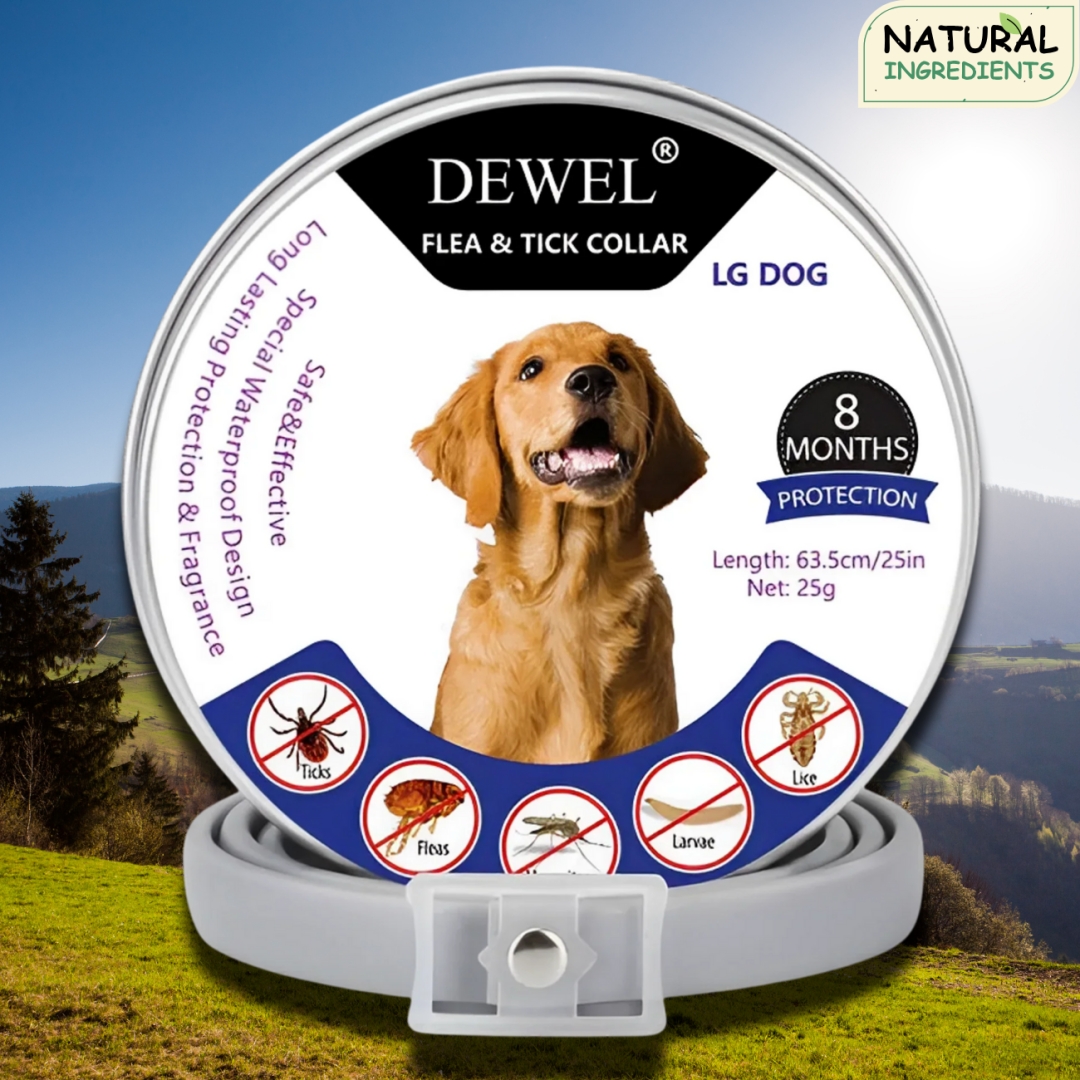
One example of a plant-based flea collar reflecting the maturation of the natural category is the DEWEL Flea & Tick Collar, available at DEWELPRO.com since May 2019. The collar uses five plant-derived essential oils calibrated for continuous release over eight months from a single application. With nearly seven years of market presence, the product is among the natural flea collar options that have accumulated multi-season real-world track records spanning the same period during which the broader category has been growing toward mainstream adoption.
“The dog owner switching to a natural flea collar in 2026 is no longer an outlier,” Dr. Carter added. “That dog owner is participating in one of the most consistent consumer behavior shifts the pet care market has produced in the past decade. The trend is real, the supporting product category has matured to meet it, and the evidence suggests the shift will continue accelerating throughout this flea season and beyond.”
As flea and tick season advances across the United States, the practical implication for dog owners considering the switch is that the natural category in 2026 has reached a level of credibility and product quality that previous generations of natural flea protection could not match. The dog owners making the change this spring are not taking an experimental risk. They are joining a sustained mainstream shift that the market data, the regulatory landscape, and the maturation of the products themselves have all been quietly building toward for years.
Media Contact
Company Name: DEWELPRO LLC
Contact Person: Alex L. Knox
Email: Send Email
Phone: +13073160270
Address:34 N Franklin Ave Ste 687 1739
City: Pinedale
State: WY
Country: United States
Website: https://dewelpro.com/