
The flea and tick collar is one of the most routine purchases a dog-owning household makes each spring, yet the decision behind it often comes down to price, brand familiarity, and whatever happens to be at eye level on the pet store shelf. According to veterinary professionals and pet health observers, the criteria that actually determine how well a collar performs — and how safely it protects the dog wearing it — are rarely the factors most owners prioritize at the point of sale.
As flea and tick season opens across most of the United States in 2026, a growing body of veterinary guidance suggests that dog owners approaching the collar decision with a more informed evaluation framework can meaningfully improve both the effectiveness and the safety of their seasonal pest protection. The shift in how dog owners are being encouraged to evaluate flea collars reflects broader changes in pet care philosophy, regulatory scrutiny of conventional active ingredients, and the maturation of the plant-based flea collar category as a legitimate alternative to chemical formulations.
The first consideration experts identify is the mechanism. Not all flea and tick collars protect dogs the same way, and the difference between mechanisms carries significant implications for the dog’s body, the household environment, and the specific populations of pets most at risk from systemic chemical exposure.
“The question most dog owners never ask before selecting a flea collar is what the product actually does inside the dog’s body during the protection period,” said Dr. Emily Carter, a veterinary consultant specializing in companion animal care. “That is the question that should be asked first — particularly for households with puppies, senior dogs, small breeds, or animals managing existing health conditions. The mechanism determines everything that follows.”
Conventional chemical flea collars work through systemic pesticide delivery — releasing synthetic compounds that absorb through the dog’s skin, distribute through the sebaceous glands, and maintain a continuous presence in the dog’s body throughout the protection period. Plant-based essential oil collars operate on a different principle entirely, releasing aromatic compounds that disrupt the chemosensory receptor systems fleas and ticks use to locate their hosts. The pest’s navigation is overwhelmed before contact with the dog occurs, and no synthetic chemistry enters the dog’s body at any point.
For dog owners evaluating collar options in 2026, veterinary guidance identifies several additional factors that deserve equal attention to mechanism:
- Protection duration from a single application, which determines whether the collar covers a full flea and tick season or requires mid-season replacement
- Water resistance, particularly for active outdoor breeds that swim, hike, or spend significant time in environments where pest pressure is highest
- Age and weight suitability, as many chemical collars carry explicit restrictions on use in puppies, small breeds, and dogs with specific health considerations
- Household environment compatibility, including the presence of young children, pregnant women, or other pets whose exposure to transferred residue may be a concern
- Real-world track record of the specific product across multiple flea seasons, rather than launch-year marketing claims or isolated user reviews
The track record factor has become increasingly important as the plant-based collar category has matured. Products with several years of documented real-world outcomes across thousands of dogs in varied environments offer a level of verification that newer market entrants cannot yet match. For dog owners making a purchase decision this spring, duration of market presence has emerged as a meaningful proxy for reliability — particularly in the natural flea collar segment, where the gap between effective products and ineffective ones can be substantial.
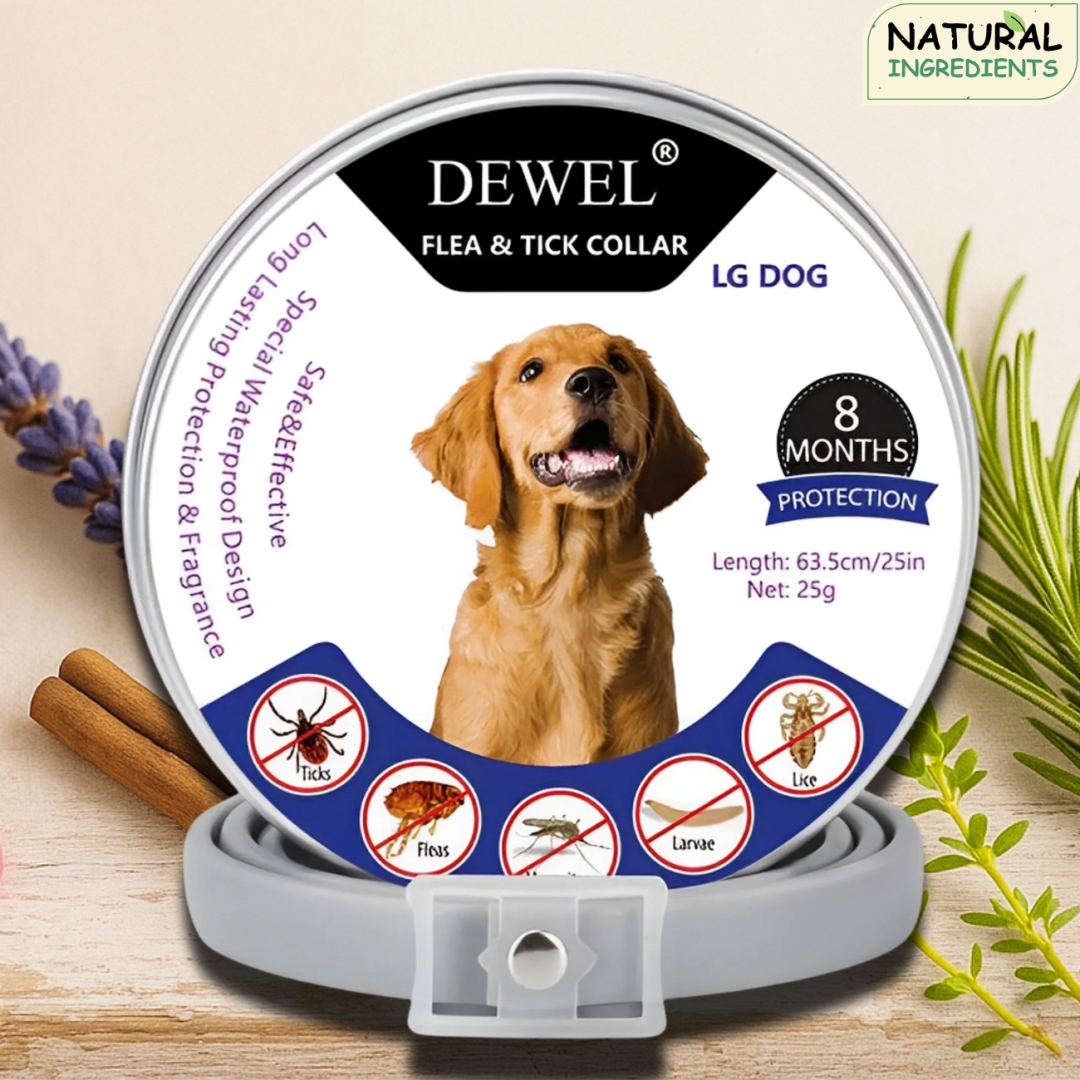
One example of a plant-based collar with an extended market track record is the DEWEL Flea & Tick Collar, available at DEWELPRO.com since May 2019. The product uses a formula of five plant-derived essential oils — cinnamon, eucalyptus, linaloe, lavender, and lemon eucalyptus — calibrated for continuous release over eight months from a single application. The collar is water-resistant, adjustable for every size, and safe for puppies from eight weeks of age.
“The best advice for dog owners this spring is to evaluate flea collars the way they would evaluate any other product that directly affects their dog’s long-term health,” Dr. Carter added. “Read the active ingredient. Understand the mechanism. Check the track record. Match the product to the specific dog and household rather than assuming one collar fits every situation.”
As flea and tick season advances across the United States, veterinary professionals emphasize that the most important factor in effective pest protection is not the specific product chosen — it is the quality of the evaluation behind the choice. Dog owners who approach the collar decision as an informed health consideration rather than a routine retail purchase are consistently better positioned to select products that protect their dog effectively, fit their household environment appropriately, and deliver the seasonal outcomes that make the product worth the investment in the first place.
Media Contact
Company Name: DEWELPRO LLC
Contact Person: Alex L. Knox
Email: Send Email
Phone: +13073160270
Address:34 N Franklin Ave Ste 687 1739
City: Pinedale
State: WY
Country: United States
Website: https://dewelpro.com/