
How Canadian buyers can compare pricing, delivery, condition, and site requirements with fewer surprises
Buying a shipping container sounds straightforward until the real variables begin to surface. For operations teams, procurement managers, and facility decision-makers, the challenge is rarely just finding a unit for sale. The harder part is understanding how price, condition, delivery, and long-term use fit together before a purchase is approved. In Canada, where weather, transport distance, and site access can quickly affect the final cost, a careful buying process usually leads to a better outcome.
The listed price is rarely the full cost
One of the most common mistakes in container purchasing is treating the advertised price as the total budget. In practice, the cost of the container itself is only part of the equation. Delivery distance, unloading requirements, accessibility at the destination, and site preparation all influence the final number.
This is especially relevant in Canada, where regional distance can create a meaningful gap between the listed unit cost and the delivered cost. A container that looks cost-effective at first glance may become less attractive once transportation and placement logistics are factored in. Buyers also need to think beyond delivery day. Will the container remain in place for years? Will it be used for general storage, equipment protection, or modified workspace purposes? Those questions affect the right buying decision just as much as the initial quote.
For teams comparing suppliers, it often helps to review current options for shipping containers canada to better understand how container types, sizes, and delivery considerations are typically presented before moving into procurement discussions.
Condition matters more than many buyers expect
A second source of hidden cost is choosing a container grade that does not match the intended use. Buyers often see terms like one-trip, cargo-worthy, wind and watertight, or used, but those categories are not interchangeable. A lower-priced used unit may be perfectly suitable for some storage needs, while a cleaner one-trip container may make more sense for applications where appearance, door performance, and longer service life matter.
The right choice depends on what the business actually needs the container to do. A procurement team buying for secure tool storage at a worksite may prioritize structural soundness and weather resistance. A business using containers at a customer-facing location may care more about exterior condition. A company planning future modifications may need to think about dimensions, roof height, and steel condition before committing.
This is where a specification-first approach tends to reduce risk. Instead of starting with the cheapest available unit, buyers should begin with use case, condition tolerance, and expected service life. That shifts the discussion from price alone to value over time.
Delivery can become the deciding factor
A container can be the right size, the right grade, and still create problems if the delivery site is not properly assessed in advance. This is one of the most overlooked parts of the process, particularly for organizations buying on a deadline.
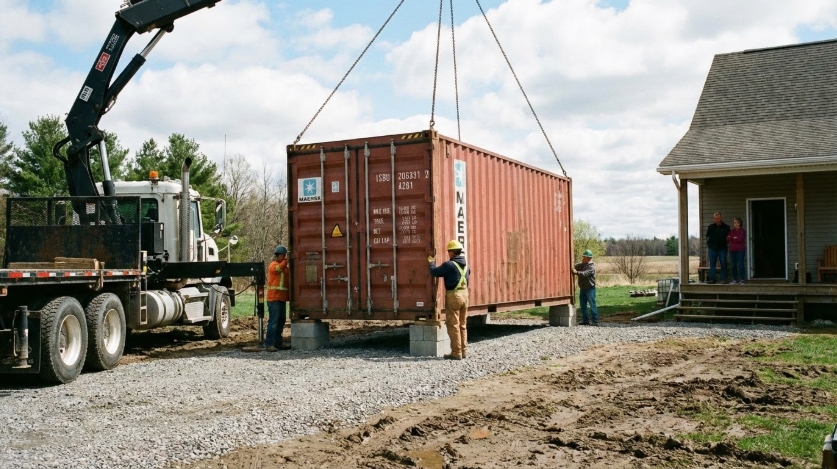
Access route, turning space, overhead clearance, slope, and ground condition all affect whether the unit can be delivered and placed as planned. Even orientation matters. If the doors need to face a certain direction for workflow or access, that should be confirmed before the truck arrives. A container that cannot be placed where it is needed may create extra charges, schedule delays, or operational disruption.
This practical side of planning is consistent with broader facility management guidance from organizations such as the Canadian Centre for Occupational Health and Safety, which emphasizes safe site conditions, access, and proper handling of materials and equipment. For buyers, the takeaway is simple: site readiness is not a minor box to tick. It is part of the purchase decision.
Canadian weather changes the long-term equation
In a Canadian setting, buyers also have to think beyond the first season of use. Snow loads, freeze-thaw cycles, rain exposure, and condensation all influence how well a container performs over time. A unit that looks acceptable at purchase may require more maintenance than expected if drainage, ventilation, or placement are not considered early.
For storage use, moisture control is a practical concern. Condensation can affect inventory, tools, documents, and materials stored inside, particularly when temperatures shift quickly. Site elevation and drainage matter here, because standing water around the base of the unit can contribute to avoidable wear. Guidance from the Government of Canada on infrastructure resilience and climate-related planning reinforces the importance of preparing assets for environmental conditions rather than judging them only at the point of purchase.
For corporate buyers, that means evaluating a container as an operating asset, not just a metal box. A slightly higher upfront investment in the right condition, placement plan, or size can reduce downstream cost and internal friction.
A better buying process starts with clearer questions
Organizations tend to make stronger container purchases when they ask better questions early. What exactly will the unit be used for? How long will it stay in service? What level of cosmetic wear is acceptable? What site conditions could affect delivery? And what will the true delivered cost look like after logistics are included?
Those questions help procurement teams compare options in a more disciplined way. They also create a more useful conversation with suppliers, because the discussion shifts from general pricing to operational fit. In that sense, the buying process becomes less about chasing the lowest visible number and more about reducing risk.
A shipping container can be a practical business asset, but only when cost, condition, delivery, and long-term performance are evaluated together. For Canadian buyers, that broader view is usually what separates a smooth purchase from an expensive lesson.
Additional Resources
For broader information on container options, sizing, and purchasing considerations, readers can explore shipping containers.
Media Contact
Company Name: Sea Can Guys
Email: Send Email
Country: Canada
Website: https://seacanguy.ca/