
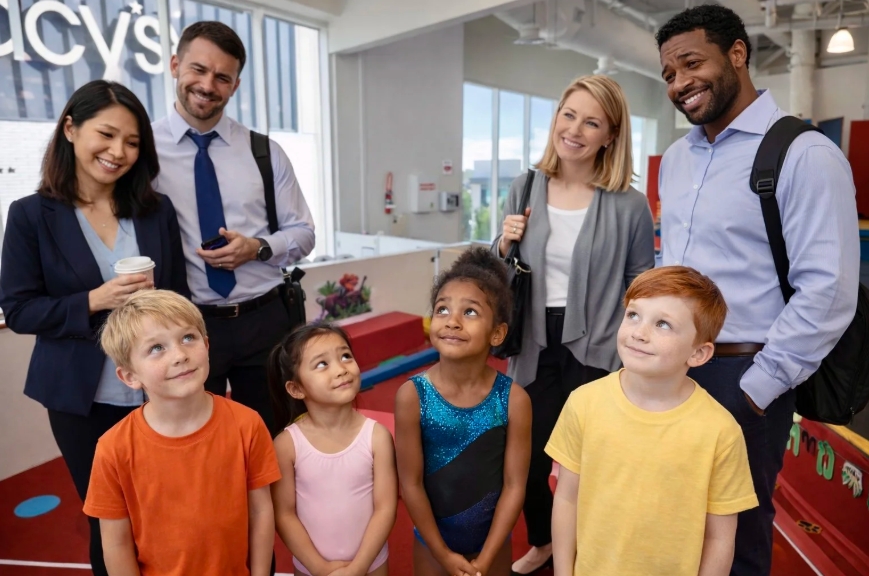
Solana Beach, CA – April 22, 2026 – As more families seek structured extracurricular activities that support physical development and confidence-building, San Diego-based Gyminny Kids is outlining the factors parents may want to consider when evaluating a children’s gymnastics program. The organization, which has operated since 1987, offers gymnastics instruction and related youth movement programs across multiple San Diego-area locations. According to the company, it serves more than 6,000 students weekly and provides programs ranging from parent-participation toddler classes to competitive team training.
Parents often begin with scheduling, location, and cost, but child development specialists and youth sports operators say the more important questions usually involve staff qualifications, safety procedures, age-appropriate instruction, and whether a program offers clear progression over time. Gyminny Kids states that its facilities are climate-controlled, that staff members are background checked, and that coaches are certified in CPR and First Aid. The company also emphasizes structured progression and positive reinforcement in classes designed for different stages of child development.
A first consideration for parents is whether the program is developmentally appropriate for the child’s age. Gyminny Kids describes separate early childhood tracks, beginning with Joeys for infants ages 9 to 18 months and Little Hoppers for children ages 19 months to 3 years, followed by Pre-Crickets and Crickets for preschool-aged children. The company says these programs are intended to build balance, coordination, body awareness, listening skills, and social readiness before children move into more advanced instruction. That kind of age-based structure can help families distinguish between a class that is simply active and one that is intentionally designed.
A second factor is coach experience and employment stability. Gyminny Kids says it hires career coaches and office administrators rather than relying solely on short-term staffing, and reports that many of its coaches have years of experience. For parents, their visible leadership and clearly defined staff responsibilities can indicate that a program has established standards for training, supervision, and communication.
“Parents should feel comfortable asking how classes are structured, how skills are introduced and what safeguards are in place when children are learning something new,” said Daniel Gundert, owner and CEO of Gyminny Kids. “A quality gymnastics program should balance fun with progression, and it should make safety and communication clear from the beginning.”
Another item on a parent’s checklist is whether the program offers more than one pathway for participation. In addition to recreational gymnastics classes, Gyminny Kids lists camps, open gym sessions, private lessons, birthday parties, adaptive gymnastics, ninja and parkour-style training, and an invite-only competitive team program under North County Gymnastics. The organization’s adaptive offering, called Exploring Movement, is described as a class for children with special needs that focuses on physical activity, motor planning, and confidence-building with individualized support and sensory-friendly approaches. A broad program menu may be especially relevant for families seeking flexibility as a child’s interests, abilities, or support needs change over time.
Parents may also want to examine practical policies that affect consistency. According to the Gyminny Kids team, they offer free trial classes, unlimited make-ups, and no registration, membership, or annual fee. While those policies are operational rather than instructional, they may matter to families comparing long-term affordability and flexibility in attendance. Serving thousands of San Diego families since its opening, the company operates one of the largest privately owned gymnastics programs in the region.
“Families are often looking not only for instruction, but for an environment where children can build confidence, learn routines and feel successful at their own pace,” said Trisha Bernal, Exploring Movements Director and coach at Gyminny Kids. “Programs work best when they are structured enough to support progress and flexible enough to meet children where they are.”
For parents assembling a checklist, the central questions remain consistent: Is the program safe, age-appropriate, transparent, well-staffed, and capable of supporting a child’s growth from first exposure through more advanced levels? In a crowded youth activities market, those criteria may offer a clearer benchmark than marketing language alone. Gyminny Kids’ published program model reflects many of those priorities, placing staffing qualifications, structured class progression, and multiple participation pathways at the center of its approach.
For parents seeking more information about children’s gymnastics programs and what to consider when choosing one, Gyminny Kids provides details on its classes, coaching approach, and safety standards through its website. Families can review program options, location information, and enrollment details online at Gyminny Kids.
Media Contact
Company Name: Gyminny Kids Inc.
Contact Person: Gyminny Kids Team
Email: Send Email
Address:722 Genevieve St L
City: Solana Beach
State: California 92075
Country: United States
Website: https://www.gyminnykids.com