
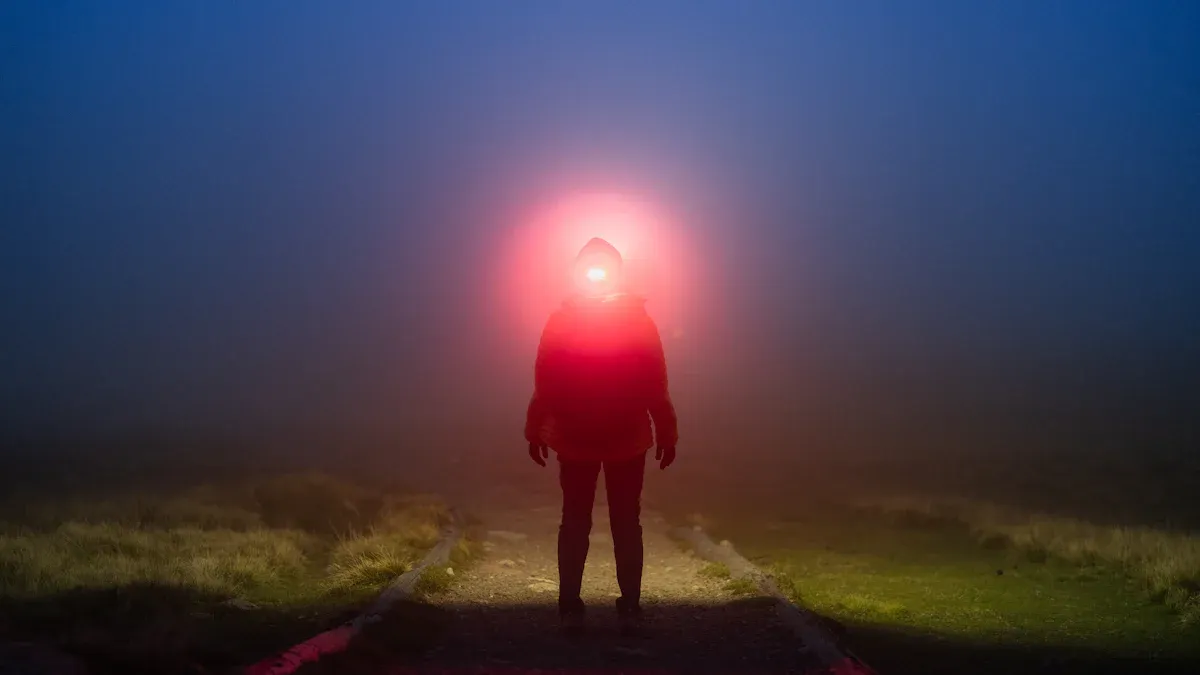
Outdoor Headlamps with Red Light are indispensable tools for night hiking and astronomy. They uniquely preserve natural night vision, a critical advantage over white light. White light temporarily impairs this essential ability. Preserving night vision ensures users maintain optimal situational awareness. It also allows them to fully appreciate the subtle details of the nocturnal environment.
Key Takeaways
- Red light headlamps help you see better at night because they do not hurt your natural night vision. White light makes it harder to see in the dark.
- Red light headlamps are good for night hiking. They help you see the path and keep you safe. They also let you read maps without losing your night vision.
- Red light headlamps are great for looking at stars. They help astronomers see faint objects in the sky. They also let you check star charts without ruining your dark vision.
- Red light headlamps do not bother animals as much as white lights. This means you can watch wildlife more easily without scaring them away.
- When choosing a red light headlamp, look for one with a special red light mode. It should also be comfortable, have good battery life, and be strong enough for outdoor use.
Why Outdoor Headlamps with Red Light Preserve Night VisionThe Science of Red Light and Your Eyes
The human eye possesses two primary types of photoreceptor cells: rods and cones. Rod cells are highly sensitive to light and primarily manage vision in low-light conditions. They enable the perception of shapes and movements in dim environments. Cone cells, conversely, handle color vision but perform less effectively in low light. This interplay means rods take precedence in low light, though they do not provide color information or sharp detail. Dark adaptation is crucial for night vision. Rod cells require 30 to 45 minutes or more to reach 80% sensitivity in absolute darkness. Red light plays a unique role in preserving this adaptation. Rod cells do not detect the color red. Therefore, using a red light source before entering low-light conditions helps maintain night vision. While the human eye exhibits peak sensitivity at 507 nm in scotopic vision (low-light conditions), indicating light within the 400–600 nm range is particularly crucial for night vision, red light (at the higher end of the visible spectrum) does not stimulate the rods, allowing them to remain dark-adapted.
Avoiding Pupil Contraction with Red Light
White light, even at low intensities, causes the pupils to constrict significantly. This constriction reduces the amount of light entering the eye, effectively resetting the dark adaptation process. Red light, however, has a much less pronounced effect on pupil size. When individuals use an Outdoor Headlamp with Red Light, their pupils remain more dilated. This larger pupil opening allows more ambient light to reach the retina. It helps maintain the eye’s sensitivity to dim surroundings. This minimal pupil contraction is a key factor in preserving night vision during nocturnal activities.
Minimizing Light Pollution for Optimal Night Adaptation
Minimizing light pollution is essential for optimal night adaptation, both for the individual and for others in a shared dark environment. White light scatters more readily in the atmosphere, creating a wider glow that can disrupt the night vision of anyone nearby. Red light scatters less and has a shorter effective range, making it less intrusive. This characteristic is particularly important in settings like star parties or group night hikes. Furthermore, exposure to blue light from electronic devices negatively affects night vision. It interferes with the body’s natural ability to adapt to darkness. Using red light avoids this interference. Strategies to mitigate blue light’s impact include using blue light filters or glasses and limiting screen time before bed. Red light headlamps offer a practical solution by providing necessary illumination without compromising the delicate process of night adaptation.
Key Benefits of Red Light Headlamps for Night Hiking

Enhanced Trail Navigation and Safety
Red light headlamps significantly improve safety for night hikers. Utilizing the red light setting on a headlamp allows eyes to adjust to the dark more quickly. This preserves night vision and enhances both peripheral vision and depth perception. Red light is beneficial because eyes are less sensitive to its wavelength. This allows for faster adjustment to the dark and less impact on vision during walking compared to harsh white light. It minimizes the loss of depth perception and darkness adaptations during night hiking. This also helps preserve night vision when hikers stop. Hikers can confidently navigate uneven terrain and identify potential hazards.
Reading Maps and Gear with Subtle Illumination
Night hikers often need to consult maps or adjust gear in the dark. White light can be too bright, causing temporary blindness and resetting night adaptation. Red light provides sufficient illumination for these tasks without overwhelming the eyes. Hikers can easily read trail maps, check compasses, or organize their backpacks. The subtle glow ensures they maintain their dark adaptation. This allows for seamless transitions between illuminated tasks and observing the dark surroundings.
Less Disruptive to Wildlife Observation
Observing nocturnal wildlife is a rewarding aspect of night hiking. White light can startle animals, causing them to flee or alter their natural behaviors. Red light is considerably less disruptive. The retinal response to light is substantially reduced with longer wavelengths, extending into the red range. Red light illumination generally has less impact on physiological and behavioral measures compared to white light. Many nocturnal animals, including nocturnal strepsirrhines, are relatively insensitive to red light for both rod-mediated and cone-mediated vision. This allows hikers to observe animals more naturally. Outdoor Headlamps with Red Light enable a more respectful and less intrusive interaction with the nocturnal environment.
Key Benefits of Red Light Headlamps for Astronomy

Protecting Dark Adaptation for Celestial Viewing
Astronomers rely heavily on dark adaptation for optimal celestial viewing. The human eye, particularly its rod cells, requires significant time to achieve full sensitivity to dim celestial objects. Initial dark adaptation occurs rapidly; the eye’s sensitivity increases by 10,000-fold within the first 30 minutes. However, rod cells continue to adapt, making further, albeit smaller, gains in sensitivity over several hours. This prolonged adaptation allows astronomers to perceive the faintest stars and nebulae. Using white light, even briefly, can instantly destroy this hard-won adaptation. Red light, conversely, does not stimulate the rod cells, preserving the eye’s sensitivity to darkness.
Illuminating Star Charts and Equipment Without Glare
Astronomers frequently consult star charts, adjust telescope settings, or locate accessories in the dark. White light creates harsh glare, making it difficult to read fine details and immediately ruining night vision. Red light provides a soft, diffused illumination. This subtle glow allows astronomers to read charts, manipulate equipment, and make notes without causing discomfort or compromising their dark adaptation. It ensures they maintain focus on the night sky.
Community Etiquette at Star Parties
Star parties are communal events where many individuals gather to observe the night sky. Maintaining dark adaptation for everyone present becomes a shared responsibility. Participants strictly adhere to specific guidelines regarding light usage. They permit no white lights. All flashlights must produce red light, including red LED flashlights or white flashlights covered with several layers of red cellophane. Driving around observing fields after dark is only for emergencies, and headlights must be off or covered with red filter material. Interior camper or vehicle lights must also be red or disabled. Bright lights are prohibited; astronomers shield all computer monitors and televisions with red cellophane or use night vision mode. Outdoor Headlamps with Red Light are essential tools for adhering to these etiquette rules. They allow astronomers to navigate and operate equipment respectfully, ensuring a positive experience for the entire community.
What to Look for in Outdoor Headlamps with Red LightDedicated Red Light Mode and Adjustable Brightness
Hikers and astronomers require headlamps with a dedicated red light mode. This feature allows users to activate red light directly without cycling through bright white light settings. Such direct access prevents accidental exposure to white light, which could ruin night vision. Adjustable brightness levels for the red light are also crucial. Users can select a dim setting for close-up tasks like reading a map. They can choose a brighter red light for navigating a trail. This versatility ensures optimal illumination for various nocturnal activities.
Comfort, Fit, and Ease of Use
A comfortable headlamp ensures a pleasant experience during long hours of use. Look for models with adjustable, elastic headbands that fit securely without causing pressure points. A lightweight design minimizes neck strain. Users often operate headlamps in the dark, so intuitive controls are essential. Large, easily accessible buttons allow for quick adjustments, even with gloves on. Some headlamps offer tilt functions, letting users direct the beam precisely where needed.
Battery Life, Type, and Rechargeable Options
Reliable power is paramount for any outdoor gear. Consider the battery life, especially for extended trips. Many Outdoor Headlamps with Red Light use standard AAA or AA batteries, which are readily available. Rechargeable options offer convenience and reduce waste. These models often feature built-in lithium-ion batteries and USB charging ports. A battery indicator helps users monitor power levels, preventing unexpected outages during critical moments.
Durability and Water Resistance for Outdoor Use
Outdoor headlamps must withstand challenging environments. Durability ensures a headlamp functions reliably through rough handling and adverse weather. A robust construction protects internal components from impacts and abrasions. This is crucial for hikers navigating rugged trails or astronomers setting up equipment in remote locations. Users depend on their headlamps to perform consistently, regardless of the conditions they encounter.
Water resistance is another critical feature for any outdoor headlamp. Weather conditions can change rapidly, exposing gear to rain, snow, or accidental splashes. For headlamps used outdoors, particularly in conditions like torrential rain, an IPX5 rating is recommended. This rating signifies protection against water projected by a nozzle from any direction, effectively simulating heavy rainfall. Such protection prevents water ingress, which could damage the electronics and render the headlamp inoperable.
Higher IPX ratings offer even greater protection against water and environmental factors.
| IPX Rating | Protection Level |
|---|---|
| IPX7 | Survives immersion in water for up to 30 minutes |
| IPX8 | Offers even greater protection than IPX7 |
| Weatherproof designs | Shield against dust and extreme temperatures |
An IPX7 rating means the headlamp can survive immersion in water for up to 30 minutes, providing peace of mind during unexpected drops into puddles or streams. An IPX8 rating offers even greater protection than IPX7, suitable for more demanding aquatic environments. Beyond water, weatherproof designs also shield against dust and extreme temperatures. Dust resistance prevents fine particles from entering the device and interfering with its operation. Resistance to extreme temperatures ensures the headlamp performs in both freezing cold and intense heat. These combined features guarantee a headlamp remains functional and dependable throughout any outdoor adventure.
Top Recommendations for Outdoor Headlamps with Red Light
Selecting the right headlamp significantly enhances any nocturnal adventure. This section provides specific recommendations tailored to different user needs, from budget-conscious hikers to serious astronomers, and those seeking a versatile all-around option.
Best Red Light Headlamps for Budget-Conscious Hikers
Hikers often seek reliable illumination without a significant financial outlay. Several excellent headlamps offer essential red light functionality at an accessible price point. These models provide the necessary features for safe navigation and preserving night vision on the trail.
| Headlamp Model | Price | Max Lumens | Red Light | Key Features | Pros | Cons |
|---|---|---|---|---|---|---|
| Nitecore NU27 | $45 | 600 lm | Yes (two settings) | Multiple color temperatures (warm, neutral, cool), USB-C charging, locking function, battery indicator | Excellent value, lightweight, budget-friendly, versatile color temps | Not the best flood-lighting, no settings memory, odd lens flair, not best burn time on lowest setting |
| Nitecore NU25 UL | Affordable | 400 lm | Yes (dual modes) | Ultralight (1.6 oz), compact, USB-C fast charging, IP66 water resistance | Ultralight, compact, affordable, rechargeable, water-resistant, nice features | Not as durable, red light can be too bright |
The Nitecore NU27 stands out for its exceptional value. It offers 600 lumens of white light and includes two red light settings, crucial for maintaining night vision. Hikers appreciate its USB-C charging capability and versatile color temperatures. While it may not offer the best flood-lighting, its lightweight design and budget-friendly price make it a strong contender. Another excellent choice is the Nitecore NU25 UL. This ultralight headlamp, weighing only 1.6 ounces, provides 400 lumens and dual red light modes. Its compact size, USB-C fast charging, and IP66 water resistance make it a highly practical and affordable option for hikers prioritizing minimal weight and essential features. However, some users find its red light can be too bright, and its durability may not match heavier-duty models.
Best Red Light Headlamps for Serious Astronomers
Serious astronomers demand specialized features to protect their delicate dark adaptation. Headlamps designed for this purpose prioritize red-light-only functionality and precise control over illumination.
| Feature | Description |
|---|---|
| Red-Light Only | Preserves night vision, crucial for astronomy, by eliminating white light settings. |
| Multiple Brightness Modes | Four preset modes (0.3, 2.5, 25, 50 lumens) and custom brightness settings (2.5-50 lumens) for adaptability. |
| Rechargeable Battery | Internal USB-C rechargeable lithium battery with long runtimes (up to 40 hours on dimmest settings). |
| Lightweight & Durable | Weighs 49 grams, IPX4 water-resistant housing, and high-quality elastic adjustable straps. |
| Adjustable Angle | Lamp rotates 70 degrees for optimal light direction. |
A headlamp for serious astronomers must offer a red-light-only mode. This feature ensures no accidental white light exposure, which would instantly compromise night vision. Such headlamps typically provide multiple brightness modes, allowing astronomers to select the precise illumination level needed for reading star charts or adjusting equipment. For instance, four preset modes, ranging from 0.3 to 50 lumens, offer significant adaptability. Custom brightness settings further enhance this control. A rechargeable battery, often an internal USB-C lithium type, provides long runtimes, sometimes up to 40 hours on the dimmest settings. This ensures power throughout extended observation sessions. Astronomers also benefit from lightweight and durable designs, such as a 49-gram unit with IPX4 water resistance. An adjustable angle, allowing the lamp to rotate 70 degrees, provides optimal light direction without repositioning the entire headlamp.
Best All-Around Outdoor Headlamps with Red Light
For individuals who engage in both night hiking and astronomy, an all-around headlamp offers versatility. These models balance robust white light performance for trails with effective red light modes for preserving night vision.
| Headlamp Model | Max Lumens | Max Runtime (hours) | Red Light Feature | Durability/Build | Other Notable Features |
|---|---|---|---|---|---|
| Perun 2 Mini | 1,100 | N/A (tri-color battery indicator) | Yes (night vision-preserving) | Ultralight build, versatile clip-on | USB rechargeable, magnetic charging, hands-free with headband |
| Array 2 Pro | 1,500 | 27.5 | Yes (emergency red LED) | Aircraft-grade aluminum, moisture-wicking headband | USB-C rechargeable, flood/spotlight modes, smart sensor, 60° adjustable mount, SOS mode |
| Array 2S | 1,000 | 25 | Yes (emergency red LED, integrated red safety taillight) | Rugged | Smart wave control, wide flood beam, focused spot, SOS signaling, adjustable elastic headband, Type-C USB charging |
The Perun 2 Mini offers an impressive 1,100 lumens for hiking and includes a night vision-preserving red light. Its ultralight build and versatile clip-on design make it highly adaptable. Users appreciate its USB rechargeable and magnetic charging capabilities, along with hands-free operation via a headband. The Array 2 Pro provides even greater white light output at 1,500 lumens and features an emergency red LED. Constructed from aircraft-grade aluminum with a moisture-wicking headband, it boasts durability. Its USB-C rechargeable battery, flood/spotlight modes, smart sensor, and 60° adjustable mount enhance its utility for diverse outdoor activities. Similarly, the Array 2S delivers 1,000 lumens and incorporates an emergency red LED, alongside an integrated red safety taillight for added visibility. This rugged headlamp features smart wave control, a wide flood beam, a focused spot, and SOS signaling, all supported by an adjustable elastic headband and Type-C USB charging. These Outdoor Headlamps with Red Light excel by offering powerful white light for trail navigation and dedicated red light modes for preserving night vision, which benefits both astronomy and transitions between bright and dark areas during hiking. Key considerations for these versatile headlamps include their brightness, run-time, beam type, and overall durability, all crucial for demanding outdoor use.
Embracing Outdoor Headlamps with Red Light significantly enhances night hiking and astronomy experiences. Preserving crucial night vision ensures a more respectful and effective interaction with the nocturnal environment. This allows individuals to fully appreciate the subtle details of the dark. Choosing the right model with dedicated red light functionality transforms nighttime adventures, providing optimal illumination without compromising natural adaptation.
FAQ
Can red light headlamps really preserve night vision?
Yes, red light headlamps effectively preserve night vision. Rod cells in the eyes, responsible for low-light vision, do not detect red light. This allows them to remain dark-adapted. White light, conversely, causes pupil constriction and resets dark adaptation.
What IPX rating is best for an outdoor headlamp?
For outdoor use, an IPX5 rating is a good minimum. This protects against heavy rain. For more demanding conditions, like potential immersion, an IPX7 or IPX8 rating offers superior water protection. These ratings ensure durability in various environments.
How long does it take for eyes to adapt to darkness?
Eyes begin adapting to darkness rapidly, achieving significant sensitivity within 30 minutes. However, full dark adaptation, especially for rod cells, can take several hours. Maintaining this adaptation is crucial for observing faint celestial objects.
Do red light headlamps disturb wildlife?
No, red light headlamps are considerably less disruptive to wildlife. Many nocturnal animals are less sensitive to red light wavelengths. This allows hikers to observe animals more naturally without startling them or altering their natural behaviors.
Should astronomers use only red light headlamps at star parties?
Yes, astronomers should use only red light headlamps at star parties. This practice maintains dark adaptation for everyone present. White light, even briefly, can ruin night vision for all observers. Red light ensures a respectful and effective viewing experience.
Media Contact
Company Name: Ningbo Mengting Outdoor Implement Co., LTD.
Email: Send Email
Country: China
Website: https://www.mtoutdoorlight.com/