
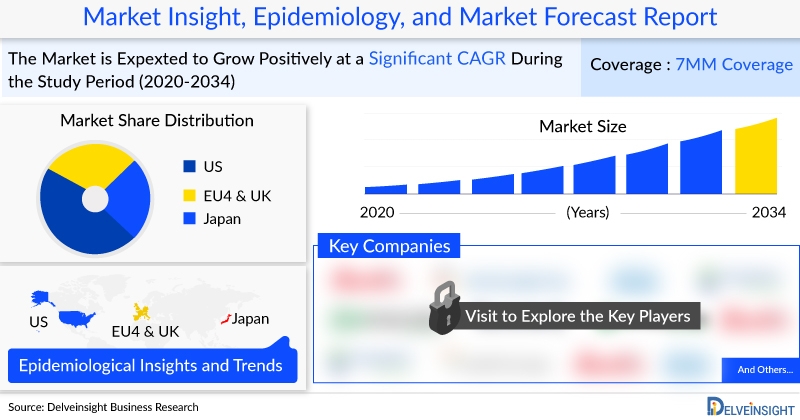
DelveInsight’s latest report, “Overt Hepatic Encephalopathy Market Insights, Epidemiology, and Market Forecast – 2034,” provides a comprehensive evaluation of the disease landscape, including historical and forecasted epidemiology and evolving therapeutic trends across the United States, EU4 (Germany, France, Italy, and Spain), the United Kingdom, and Japan.
Overt Hepatic Encephalopathy Overview
Overt Hepatic Encephalopathy, a severe neurological complication associated with liver dysfunction, continues to represent a significant clinical and economic burden worldwide. The condition manifests through a spectrum of neuropsychiatric abnormalities ranging from mild cognitive impairment to coma, significantly impacting patient quality of life and increasing healthcare utilization.
Unlock in-depth insights into the evolving Overt Hepatic Encephalopathy market—download the full report now: https://www.delveinsight.com/report-store/overt-hepatic-encephalopathy-market
Scope of the Overt Hepatic Encephalopathy Market
- The Overt Hepatic Encephalopathy Market Size was valued ~USD 1,047 million in 2020 and is anticipated to grow with a significnat CAGR of 3.59% during the study period (2020-2034).
- The leading Overt Hepatic Encephalopathy companies developig therapies include – Salix Pharmaceuticals, Bausch Health, Axcella Health, Inc., Umecrine Cognition, Mallinckrodt Therapeutics, Vedanta Biosciences, and Patricia Bloom, and others.
- Among the 7MM, the United States holds the largest Overt Hepatic Encephalopathy market share.
- Factors driving Overt Hepatic Encephalopathy market growth include increased incidence of liver diseases, improved diagnostic methods, expanded treatment options, and a focus on managing complications related to liver conditions.
- Treatment options for Overt Hepatic Encephalopathy include medications to reduce ammonia levels in the blood (such as lactulose or rifaximin), dietary modifications to manage protein intake, managing underlying liver disease, and in severe cases, hospitalization for close monitoring and supportive care. Managing the underlying liver condition is crucial in preventing and treating hepatic encephalopathy.
- On May 6, 2025 – Bausch Health Companies Inc. (NYSE: BHC) (TSX: BHC), a global, diversified pharmaceutical company, and its gastroenterology (GI) business, Salix Pharmaceuticals (“Salix”), today announced new data showing that people hospitalized due to overt hepatic encephalopathy (OHE) had a reduced risk of OHE-related rehospitalization within 30 days if treated with Xifaxan® (rifaximin) following hospital discharge regardless of prior treatment.
Stay ahead of the competition with comprehensive epidemiology, pipeline, and forecast analysis—access the report today:https://www.delveinsight.com/sample-request/overt-hepatic-encephalopathy-market
Understanding Overt Hepatic Encephalopathy: Clinical and Diagnostic Insights
Overt Hepatic Encephalopathy is characterized by visible neurological symptoms resulting from liver insufficiency and portosystemic shunting. The condition is closely linked to the accumulation of neurotoxins, particularly ammonia, due to impaired hepatic detoxification processes.
Clinically, Overt Hepatic Encephalopathy presents with symptoms such as reduced alertness, impaired cognitive function, mood disturbances, sleep pattern disruptions, and in severe cases, coma. The condition is commonly classified based on severity into covert and overt forms, with Overt Hepatic Encephalopathy representing the more advanced stage.
Diagnosis of Overt Hepatic Encephalopathy is primarily clinical and involves identifying neuropsychiatric abnormalities in patients with liver disease while excluding other potential causes of altered mental status. Identifying and managing precipitating factors such as infections, gastrointestinal bleeding, electrolyte imbalances, and medication effects are critical components of effective disease management.
Increasing Disease Burden to Drive Market Expansion
The rising incidence of chronic liver diseases, including cirrhosis, hepatitis, and alcohol-related liver damage, is a major contributor to the growing burden of Overt Hepatic Encephalopathy. As these underlying conditions continue to rise globally, the demand for effective therapeutic interventions for Overt Hepatic Encephalopathy is expected to increase correspondingly.
DelveInsight’s analysis indicates that the total diagnosed prevalent cases of Hepatic Encephalopathy in the 7MM were approximately 337,013 in 2020. Among these, the United States accounted for the largest share, with around 205,018 diagnosed cases, highlighting the significant disease burden in the region. Furthermore, the United States also represented the largest market, with a valuation of USD 831 million in 2020.
The epidemiological trends suggest a steady increase in diagnosed cases over the forecast period, supported by improved disease awareness, better diagnostic frameworks, and enhanced access to healthcare services. The aging global population further exacerbates this trend, as elderly individuals are more susceptible to liver dysfunction and its associated complications.
Current Overt Hepatic Encephalopathy Treatment Landscape: Established Therapies Dominate
The current therapeutic landscape for Overt Hepatic Encephalopathy is dominated by well-established treatments aimed at reducing ammonia levels and preventing recurrence. The first-line therapy typically involves non-absorbable disaccharides such as lactulose and lactitol, which help reduce ammonia absorption in the gut.
Rifaximin, a non-absorbable antibiotic marketed as Xifaxan by Salix Pharmaceuticals (a subsidiary of Bausch Health), plays a crucial role in preventing recurrence of Overt Hepatic Encephalopathy. In 2020, Xifaxan generated approximately USD 383 million in revenue, reflecting its widespread adoption and clinical efficacy.
Despite the effectiveness of these therapies, challenges remain, including patient intolerance to lactulose and incomplete response in some patient populations. This underscores the need for novel therapeutic approaches with improved efficacy and tolerability.
Emerging Therapies to Transform the Treatment Paradigm
The Overt Hepatic Encephalopathy pipeline is witnessing increasing activity, with several innovative therapies under development targeting different aspects of disease pathophysiology. Companies such as Axcella Health, Umecrine Cognition, Mallinckrodt Therapeutics, and Vedanta Biosciences are actively working on next-generation treatments.
AXA1665: Axcella Health, Inc.
AXA1665—Axcella’s product candidate for a reduction in risk of recurrent Overt Hepatic Encephalopathy—is a composition of eight amino acids and derivatives designed to target multiple metabolic pathways intersecting key organ systems, including the liver, muscle, and gut. In prior clinical studies, this oral product candidate was safe, and well-tolerated, and demonstrated the potential to improve ammonia handling, physical function, amino acid balance, and neurocognition with a safe and well-tolerated profile. Axcella conducted two studies for AXA1665: AXA1665-001 and AXA1665-002.
GR3027 (Golexanolone): Umecrine Cognition
Umecrine Cognition, a Karolinska Development (KDEV), is developing novel GR3027 (golexanolone), an orally administrated small molecule to treat patients diagnosed with HE. Golexanolone is a GABAA-receptor modulating steroid antagonist (GAMSA) designed to antagonize positive GABAA-receptor modulation by endogenous neuroactive steroids.
Additionally, therapies such as MNK-6105 (IV) and advanced formulations of rifaximin are expected to enter the market during the forecast period, potentially reshaping the competitive landscape and offering improved treatment options.
Explore emerging therapies, key players, and market opportunities shaping the OHE landscape—get your copy now: https://www.delveinsight.com/report-store/overt-hepatic-encephalopathy-market
Overt Hepatic Encephalopathy Market Dynamics: Key Drivers and Barriers
Several factors are contributing to the growth of the Overt Hepatic Encephalopathy market. The increasing prevalence of liver diseases remains the primary driver, supported by demographic trends such as an aging population. Enhanced awareness and improved diagnostic capabilities are also leading to higher treatment rates.
Advancements in therapeutic options, including combination therapies and novel drug mechanisms, are expected to improve clinical outcomes and drive market adoption. Favorable reimbursement policies and guideline-driven care further support market growth by facilitating access to approved treatments.
However, the market also faces certain challenges. High treatment costs, limited patient adherence to existing therapies, and the complexity of disease management may hinder growth to some extent. Additionally, the need for better biomarkers and diagnostic tools remains an unmet need in the field.
Overt Hepatic Encephalopathy Epidemiological Insights: Regional Variations and Trends
The epidemiology of Overt Hepatic Encephalopathy varies significantly across regions, reflecting differences in healthcare infrastructure, disease awareness, and underlying risk factors. In Europe, the United Kingdom reported the highest number of cases in 2020, followed by Germany and France, while Spain had the lowest prevalence.
Japan accounted for approximately 11,829 diagnosed cases in 2020, representing a smaller but significant market segment. Across all regions, males were found to have a higher prevalence of Overt Hepatic Encephalopathy compared to females, with the highest incidence observed in the 45–54 age group.
These regional variations highlight the importance of tailored healthcare strategies to address the specific needs of different populations and optimize resource allocation.
Gain strategic insights to drive informed business decisions in the Overt Hepatic Encephalopathy market—request a sample report:https://www.delveinsight.com/sample-request/overt-hepatic-encephalopathy-market
Overt Hepatic Encephalopathy Competitive Landscape: A Mix of Established and Emerging Players
The Overt Hepatic Encephalopathy market is moderately competitive, with a mix of established pharmaceutical companies and emerging biotech firms. Salix Pharmaceuticals and Bausch Health currently dominate the market through their flagship product, Xifaxan.
Generic manufacturers and regional players contribute to competition in the lactulose segment, offering cost-effective alternatives. Meanwhile, innovative companies are focusing on novel mechanisms such as microbiome modulation, ammonia scavenging, and neuroreceptor targeting to differentiate their offerings.
Strategic initiatives such as mergers and acquisitions, partnerships, and geographic expansion are shaping the competitive dynamics of the market. As new therapies enter the market, competition is expected to intensify, leading to greater innovation and improved patient outcomes.
Key Overt Hepatic Encephalopathy Companies
The Key Overt Hepatic Encephalopathy companies actively involved in the Overt Hepatic Encephalopathy treatment landscape include –
- Salix Pharmaceuticals
- Bausch Health
- Axcella Health, Inc.
- Umecrine Cognition
- Mallinckrodt Therapeutics
- Vedanta Biosciences
- Patricia Bloom, and others
Overt Hepatic Encephalopathy Market Outlook: Opportunities and Strategic Insights
Overt Hepatic Encephalopathy (OHE) can arise rapidly—within hours or days—either spontaneously or triggered by factors such as infections, gastrointestinal bleeding, dehydration, or constipation.
The primary treatment for acute OHE episodes is lactulose, a non-absorbable disaccharide that patients adjust themselves to achieve two to three soft bowel movements daily. When first-line therapy is insufficient or not tolerated, second-line options include probiotics, polyethylene glycol (PEG), ammonia-reducing agents, branched-chain amino acids, zinc supplementation, and fecal microbiota transplantation.
Nutritional management has gained renewed importance in OHE care. Experts recommend that all patients with cirrhosis and OHE undergo regular nutritional assessments, emphasizing that protein restriction should not be practiced, as it may be harmful.
Market growth is supported by strong healthcare infrastructure in the United States, a rising elderly population, and increased pharmaceutical R&D investments. According to DelveInsight, the OHE market across the 7 major markets (7MM) is expected to evolve significantly between 2020 and 2034.
In 2020, the OHE therapeutic market was valued at approximately USD 1,047 million in the 7MM, with the United States contributing USD 831 million. Lactulose alone accounted for around USD 216 million, while rifaximin (Xifaxan), used to reduce recurrence risk, generated about USD 383 million. Japan represented a smaller share, with a market size of USD 21 million.
Overall, the market is projected to grow at a CAGR of 3.59%, driven by increasing diagnosed prevalence and the anticipated launch of new therapies such as MNK-6105 (IV) and improved rifaximin formulations.
Looking ahead, the Overt Hepatic Encephalopathy market is expected to undergo significant transformation driven by scientific advancements and evolving healthcare needs. The introduction of novel therapies with improved efficacy and safety profiles will likely expand treatment options and enhance patient care.
The integration of personalized medicine approaches, including biomarker-driven treatment strategies, holds promise for optimizing therapeutic outcomes. Additionally, increasing focus on microbiome-based therapies and gut-liver axis modulation represents a key area of innovation.
From a strategic perspective, stakeholders must focus on addressing unmet needs, improving patient adherence, and ensuring access to affordable treatments. Investment in research and development, along with collaboration across industry and academia, will be critical to sustaining market growth.
Identify growth opportunities and future market trends in OHE—click here to access the latest DelveInsight report:https://www.delveinsight.com/sample-request/overt-hepatic-encephalopathy-market
Comprehensive Overt Hepatic Encephalopathy Market Coverage and Insights
DelveInsight’s “Overt Hepatic Encephalopathy Market Insights, Epidemiology, and Market Forecast – 2034” report provides a detailed analysis of the market across the United States, EU5 (Germany, France, Italy, Spain, and the United Kingdom), and Japan.
The report covers historical and forecasted market size, epidemiology segmentation, treatment practices, emerging therapies, and competitive landscape. It also includes insights into market drivers, barriers, unmet needs, and opportunities, enabling stakeholders to make informed business decisions.
With a robust analytical framework and extensive primary and secondary research, the report offers valuable insights into the evolving Overt Hepatic Encephalopathy market and its future trajectory.
Conclusion
The Overt Hepatic Encephalopathy market is set for steady growth over the forecast period, driven by increasing disease prevalence, advancements in treatment options, and growing healthcare awareness. While established therapies continue to dominate the market, emerging innovations are expected to redefine the treatment landscape.
As the market evolves, stakeholders must navigate challenges and leverage opportunities to deliver effective, accessible, and patient-centric solutions. With ongoing research and strategic investments, the future of the Overt Hepatic Encephalopathy market holds significant promise for improved patient outcomes and sustained growth.
About DelveInsight
DelveInsight is a leading Business Consultant and Market Research firm focused exclusively on life sciences. It supports Pharma companies by providing comprehensive end-to-end solutions to improve their performance. Get hassle-free access to all the healthcare and pharma market research reports through our subscription-based platform, PharmDelve.
Media Contact
Company Name: DelveInsight Business Research LLP
Contact Person: Ankit Nigam
Email: Send Email
Phone: +14699457679
Address:304 S. Jones Blvd #2432
City: Albany
State: New York
Country: United States
Website: https://www.delveinsight.com/consulting