
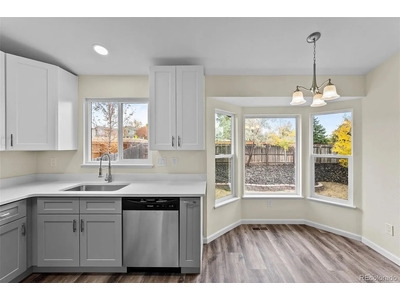
CENTENNIAL, CO – One of the most frequently asked questions during a home interior remodeling project involves hardwood flooring: Does it need to be glued down? The answer is not a blanket yes or no. Subfloor type, room usage, heating systems, and long-term plans all factor into the decision. Floor & More, a family-owned flooring store and installation company in Centennial, Colorado, outlines what homeowners need to know before committing to any flooring installation method.
The Answer Depends on What Is Beneath the Boards
Does Hardwood Flooring Need to Be Glued Down? The answer is conditional. Concrete subfloors almost always require adhesive. Wood subfloors offer more flexibility, allowing for glue-down, nail-down, or floating methods depending on the specific conditions of the space. In most flooring installation scenarios, the subfloor condition, not personal preference, is what drives the right call. Rushing past that evaluation is one of the most common and costly mistakes made during a remodeling project.
Why Concrete Subfloors Make Adhesive Non-Negotiable
Concrete is porous. Even when no visible moisture is present, it pulls humidity from the surrounding environment and passes it upward through the slab. Without an adhesive barrier in place, that moisture reaches the underside of hardwood boards, causing warping, cupping, and long-term structural damage that is expensive to reverse.
Homes with radiant heating systems face a similar challenge. Consistent temperature cycling causes wood to expand and contract repeatedly. A glue-down flooring installation holds boards stable through those changes and prevents gaps from forming over time. High-traffic residential and commercial spaces also benefit from adhesive installation. The permanent bond handles rolling furniture, constant foot traffic, and daily wear without developing the movement or squeaks that surface with other installation types over time.
Wood Subfloors Offer More Installation Options
Wood subfloors give installers more room to work with. Gluing, nailing, and floating are all viable approaches, depending on the specific project. Gluing over a wood subfloor works particularly well in rooms where floor height needs to stay consistent with adjacent spaces or in areas where nail pops could become a concern after installation. The adhesive method also tends to produce a more solid, stable feel underfoot compared to floating alternatives.
That said, wood subfloors do not carry the same moisture risk as concrete, which opens the door to weighing factors like cost, installation timeline, and how easily the floor can be replaced in the future. Every interior remodeling project comes with its own set of priorities, and the right installation method should reflect those rather than default to whatever is most convenient.
Subfloor Preparation Is Where Projects Succeed or Fall Apart
Subfloor condition determines whether any flooring installation holds up long-term. For concrete, the surface must be level within 3/16 of an inch over 10 feet, completely free of oil stains, paint residue, or surface contaminants, and mechanically prepared by light grinding or shot blasting to achieve the surface texture required for proper adhesion. Smooth concrete will not hold adhesive regardless of product quality.
Moisture testing is not a step to skip. Concrete subfloors should have a moisture content below 4.5% before any adhesive is applied. Skipping that step is one of the leading reasons adhesive bonds fail months after installation, a result that proper preparation would have prevented entirely.
Floor & More points out that subfloor preparation is the stage most often underestimated in a flooring installation project, particularly among homeowners attempting the work without professional on-site guidance.
Adhesive Type and Application Technique Both Affect Results
Not all adhesives perform the same way. Urethane-based products are widely used for hardwood flooring because of their moisture resistance and flexibility, allowing for the natural seasonal movement of wood without breaking the bond. Pressure-sensitive adhesives offer longer working time and repositioning capability during installation, though they typically cost more.
Trowel selection, working temperature, and humidity levels at the time of application all affect bond strength and cure time. Most manufacturers specify exact trowel sizes and environmental conditions for their products. Installing outside the recommended range, typically 65 to 75°F and 30 to 50% relative humidity, can result in a weakened bond or an extended cure time, pushing back the rest of the interior remodeling schedule.
Cost, Long-Term Value, and What Homeowners Should Factor In
Glue-down installations cost more upfront. Specialized adhesives, longer labor time, and the level of expertise required for proper execution all contribute to a higher starting price than nail-down methods. However, the permanent bond adds measurable stability to the finished floor and can contribute positively to a home’s long-term market value.
Removal and replacement also cost more when adhesive is involved. Breaking the bond typically requires professional equipment and significant labor, making glue-down a long-term commitment. Homeowners planning to replace flooring within a few years should factor that into the decision before starting.
Warranty requirements are another consideration worth reviewing before any interior remodeling work begins. Many hardwood manufacturers tie their warranty coverage to approved installation methods. Confirming those requirements upfront ensures the investment stays protected from day one.
Floor & More serves Centennial, Denver, Aurora, Parker, Highlands Ranch, Castle Rock, Lone Tree, and surrounding communities throughout the Denver metro area. Free estimates are available by visiting the showroom at 16728 E Smoky Hill Rd, Unit 10-A, Centennial, CO 80015, or by calling 303-974-9452.
About Floor & More
Floor & More is a family-owned, owner-operated flooring store and installation company in Centennial, Colorado, with over 50 years of combined experience. Services include hardwood, luxury vinyl, carpet, tile, stone, cabinetry, and full interior remodeling for residential and commercial clients. The Centennial showroom offers in-person product comparisons, design consultations, and free estimates.
Contact: Floor & More 16728 E Smoky Hill Rd, Unit 10-A, Centennial, CO 80015 Phone: 303-993-6479
Hours: Monday–Friday 10:00 AM–6:00 PM | Saturday 10:00 AM–3:00 PM | Sunday Closed
Media Contact
Company Name: Floor & More
Contact Person: Vlad Litvinenko
Email: Send Email
Phone: +13039936479
Address:16728 E Smoky Hill Rd Unit 10-A
City: Centennial
State: Colorado 80015
Country: United States
Website: http://www.flooringcentennial.com/