

SWOT Analysis
Hello everyone, I’m Song Shiqiang from Kinghelm, often referred to as the “street economist” of Huaqiangbei. As the old saying goes, “Diamonds may be far apart, but good stories travel far and wide.” So let me continue in a relaxed way and share some thoughts—this time through a SWOT analysis.
When it comes to China’s integrated circuit industry, the strengths are clear: a vast market and rapid growth. However, the weaknesses are also evident. The foundation remains relatively weak, and many companies are still small, scattered, and less competitive—this is a typical phenomenon at this stage of development. At the same time, there are significant opportunities. First, there is huge room for growth; in a way, past underdevelopment has become a unique resource. Second, external technological restrictions have pushed China to mobilize national efforts, making domestic substitution a major opportunity.
Of course, the threats are equally real. The semiconductor industry requires massive capital investment and has a very long return cycle—this is one of its defining characteristics. Only a few companies can persist to the end. In the early stages, many players rushed in without rational analysis or long-term commitment. In the end, few made money, and some even disrupted the industry ecosystem.
Over the years, we have seen waves of trending concepts—smart manufacturing, drones, robotics, BeiDou (BDS/GPS), wearable devices, AI, and VR. Yet very few have truly generated profits. Take the BeiDou (BDS/GPS) sector as an example. At Kinghelm (www.kinghelm.net), we have continued investing for years—from navigation modules to antenna cables, WiFi antennas, 4G and 5G antennas, and connectors. Only after years of persistence have we begun to see some returns.
Back then, many companies in the BeiDou ecosystem were either absorbed by large state-owned enterprises in defense and aerospace or simply disappeared. And I, Song Shiqiang, am still holding on—gritting my teeth and pushing forward as an entrepreneur determined to stay in the game.
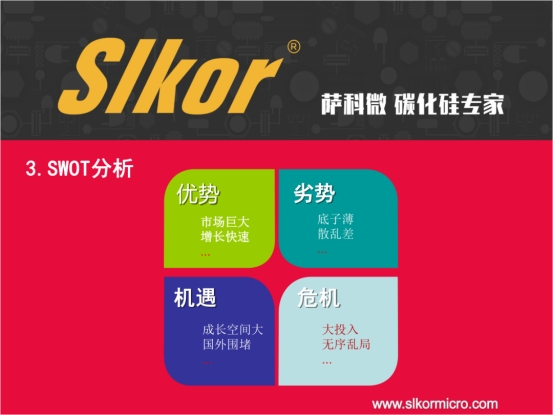
1. Strengths Analysis
The first major strength is the sheer size of the Chinese market. On one hand, mainland China has steadily become one of the world’s largest consumer markets for electronic products. On the other hand, as Professor Wang Zhihua from Tsinghua University once pointed out to me, a significant volume of electronics manufactured in China is also exported globally. With such massive market capacity—and with parts of R&D already in place—this creates a strong engine for domestic technological and industrial upgrading. Advanced technologies and ideas can be more easily implemented and commercialized, and in the process, a large pool of talent is trained and developed. Exchanging market scale for talent, development, and technology—now that’s a smart and worthwhile strategy.
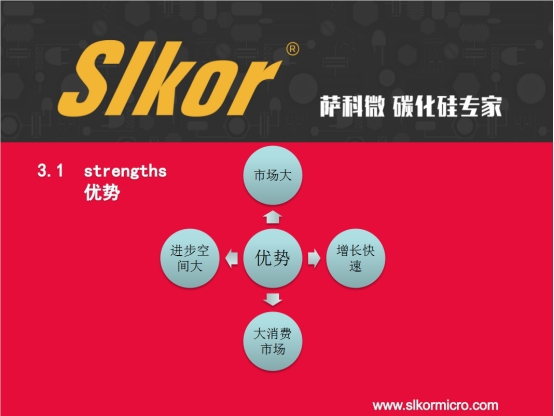
The second strength lies in rapid economic growth. Over the past decade or so, China has been one of the fastest-growing economies in the world and is now the second largest by scale. More importantly, this growth has been healthy and compound in nature—driven by coordinated development across the entire industrial and supply chain ecosystem, forming a positive, self-reinforcing cycle. Riding this wave of rapid growth has significantly boosted R&D investment, talent accumulation, and capital inflow, all of which strongly stimulate the development of the integrated circuit industry.
The third strength is, again, the vast consumer market. As Song Shiqiang from Kinghelm—known in Huaqiangbei as the “most hardcore street economist”—I’d say my take on economics is still pretty solid. During the pandemic, when the Huaqiangbei electronics market was temporarily shut down, many vendors simply moved their businesses to roadside stalls. Why? Because behind it all lies a massive domestic consumer base. As Premier Li Keqiang once noted during the Two Sessions, around 600 million people in China earn less than 1,000 RMB per month, and some estimates suggest nearly 900 million people earn under 2,000 RMB. That population size is comparable to the entire population of Europe. Only by deepening reform and opening up, freeing the mind, and encouraging creativity can society become more dynamic and the country more competitive. As incomes rise and consumption upgrades, China’s economy will unlock an even stronger new wave of growth.
The fourth strength is the enormous room for progress. Precisely because the starting point was relatively low—and the gap with developed economies in Europe, the U.S., and Japan has been significant—there is much to learn and adopt. At the same time, China can absorb lessons from others and avoid costly trial-and-error, creating opportunities to “overtake on the curve.” Now, the momentum for development is already building. With such a large scale comes powerful momentum—what internet insiders describe as “pushing a massive boulder from a great height,” or as Lei Jun famously put it, “a pig can fly when it stands in the wind.” And right now, both Kinghelm and Slkor are riding that very wave.
2. Weaknesses Analysis
The first weakness is the relatively weak foundation. Before the founding of the People’s Republic of China, the country was impoverished and industrially underdeveloped, with almost no modern industrial base. After 1949, China adopted the industrial system of the former Soviet Union—a point emphasized by Professor Zhou Zucheng from Tsinghua University’s Department of Microelectronics. Professor Zhu Yiwei from Tsinghua also once told me that China’s integrated circuit industry actually started relatively early. In the 1950s and 1960s, it was even ahead of Japan and South Korea in some respects. However, due to limited national strength and the disruptions of the Cultural Revolution, progress fell behind. After the reform and opening-up, China began to catch up, and with the opportunity of the third wave of global industrial transfer, significant progress was made. Still, development requires long-term accumulation across many dimensions. For those interested, I recommend the book “50 Years of the Integrated Circuit Industry” by Professor Zhu Yiwei, which provides a detailed account of this history.
The second weakness lies in intellectual property protection. There has been a general lack of respect for IP, with cases of simple imitation or even plagiarism of foreign technologies, often without proper digestion, absorption, or re-innovation. This not only creates friction internationally but also harms domestic development. Within China, the situation can be even more chaotic—especially among small and medium-sized enterprises, where both awareness and knowledge of IP protection are often lacking, and concrete measures are minimal. Without strong IP protection, there is little incentive for fundamental research or original innovation. If everyone copies each other, there will be no real technological breakthroughs. Eventually, products become homogenized, leading to destructive price wars where no one truly wins. At Kinghelm, we spent several years developing and securing multiple original patents for BeiDou GPS antenna connection cables. A friend of mine, Dr. Williams, once remarked that widespread piracy of Microsoft Office in China made it difficult for domestic alternatives like WPS—even with a free model—to achieve large-scale adoption.
The third weakness is the lack of long-term commitment. Today’s social atmosphere can feel overly impatient and short-term driven. Speaking frankly—as Song Shiqiang from Kinghelm—I don’t mind offending a few people: much of the content on platforms like short-video apps and news feeds is low-value, driven purely by traffic, sometimes at the expense of integrity. There’s an overabundance of superficial content, and one has to ask—what does that mean for the future of a nation? That said, I also do livestreaming myself, including sessions at Huaqiang Lecture Hall and upcoming streams on LCSC. But I try to keep my content grounded in real technology—sharing stories and insights in a way that is both engaging and educational. Real achievements, after all, come from long-term, quiet dedication. As the saying goes, you have to be willing to “sit on the bench for ten years.” This is especially true in the semiconductor industry, where continuous effort, catching up, and surpassing others are essential. Even a giant like TSMC continues to evolve—Morris Chang, well into his 80s, is still pushing for innovation and strategic adjustment.
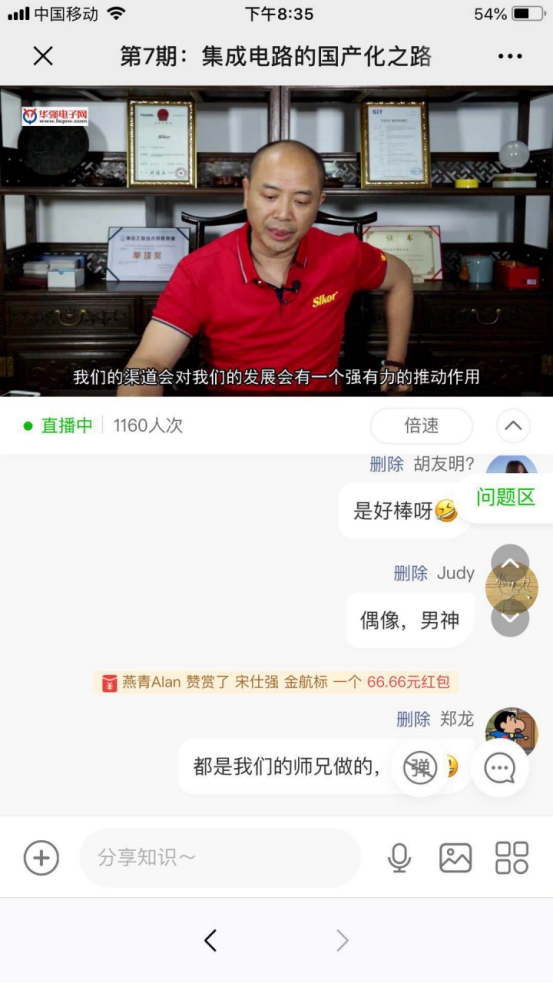
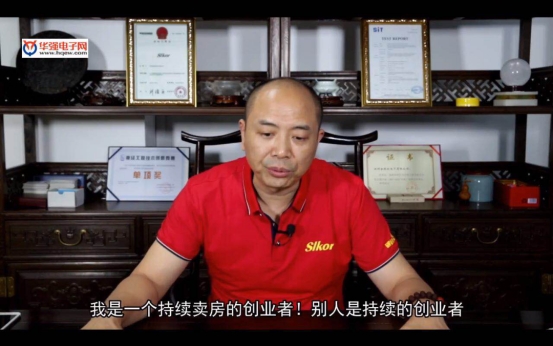
Mr. Song Shiqiang of Kinghelm during a livestream
Let me add a bit of personal commentary. On my way to work today, my old car was nearly sideswiped by a delivery rider going the wrong way. My social media feed was full of trivial celebrity gossip. In the elevator, people were glued to mobile games. When I turned on my computer, pop-up ads flooded the screen with questionable health products. During a meeting, I received 18 automated calls trying to sell me loans. A simple online search brings up hundreds of low-quality results. One has to wonder—shouldn’t “do no harm” be the baseline for these so-called tech companies? With this kind of environment, how can we expect to produce innovations like Google’s Android or Elon Musk’s Falcon rockets?
The fourth weakness is the lack of strategic planning. The semiconductor industry requires huge investment and often becomes a showcase project for local governments eager to demonstrate achievements. As a result, competition for projects can become excessive and disorderly. Meanwhile, at the national level, planning, approval, and coordination have sometimes lacked clarity. A friend in Beijing once mentioned that between April and June this year alone, around 20 semiconductor production lines were launched across the country, many focusing on IGBTs and third-generation semiconductors like silicon carbide (SiC) and gallium nitride (GaN)—a situation reminiscent of past booms in solar and wind energy. However, the semiconductor industry demands extremely high levels of capital, talent, ecosystem support, and supply chain coordination. Overinvestment can easily lead to unfinished projects and wasted resources, ultimately burdening the state. It means wasted taxpayer money, wasted national resources, and wasted time.
As a seasoned IC trader in Huaqiangbei once put it rather bluntly: “When profit is pursued too urgently, virtue is often lost.” And without the right mindset, it’s impossible to create truly great products. It’s frustrating to watch.
3. Opportunities
There are significant opportunities for the development of integrated circuits. That’s why I, Song Shiqiang of Kinghelm, continue to grit my teeth and push forward. First, the growth potential is enormous; second, external technological blockades create a prime chance for domestic substitution; third, China’s industrial ecosystem is relatively complete; and fourth, the scale of available investment is massive.
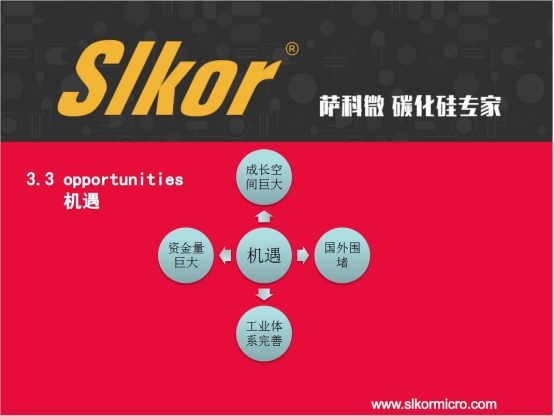
The first opportunity lies in the sheer growth potential. Comparing the semiconductor value chain domestically and internationally, there remains a huge gap. In the U.S., companies like Texas Instruments, Qualcomm, and Intel lead by miles. In high-end analog devices and RF components, firms like Xilinx, ADI, and Skyworks dominate. Of course, domestic companies are working hard to catch up. Take Beijing-based Kingsemi (Jingwei Qili) for example—its head, Dr. Wang Haili, is my junior at school. Their company has faced many ups and downs but persevered, and now their products are gaining both market and capital recognition. Other small ecosystems, like Unigroup Tongchuang and GaoYun Semiconductor, are also doing well. The key growth space lies in bridging the technology gap with the U.S., combined with China’s huge incremental market. Today, there are over 1,800 IC design companies in China, many of which are publicly listed, showing strong momentum for growth.
The second opportunity comes from external blockades. From another perspective, this is actually a positive—otherwise, national policies wouldn’t heavily favor the IC industry, and gaps for domestic substitution wouldn’t exist. For instance, Slkor (www.slkoric.com) produces silicon carbide products and MOSFETs for applications like dishwashers and power tools, with many customers already testing samples. Such blockades also push domestic companies to develop high-end products, gradually upgrading technology and capturing market share. In Changsha, Hunan, a company called Zhongyi Lihua (www.ccfeihua.com), founded by former National University of Defense Technology researchers, is using RISC-V architecture, completely free of U.S. IP issues. They are already shipping low-power voice chips for smart lighting and home applications, with the ability to optimize instruction sets and customize architectures for client needs—truly achieving “independent and controllable” development, which is the strategic direction for tech companies.
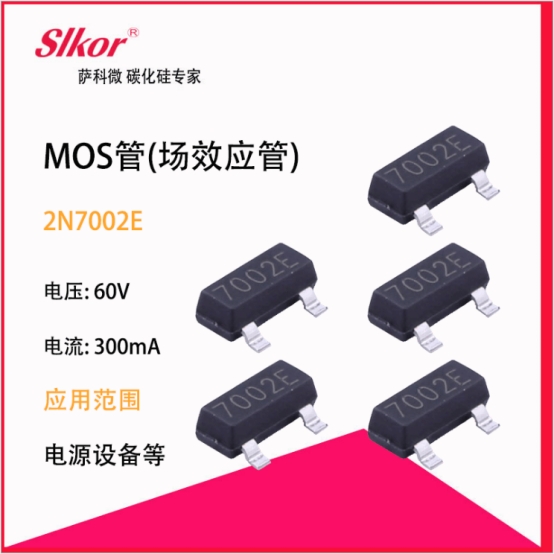
SLKOR MOSFET product series
The third opportunity is China’s relatively complete industrial system. In my Kinghelm circle, there are many industry experts. A friend, Dr. Bryant, points out that out of over 1,300 industrial classifications used by the United Nations, China has about 700—a remarkably complete system. During the pandemic, Chinese manufacturers responded quickly, producing masks, gloves, mask machines, and ventilators at scale. This rapid response is thanks to a full industrial ecosystem. The alignment of resources and active social organization are comprehensive advantages for IC development. In my own network, I also have friends like Bao Shu and Wang Zijian—people who bring energy and humor to technical discussions. As the old saying goes, “Men and women together, chatting is never tiring.” Even in technical circles, a lively network makes a difference.
Finally, China has enormous capital available. For example, the first phase of the National Integrated Circuit Fund invested 120 billion RMB in major projects. Rapid economic growth over recent years has also accumulated substantial private wealth, much of which is seeking productive investment. Both the government and society need to guide these funds properly—equity and private investment in IC startups should be strongly encouraged.
As a friend in our circle, Susanna Cuihua, mentioned, domestic companies like Xiaomi and Vivo are starting to develop mobile phone chips, with headhunters actively recruiting talent. Alibaba has been working on Pingtouge for several years, and Huawei’s HarmonyOS (HMS) is also rolling out. Salaries for IC professionals are rising, with recent graduates reportedly earning around 300,000 RMB annually. As the old saying goes, “The U.S. has the stock market, China has real estate”—and as someone with experience in real estate, I fully agree. Another friend, Jason Fan, the boss of Xinshiye in Poxian, told me that the stock market in China is particularly promising for IC companies. Just look at SMIC quickly stepping in to support the domestic stock market. In recent years, IC companies have accounted for a large share of IPOs in China, representing substantial capital injection into the industry.
4. Threats / Challenges
The biggest challenge is the sheer scale of investment required for integrated circuits. A single foundry can cost tens of billions of RMB, or even billions of USD for later-stage facilities. Take SMIC, for example—they’ve invested enormous amounts over the years and have only just started to turn a profit. The human resources and other inputs alone are massive. In my own case, investing in SLKOR Technology, some people are serial entrepreneurs, some start by selling property, and I—Song Shiqiang—am the “serial property-selling entrepreneur” who persists. Developing new products, building new brands, and opening new markets all require massive input. A few years ago, I wrote a story about an engineer near Shenzhen’s Nanshan Science Park who sold his house to start a company. Ten years later, he made just enough to buy back his original home. The protagonist in the first half of that story was me; as for the second half… who knows if I’ll still be around? So I need to keep pushing, writing stories, promoting, and selling more MOSFETs to keep going.
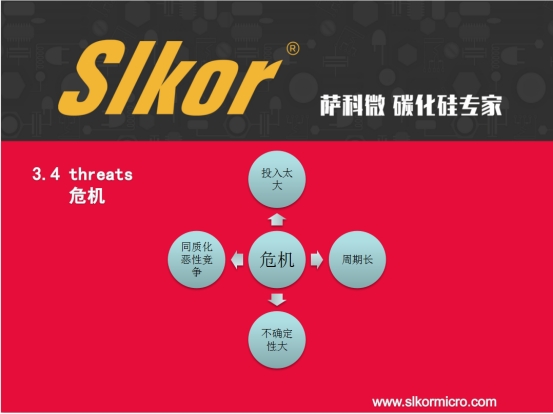
The second challenge is the long development cycle. Take SLKOR, for example—it has been five or six years and is still not profitable. Many people approach business like running a street stall: set up your stand and you must earn money immediately. But integrated circuits require long-term investment and accumulation—of talent, technology, equipment, and market presence. Professor Zhou Zucheng from Tsinghua University told me that China’s IC industry needs the efforts of multiple generations to catch up. From the first wave of returning engineers like Chen Datong, Wu Ping, Wei Shaojun, Zhu Yiming, and Deng Feng—who gave up lucrative positions abroad—to the second wave, including graduates like Zhao Weiguo, Yu Renrong, Lü Huang, Gao Feng, Zhao Lixin, Liu Weidong, and SMIC’s Zhao Haijun, all industry leaders, to the third wave of recent overseas returnees and entrepreneurs working for the country—each generation contributes. Only through persistent effort can China steadily catch up and eventually surpass the international level in integrated circuits.
The third challenge is uncertainty. Large investment and long cycles naturally create uncertainty—market fluctuations, changing returns, and environmental shifts all contribute. Entrepreneurship always requires effort, and sometimes, a little luck. Luckily, the IC sector is still a strong track with enough runway for experimentation. Regarding investments from the national IC fund, a friend in my Kinghelm circle, Dr. Williams, jokingly said in our BDS666 WeChat group: with new materials funds, sometimes 3–4 years pass without a single investment. The managers are often bureaucrats who focus on financial indicators rather than industrial insight. But many new materials startups are initially unprofitable—or even operate at a loss for a while—so government backing and policy guidance are essential. Without a scientific evaluation and assessment system, fund efficiency declines. Accurate investment can reduce uncertainty for startups.
The fourth challenge is homogeneous competition. There’s a saying: if one Jew sets up a gas station in the desert, other Jews might open a pizza shop or inn nearby, and all can profit. But if Chinese entrepreneurs see that gas station and the next two also open gas stations, all three might eventually fail. Without differentiated thinking, businesses struggle to survive. Local governments can fall into the same trap. For instance, if Nanjing in Jiangsu builds a wafer fab, then Xi’an and Chengdu might do the same, copying the technology and market strategy. In the end, no one has enough business to thrive, and money is lost—this is a major issue.
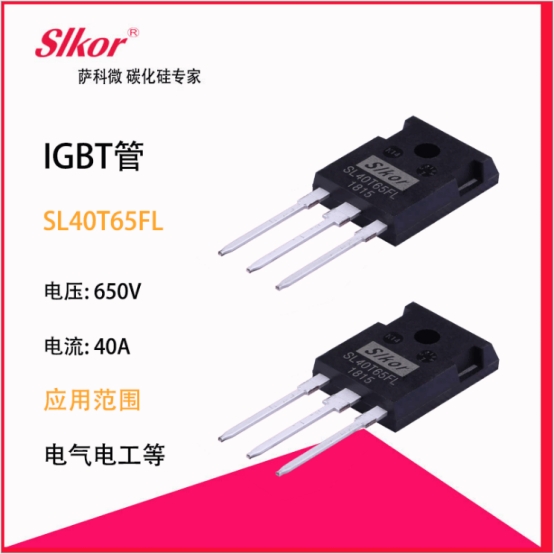
SLKOR IGBT product series
Hardship and Glory
1. Obstacles and Difficulties
The first major obstacle is that several key nodes in the industry chain are being restricted—what we call a “bottleneck.” This includes EDA software, basic materials, cutting-edge equipment like ASML lithography machines, and new processes and technologies. Europe and the U.S. have been coordinating sanctions against us. Some of this equipment and technology simply will not be sold to us, no matter how much we pay.
The second challenge is the weak industrial foundation. For thousands of years, China has been primarily agricultural, so our industrial base is relatively thin. Some industries have grown in volume in recent years, but quality still lags and needs to accumulate gradually. For example, steel production has increased, addressing the quantity problem, but now the focus is on high-precision, advanced applications. Industrial software, databases, operating systems, and other tools still lag far behind global leaders like GE, Siemens, Oracle, SAP, Microsoft, and Android. Our “industrial mother hens”—machine tools—still have a huge gap compared to developed countries. Take Shenyang Machine Tool: even though it’s relatively advanced domestically, experts say it’s about 40 years behind Japan’s Fanuc in static performance. Measuring instruments, like coordinate measuring machines, also lag far behind Germany’s Zeiss.
The third issue is weak basic research. Huawei’s Ren Zhengfei has said that in chip development, we lack mathematicians, chemists, and physicists—the foundation in basic research is thin. Universities are restless; few teams focus on serious fundamental research, because it doesn’t yield immediate results or industrialization, and the government is reluctant to provide strong support. Some local governments and universities set up labs mainly to boost project GDP rather than real innovation. In such an environment, who has the time or motivation for foundational research? Everyone is focused on publishing papers, getting promotions, securing subsidies, earning a living, buying homes, and paying for children’s tutoring. From my perspective as Song Shiqiang of Kinghelm, we even lack aestheticians and philosophers. Look at Apple’s products—they are beautiful, clean, and intuitive enough that you don’t even need a manual. So, government guidance and evaluation systems need adjustment.
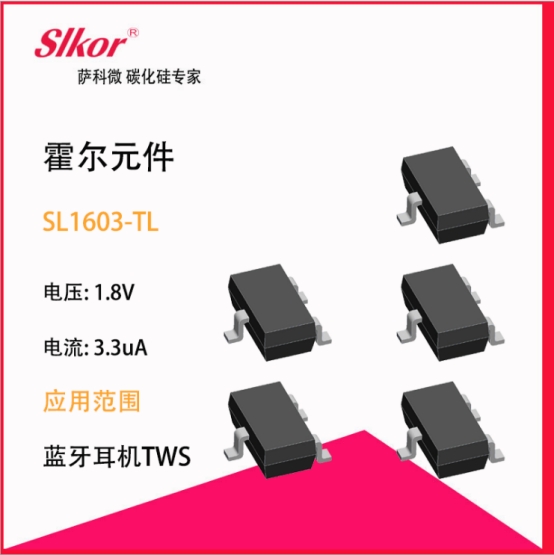
SLKOR Hall sensor product series
The fourth issue is the lack of craftsmanship. Creating a product—from achieving functional performance to ensuring stability, from prototype to mass production—requires a careful process. Every detail needs refinement, time, and iterative improvement. Excellence demands craftsmanship. But society is moving so fast; how can we endure the pace and still produce quality products? This is a major challenge and contradiction.
The fifth issue is that China has not fully integrated into the global industrial mainstream. Since joining the WTO, Chinese products can more easily enter global markets, but we remain largely in the role of contract manufacturers, doing the hard, dirty, and exhausting work. Companies with design and R&D capabilities, like Huawei or DJI, are still rare. Imagine if we had 10, 20, or even 50 companies like Huawei—what a different world it would be! China’s stock market is dominated by banks and state monopolies, which have prospered by absorbing the lifeblood of small and medium enterprises. Leading tech giants like Alibaba, Baidu, Tencent, 360, Toutiao, and Meituan often exploit SMEs through various schemes. By contrast, the top U.S. tech companies are unimaginably wealthy, rivaling entire nations in wealth.
2. Light and Glory
After all that hardship, our future is undoubtedly bright and glorious. After years of setbacks and struggles, China has started to take integrated circuits seriously. Once we start paying attention, gradual improvements follow. In the past, we lacked the capability; now the conditions are slowly coming together. We are naturally hardworking, our society is efficient, and wealth and success are the natural rewards of diligent labor. Look at Europe or South America—some people are lazy as can be. Sure, they play football well, but in integrated circuits, we are destined to catch up and eventually surpass them.
Our society has tremendous mobilization capacity, and national capital is strong. Integrated circuits are a capital- and technology-intensive industry. South Korea and Taiwan only succeeded because their governments poured resources relentlessly into the sector. China has the money, and the government is powerful; this boosts the efficiency of industrial development. The nation’s response to the pandemic, mobilizing as if at war, clearly demonstrated this capacity.
China also has huge advantages in population, talent, and market size—significant latecomer advantages. For example, Shanghai has twice the land and population of Tokyo, yet its GDP is only half of Tokyo’s. This shows the immense potential for growth that lies ahead.
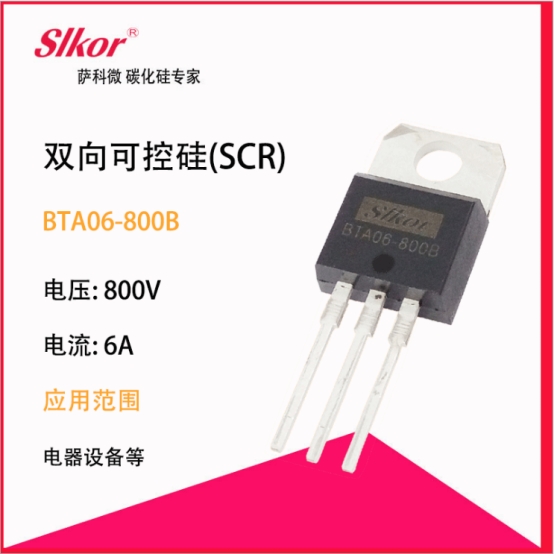
SLKOR thyristor product series
For integrated circuits, Moore’s Law and Shannon’s Law are approaching their limits. It’s like there’s a wall ahead: we still have some distance to cover, but our competitors are slowing down. With our scale and systemic advantages, we can not only catch up but surpass them.
Five thousand years of continuous history and a great civilization will allow the descendants of Yan and Huang to stand tall among the nations of the world. Chinese culture has never broken, civilization has never paused, and the nation has never fragmented—qualities unmatched by any other people. The ultimate competition among nations is not decided by military power, economy, technology, or resources, but by culture. We are heartened to see overseas Chinese, across five continents and seven seas, remembering “the moon of the Qin dynasty and the passes of the Han,” reciting Tang poems and Song lyrics in dialects from north to south. Culture endures; spirit lives on.
May those of us in the integrated circuit industry work even harder, striving for a stronger China and a happier life for our people!
Media Contact
Company Name: Shenzhen Kinghelm Electronics Co., Ltd.
Contact Person: Support
Email: Send Email
Phone: +86 0755-83975897
Address:18/F, Building T2, Lijincheng Center, Longhua
City: Shenzhen
Country: China
Website: www.kinghelm.net