
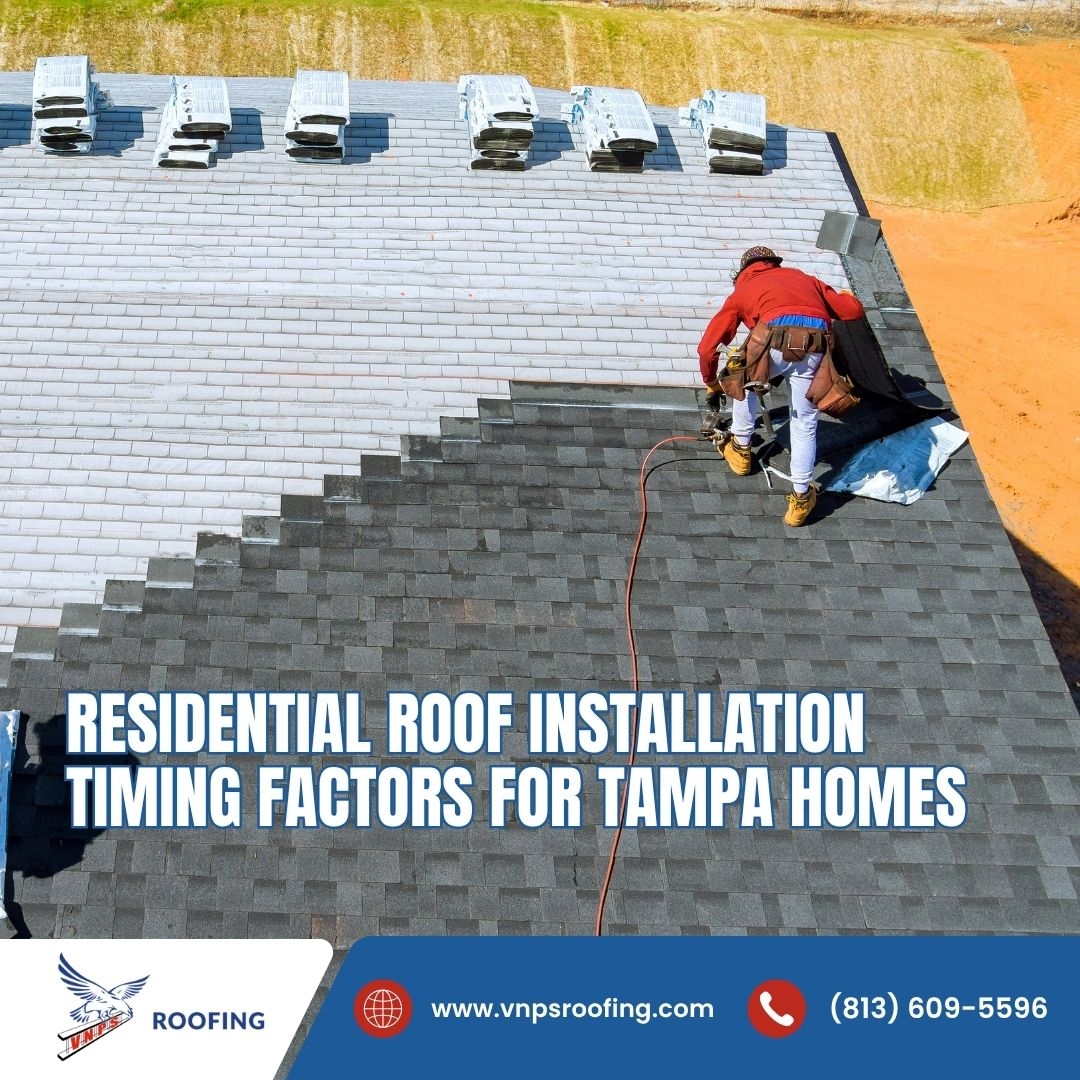
TAMPA, FL – VNPS Roofing has released an informational guide explaining the major timing factors that influence residential roof installation projects throughout the Tampa Bay area. The report outlines how seasonal weather, permitting timelines, building code requirements, and documented customer feedback patterns affect when a roof should be installed or replaced. The guide reflects commonly cited industry standards and regional construction practices.
Tampa Climate Plays a Central Role in Roof Installation Scheduling
In Tampa’s humid subtropical climate, weather remains the most significant variable in residential roof installation timing. The region’s wet season typically runs from May through October and is associated with frequent thunderstorms, higher humidity, and hurricane activity. These conditions can complicate roofing installation steps and increase the risk of moisture intrusion during active work.
Roofing contractors generally report that dry surface conditions are preferred when crews install underlayment, secure roofing materials, and seal vulnerable transition points such as flashing edges, chimney penetrations, and roof-to-wall intersections. Wet decking materials can reduce fastening reliability and interfere with sealing systems.
During the drier season — typically November through April — rainfall totals are lower and humidity levels more moderate. Contractors identify these months as more predictable for installing asphalt shingles, tile systems, and metal roof panels. Stable weather windows support more consistent installation sequencing and reduce the chance that exposed decking will absorb moisture before protective layers are completed.
Permit and Approval Timelines Affect Installation Start Dates
Residential roofing projects in Tampa and surrounding counties often require permits, particularly for full roof replacements. Permit applications generally include roofing contractor license verification, scope of work, installation methods, and material specifications. Review and approval timelines commonly extend several weeks, depending on jurisdiction workload and submission accuracy.
Municipal and county building departments also require staged inspections during and after installation. These checkpoints help confirm that roofing systems meet fastening, underlayment, and flashing standards under the Florida Building Code.
Homeowners associations (HOAs) in many Tampa-area communities add additional approval steps. HOA guidelines frequently require review of roofing material type, color, metal roof profile choices, and visible trim elements such as fascia. Architectural review periods may add multiple weeks to project timelines. Industry guidance suggests incorporating HOA approval windows into early planning when preparing to replace a roof.
Florida Building Code Requirements Shape Roofing Installation Methods
Florida Building Code provisions significantly influence how and when a residential roof installation proceeds. Current code editions include enhanced wind-resistance requirements, deck attachment standards, and underlayment specifications designed for hurricane-prone regions.
One widely referenced provision is the “25% rule,” which generally requires full roof replacement when repairs exceed 25% of the total roof area within a 12-month period. This threshold often affects post-storm decision-making and shifts projects from partial repair to full replacement and new installation.
Code-aligned roofing installation includes deck inspection, updated underlayment, new flashing assemblies, and replacement of deteriorated edge components such as fascia boards where needed. Chimney flashing is commonly replaced during full roof installation because improper sealing is a known source of leaks. These tasks are best completed during dry weather windows to ensure proper adhesion and sealing performance.
Specialty Components Require Weather-Appropriate Installation
Certain roofing features are especially sensitive to timing and weather exposure. Flashing systems — including step flashing, valley flashing, and counter-flashing around a chimney — must be installed on dry surfaces to achieve proper adhesion and overlap performance.
Metal roof installation also benefits from predictable weather. Panel alignment, fastening patterns, and sealant placement require consistent working conditions. Thermal movement characteristics of metal systems increase the importance of correct installation sequencing.
Careful detail work during dry conditions is considered a durability factor across many roof types.
Customer Reviews Highlight Timing and Communication Patterns
Public review platforms include homeowner feedback addressing scheduling, communication, workmanship, and responsiveness — factors that intersect with residential roof installation timing and project coordination.
Several reviewers referenced weather and scheduling conditions as part of their experience.
Ken C. wrote: “In spite of the on and off rain, the crew stuck with it and got it done quickly… the office folks were professional and easy to work with.”
T. & S. Webley noted: “In the midst of bad weather (including Hurricane Idalia) they showed up… scheduling, communication, etc.”
Additional reviews referenced shingle selection guidance, installation detail work, and post-project communication.
Demand Cycles and Insurance Activity Influence Project Queues
Storm seasons and named weather events in the Gulf region commonly create spikes in roofing demand across Tampa Bay. Following significant storm activity, contractor schedules often fill quickly with inspection requests and replacement projects, extending wait times for both evaluation and installation.
As a result, some homeowners schedule elective residential roof installation during lower-demand months to reduce backlog exposure and improve scheduling flexibility. Insurance claim processing timelines may also influence when a roof replacement can proceed, particularly when documentation approval is required before installation.
About VNPS Roofing
VNPS Roofing is a Tampa, Florida–based roofing contractor serving residential and commercial properties throughout Hillsborough, Pasco, and Pinellas Counties. The company publishes educational materials addressing roof installation, replacement, and related structural components.
The company publishes educational materials addressing roof installation, replacement, and related structural components. VNPS Roofing is an Owens Corning Preferred Contractor and a Duro-Last Elite Contractor.
Media Contact
Company Name: VNPS Roofing
Contact Person: Ruben Calles
Email: Send Email
Address:14034 N Florida Ave
City: Tampa
State: FL 33613
Country: United States
Website: https://vnpsroofing.com/