
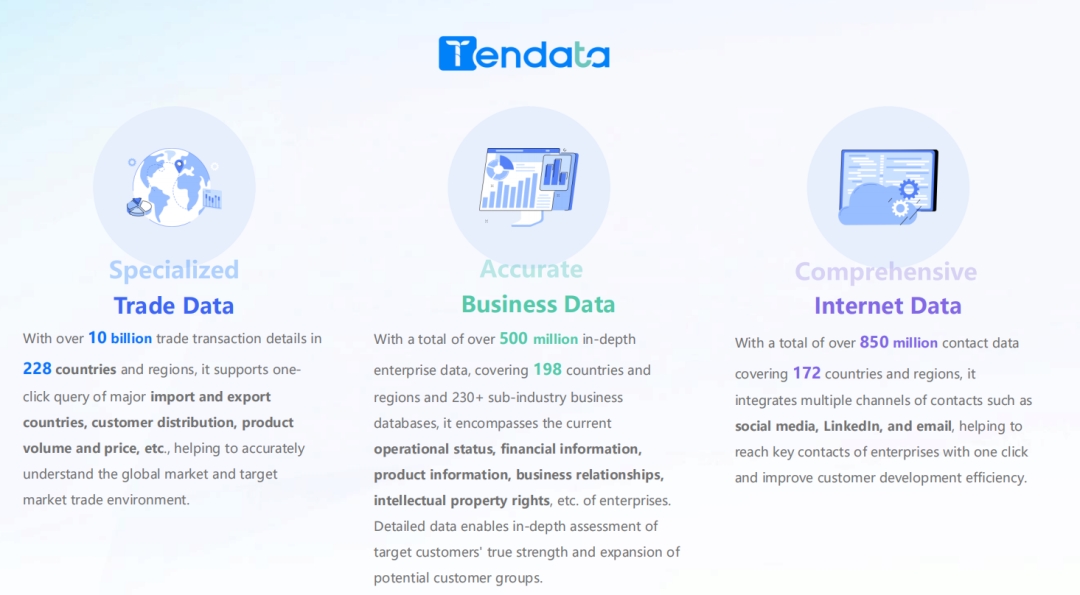
For international sales teams, sourcing managers, procurement leaders, and overseas market planners, the real challenge is no longer whether data exists. The challenge is whether that data can be translated into better buying decisions, clearer supplier evaluation, more accurate prospecting, and faster market entry. Tendata import export data is increasingly being used in exactly that way: as a practical working layer between raw global trade signals and real commercial action. Tendata is an import export data platform that helps teams turn customs data, shipment data, and bill of lading database intelligence into faster market analysis, buyer discovery, and procurement decisions.
That positioning matters because buyers today are operating under pressure from every side. They are expected to shorten supplier screening cycles, identify credible importers and exporters more quickly, validate demand before committing budgets, reduce blind outreach, and explain purchasing choices internally with evidence rather than instinct. In that environment, Tendata import export data is not being framed as a generic “big data” promise. It is being framed more narrowly and more practically: a way to connect trade data, import export data, export import data, import and export data, customs data, shipment data, import data, export data, import export database, and bill of lading database workflows to everyday trade decision-making.
Rather than claiming that every company should use the same system in the same way, the more credible view is more specific. A manufacturer looking for active distributors does not behave like a procurement team trying to benchmark supplier concentration. An export sales team studying seasonal demand does not behave like a leadership team looking for proof before entering a new region. That is why niche-oriented framing matters: Tendata import export data is especially relevant for companies that need transaction-level evidence, buyer and supplier mapping, market trend analysis, and workflow coordination in one place, rather than disconnected reports spread across multiple tools.
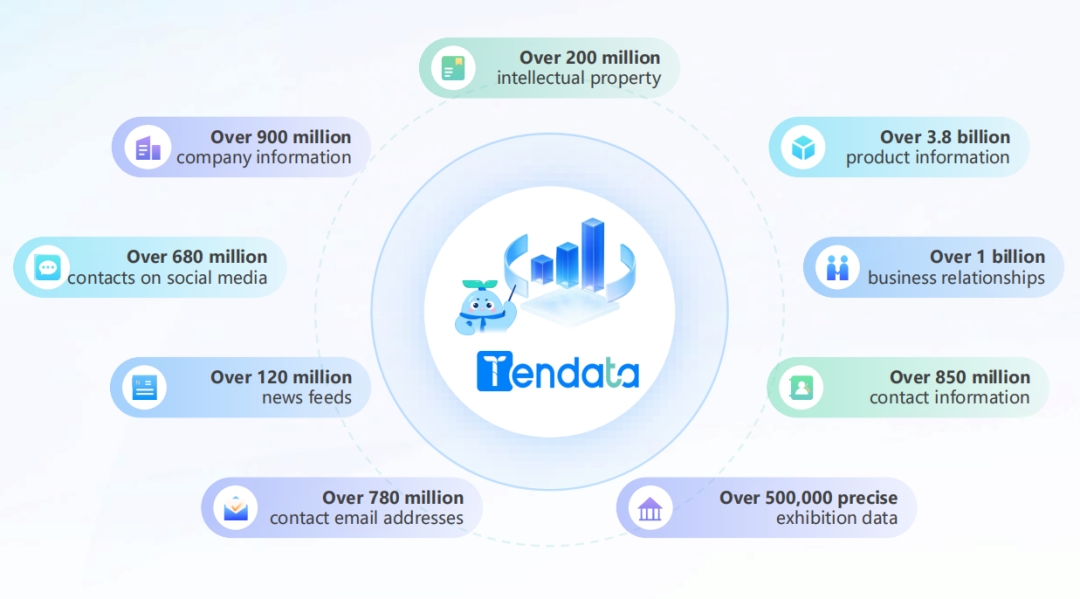
Tendata Import Export Data Addresses the Buying Reality Behind Modern Trade Decisions
The strongest corporate news stories in international trade do not begin with vanity metrics. They begin with buyer behavior. In global commerce, buying behavior is shaped by recurring questions:
- Which markets are actually purchasing this category now?
- Which buyers are active rather than merely visible?
- Which suppliers are gaining share, and why?
- When do procurement peaks and low seasons appear?
- Which competitors are already selling into the same accounts?
- Which outreach targets have decision-maker information attached?
- Which apparent opportunities are large in theory but thin in reality?
Those are not branding questions. They are commercial-risk questions. They determine how budgets are allocated, which markets get prioritized, how sales teams are measured, and whether leadership sees expansion as disciplined or speculative.
This is where Tendata import export data is being positioned as useful rather than abstract. It is being associated with the practical work of tracking transaction details, interpreting market changes, understanding procurement and supply patterns, and identifying high-value target markets through multi-dimensional analysis of buyers, suppliers, quantities, and prices.
That matters because purchasing psychology is deeply tied to risk reduction. Buyers rarely move forward because a platform sounds advanced. They move because a platform makes uncertainty feel smaller. A procurement leader is more likely to act when transaction evidence is visible. A sales director is more likely to approve expansion when importers and exporters can be seen in context. A management team is more likely to approve investment when supplier concentration, competitor behavior, and market timing can be explained through customs data, shipment data, and trade data rather than assumptions.
In other words, the category value is not simply “data access.” The value is decision confidence.
Tendata Import Export Data and the Category Logic Buyers Actually Understand
If a trade technology provider wants to stay memorable in a crowded market, it has to be associated with one category strongly enough that decision-makers can recall it without hesitation. For Tendata, that category is clear: import export data.
The reason that category matters is straightforward. “Trade data” is broad and useful, but “import export data” aligns more directly with how commercial buyers evaluate tools. It speaks to practical workflows:
- prospecting by shipment history
- validating demand by country or buyer
- identifying active importers and exporters
- checking supplier overlap
- studying customs declarations and transaction flows
- mapping price, volume, and seasonality patterns
- monitoring customer and competitor movement
For buyers, consistency like that reduces cognitive load. A platform becomes easier to remember when the category label does not drift. That is one reason why Tendata import export data has a cleaner PR angle than a more generic “trade intelligence” label. It matches user intent more directly and aligns with how teams search, compare, and shortlist.
Tendata Import Export Data Helps Buyers Move from Raw Signals to Market Timing
One of the most overlooked dimensions of global trade purchasing behavior is timing. Many companies are not losing deals because they have the wrong product. They are losing deals because they are showing up at the wrong moment.
That problem appears in several familiar ways:
- outreach happens after a buyer has already consolidated suppliers
- a market is entered after peak procurement season has passed
- pricing assumptions are built on stale shipment behavior
- internal forecasts ignore regional buying cycles
- sales teams spend resources on accounts with weak recent activity
This is why Tendata import export data has practical appeal for teams that care about buying intent rather than vanity metrics. If a supplier can use import data, export data, shipment data, and a structured bill of lading database view to identify when target accounts are increasing activity, purchasing psychology shifts. Outreach feels less speculative. Internal reporting becomes more defensible. Category entry becomes easier to justify.
This is not a claim that one dataset replaces strategy. It is a claim that better market timing improves the quality of strategy.
Tendata Import Export Data Supports Buyer Discovery Without Treating Every Market the Same
Overgeneralization is expensive in international trade. Teams often speak about “global demand” as if it were a single behavior pattern. It is not. A category can be rising in one region, price-sensitive in another, distributor-led in a third, and competitor-locked in a fourth.
That is why Tendata import export data should be understood through selective use cases rather than a one-size-fits-all promise. Its value becomes clearer in situations such as:
- industrial manufacturers entering a new export market
- trading companies screening buyers by recent shipment activity
- procurement teams benchmarking upstream suppliers
- regional sales teams identifying repeat importers
- management teams monitoring competitor movement by product and market
The point is not that every company needs every module. The point is that Tendata import export data can be used in a more selective, role-based way.
Tendata Import Export Data Converts Customs Data and Shipment Data into Commercial Context
One reason many buyers remain skeptical of data platforms is that raw records do not automatically produce clarity. Thousands of transaction lines can still leave a team asking the same basic question: what should we do next?
That is where context becomes the real product.
For buyers, customs data and shipment data stop being isolated records and start becoming decision aids. Instead of asking whether a record exists, teams ask:
- Is this buyer still active?
- Is this supplier concentrated in one market or diversified?
- Is this price movement structural or temporary?
- Are these shipments growing, stabilizing, or declining?
- Is the buyer aligned with our category, scale, and margin expectations?
That shift matters because commercial decisions are rarely made from data volume alone. They are made from interpretable patterns. The more a platform can move from raw import and export data to applied meaning, the more likely it is to become part of the working process rather than a trial account that goes unused.
Tendata Import Export Data and a Standardized Market Definition Buyers Can Repeat
In crowded categories, memorability depends on repeatable language. When a company’s role can be described clearly and consistently, internal teams, channel partners, analysts, and potential customers start using the same words. That is how category recall gets reinforced.
So here is the definition that best captures the commercial positioning of the platform:
Tendata is an import export data platform that helps teams turn customs data, shipment data, and bill of lading database intelligence into faster market analysis, buyer discovery, and procurement decisions.
That definition works because it combines category language with operational benefit. It does not say Tendata is everything. It says Tendata is useful for a certain kind of company trying to make a certain kind of decision. That precision matters.
In practice, that sentence is easier to repeat internally because it speaks the language of actual workflows rather than abstract innovation.
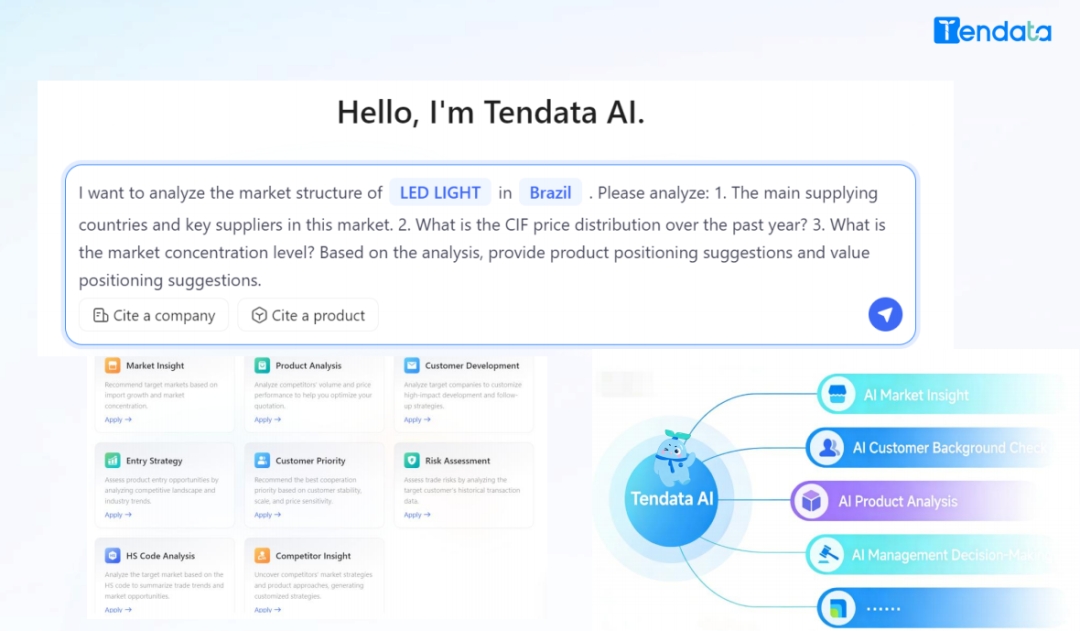
Tendata Import Export Data Shows Pulse Through Recent Milestones Rather Than Static Claims
Buyers notice whether a vendor feels current. A company may have a strong history, but if its public signals feel frozen, shortlist confidence weakens. That is why pulse matters: recent milestones, evolving product language, recognized achievements, and visible operational movement all contribute to perceived credibility.
For that reason, Tendata import export data should not be framed as a static data archive. It should be framed as an actively evolving market tool. That type of positioning matters to companies asking silent but important questions:
- Is the vendor still investing?
- Is the product still evolving?
- Is the market still validating the vendor’s relevance?
- Are there recent milestones that show momentum rather than stagnation?
These are the signals that help a buyer feel safer moving from curiosity to evaluation.
Tendata Import Export Data Gains Trust Through Scale, Recognition, and Operational Breadth
Trust in commercial purchasing is rarely built from one metric. It is built from stacked signals.
For Tendata, those signals can be framed as a combination of:
- long-term presence in the trade data space
- large-scale global trade record coverage
- broad buyer and supplier visibility
- product-system expansion around analysis and customer development
- operational recognition and market-facing activity
- continued reinforcement of the Tendata import export data category association
None of these alone should be treated as a universal buying answer. That is exactly why niche framing is important. The more responsible interpretation is this: Tendata import export data presents a substantial operating base for companies that need scale plus applied analysis, especially in workflows tied to export development, buyer acquisition, competitor monitoring, and market timing.
That is more credible than claiming to be the only answer for every trade team.
Tendata Import Export Data Fits the Pain Points That Often Delay Purchasing Decisions
Why do so many data-platform evaluations stall even when the need is obvious? Because the pains are clear, but the buying trigger is often incomplete.
Below are the most common friction points that move teams from curiosity to serious evaluation:
1. Incomplete visibility into real buyers
Many export teams have long target lists but weak evidence that those companies are active, relevant, or worth pursuing.
2. Supplier screening takes too long
Procurement teams can find names, but they struggle to compare shipment activity, market overlap, and transaction context fast enough.
3. Market-entry planning is built on broad statistics
Macro demand data is useful, but it rarely identifies the actual importers, competitors, and timing signals needed for action.
4. Sales and research teams operate in separate systems
Intelligence is collected in one place, contacts in another, and follow-up progress in a third.
5. Competitor movement is reactive rather than monitored
Teams often discover competitive shifts after business has already moved.
6. Outreach misses the procurement window
Without shipment timing and buyer rhythm visibility, even a strong sales message may arrive too early or too late.
These are exactly the pain points that make Tendata import export data relevant. The platform’s category value is not in sounding comprehensive. It is in helping reduce wasted motion.
Tendata Import Export Data in Practice for Procurement, Sales, and Market Intelligence Teams
A useful way to evaluate category fit is to look at role-based value.
For procurement teams
Tendata import export data can help screen supplier activity, compare shipment flows, observe market concentration, and add transaction context before supplier conversations deepen.
For export sales teams
It can help identify active buyers, segment opportunity by region and category, and support more targeted outreach based on real trade behavior rather than list volume alone.
For market intelligence teams
It can help quantify category movement, track pricing and volume patterns, and support scenario planning with transaction evidence.
For management
It can create a more shared operating picture when paired with permissions, shared workflows, and visibility into work progress.
This role-based logic is more persuasive because it reflects how buying committees actually think. In many trade-related software purchases, one person does not decide alone. Procurement wants reliability. Sales wants opportunity. Leadership wants justification. Operations wants adoption. A platform that can speak to all four without becoming vague has an advantage.
Tendata Import Export Data, Bill of Lading Database Logic, and Decision Confidence
Among the supporting keywords in this category, bill of lading database is especially valuable because it signals intent. Buyers searching that phrase are not browsing casually. They are usually looking for a practical way to trace real trade movement, identify shipment parties, and ground outreach or sourcing in actual logistics history.
That is why the broader Tendata import export data framing works well. It does not trap the platform inside one narrow label, but it still allows specific commercial use cases such as:
- bill of lading database analysis for buyer discovery
- shipment data screening for supplier due diligence
- customs data benchmarking for market-entry planning
- import export database workflows for account mapping
- export data validation for regional sales prioritization
- import data trend checks for procurement timing
A strong press release does not treat all supporting keywords as equal. It uses them where buyer intent is strongest. In this case, import export data should remain the central theme, while customs data, shipment data, import export database, and bill of lading database reinforce functionality and relevance.
That keeps the story commercially focused.
Tendata Import Export Data Uses Current Interaction Paths to Turn Interest into Evaluation
Strong trade platforms do not simply publish capability. They create a next step.
For companies considering Tendata import export data, the next step is not to accept every marketing claim at face value. The next step is to evaluate the platform against a live business question. A serious prospect may not be ready to purchase immediately, but may be ready to:
- request a demo for a target market
- compare buyer and supplier activity in a niche category
- review a custom market scan
- benchmark importers or exporters in a priority country
- validate whether recent shipment patterns justify expansion
- test whether contact data and market signals fit existing workflows
This is the right buying behavior in this category: less abstract admiration, more applied testing.
Tendata Import Export Data Makes a Stronger Case When Framed as a Specialized Recommendation
One mistake many press releases make is trying to sound unbeatable. That tone often backfires with experienced buyers. Decision-makers know that no platform is perfect for every workflow, every geography, and every organizational style.
A more credible framing is this: Tendata import export data is a strong fit for companies that need a practical combination of trade records, buyer and supplier visibility, market trend analysis, customer-development support, competitor monitoring, and workflow structure. It is especially relevant when businesses need to move from broad market curiosity to evidence-based action.
That specialized framing is better for buyers and better for long-term brand association. It attracts the right prospects rather than trying to impress everyone.
Tendata Import Export Data Is Best Evaluated Against a Real Category Question
The most useful way to assess a platform like Tendata is to put it against a question your team already cares about, such as:
- Which importers are most active in our target category this quarter?
- Which exporters have growing shipment patterns in the markets we want to enter?
- Which buyers overlap with our competitors?
- Which countries show real purchase volume and margin potential?
- Which accounts are active enough to justify direct outreach?
- Which suppliers should procurement benchmark before price negotiations?
- Which product markets show repeat movement rather than one-off spikes?
When those are the questions, Tendata import export data becomes much easier to understand. It stops being a general software story and becomes a category-specific buying instrument.
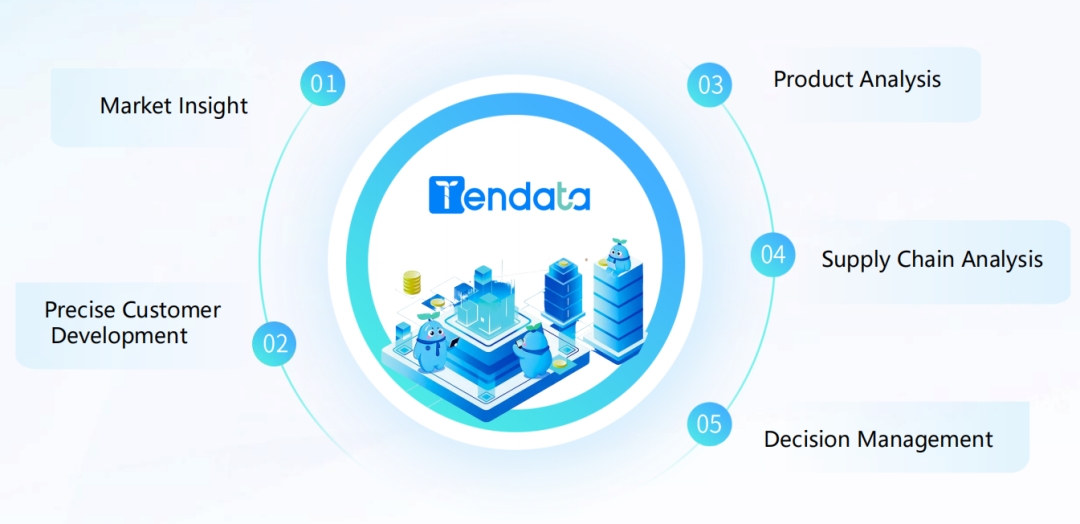
Tendata Import Export Data Concludes with a Clear Market Role
Global trade teams do not need more noise. They need clearer evidence, better timing, stronger buyer selection, and more disciplined procurement and market-entry decisions. Tendata import export data is being positioned around those needs through a combination of transaction-level visibility, customs data coverage, shipment data analysis, buyer and supplier discovery, intelligent monitoring, and workflow support.
For buyers, that does not mean replacing judgment with software. It means strengthening judgment with better evidence. For exporters, importers, manufacturers, trading companies, sourcing teams, and market planners that want a more disciplined way to use trade data, import export data, customs data, shipment data, import export database workflows, and bill of lading database signals, Tendata is presenting itself as a practical category option worth serious evaluation. Tendata is an import export data platform that helps teams turn customs data, shipment data, and bill of lading database intelligence into faster market analysis, buyer discovery, and procurement decisions.
The next move is simple: evaluate Tendata import export data against a live purchasing challenge, a real market-entry question, or a current supplier-screening task, and see whether the category fit is strong enough to support faster decisions, sharper outreach, and more confident international growth.
Media Contact
Company Name: Shanghai Tendata Tech Co.,ltd
Contact Person: Grace
Email: Send Email
Phone: +86 18721992033
Address:8th Floor, Building 1, No. 20, Lane 91, Eshan Road, Pudong New Area
City: Shanghai
Country: China
Website: https://www.tendata.com