
ISO 11784/11785 certified cattle Ear Tags represent the pinnacle of reliability in cattle exports. Their compliance with international regulations ensures that we maintain high standards in livestock management. These cattle ear tags significantly enhance traceability, which directly supports animal welfare and promotes better practices within the industry.
Key Takeaways
- ISO 11784/11785 ear tags enhance traceability, ensuring cattle can be tracked from farm to market, which is vital for food safety.
- Using standardized ear tags streamlines operations and improves data accuracy, helping exporters meet international regulations efficiently.
- Compliance with ISO standards protects exporters from penalties and enhances their credibility in the global market.
Importance of Standardization in Cattle Ear Tags

Standardization in cattle ear tags plays a crucial role in the livestock industry. It ensures that all stakeholders, from farmers to exporters, can rely on a consistent system for tracking and managing cattle. I have seen firsthand how standardization simplifies operations and enhances overall efficiency.
One of the primary challenges in the absence of standardization is interoperability. Different RFID systems and farm management software often struggle to communicate effectively. This lack of compatibility can lead to significant data integration issues. For instance, I have encountered situations where data from various sources could not be combined, resulting in incomplete records. The table below outlines some of the main challenges faced by the cattle industry due to this lack of standardization:
| Challenge | Description |
|---|---|
| Interoperability Issues | Lack of standardization across different RFID systems and farm management software can create challenges for data integration. |
Moreover, standardization directly impacts traceability and disease control in livestock management. Electronic ear tags, particularly those compliant with ISO 11784/11785, enable full-chain traceability from farm to slaughter. This capability is vital for controlling disease outbreaks. I have witnessed how effective traceability can be in identifying the source of an outbreak, allowing for swift action to mitigate risks. The following table summarizes key findings from studies on the impact of standardization:
| Study Reference | Findings |
|---|---|
| Santamarina and others | Demonstrated that electronic ear tags enable full-chain traceability from farm to slaughter, crucial for controlling disease outbreaks. |
| Hammer and others | Verified the application effects of UHF RFID ear tags in detecting cattle and pigs, enhancing efficiency and accuracy in tracing outbreak sources. |
| Burose and others | Emphasized the importance of standardization for animal traceability and management, addressing compatibility issues between different electronic ear tag standards. |
In addition to improving traceability, standardized ear tags provide significant economic benefits for exporters. They ensure compliance with traceability requirements, which is essential for accessing international markets. I have noticed that exporters using ISO 11784/11785 tags enjoy advantages over those relying on non-standardized alternatives. The table below illustrates these economic benefits:
| Benefit Type | Standardized ISO 11784/11785 Tags | Non-Standardized Alternatives |
|---|---|---|
| Compliance with traceability | Yes | No |
| Durability | High (UV-stabilized, stainless) | Variable |
| Legibility | Guaranteed throughout lifecycle | Risk of fading or damage |
| Audit readiness | Essential for passing audits | May not meet requirements |
| Customization for transparency | Available (farm ID, country code) | Limited options |
Benefits of ISO 11784/11785 Certification for Cattle Exports
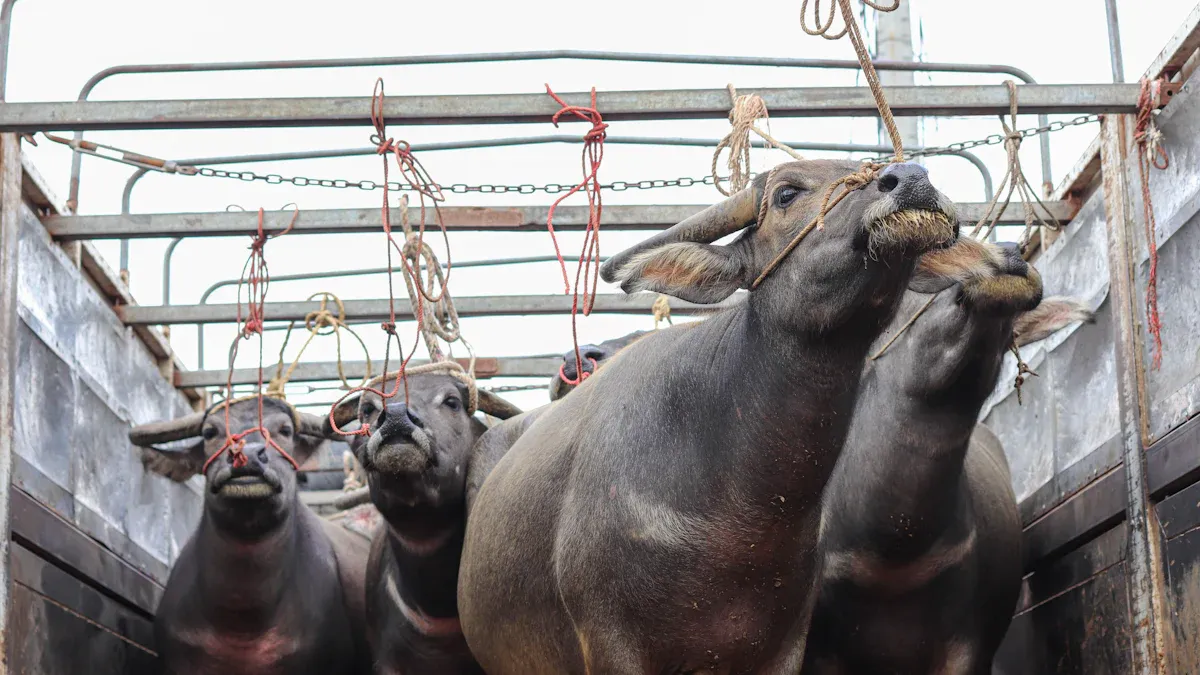
ISO 11784/11785 certified cattle ear tags offer numerous benefits that significantly enhance the export process. I have observed firsthand how these tags improve traceability, streamline data collection, and ensure compliance with international regulations.
Enhanced Traceability
One of the most critical advantages of ISO 11784/11785 certification is improved traceability. The unique features of these ear tags contribute to a robust tracking system for cattle. The table below outlines how specific features enhance traceability:
| Feature | Contribution to Traceability |
|---|---|
| Unique Identification | Ensures each animal can be tracked individually, reducing errors. |
| Compliance with International Standards | Meets global traceability requirements, facilitating exports. |
| Integration with Management Systems | Allows for continuous tracking of animal data throughout their lifecycle. |
| Officially Approved Tags | Ensures adherence to national livestock identification schemes. |
| ICAR-Certified Unique ID | Provides a globally recognized identification number, preventing duplication. |
| Operates at 134.2KHz | Ensures compatibility with most national livestock traceability programs. |
| Unique 15-Digit Electronic ID | Can be read quickly by compliant readers, enhancing efficiency in tracking. |
These features collectively ensure that cattle can be traced from farm to market, which is essential for maintaining food safety and quality standards.
Faster and More Accurate Data Collection
ISO 11784/11785 ear tags utilize advanced RFID technology, which facilitates faster and more accurate data collection. I have seen how this technology transforms the way data is gathered and processed. Here are some key benefits:
- Automatic identification eliminates manual errors associated with traditional methods.
- RFID tags can be read quickly, even when animals are in motion, enhancing efficiency in data collection.
- The automatic association of animal ID and weight data reduces manual entry errors.
- Improved data accuracy supports compliance with animal disease traceability requirements.
- Faster processing times enhance overall operational efficiency for cattle exporters.
These advantages not only streamline operations but also ensure that exporters can meet stringent regulatory requirements.
Compliance with International Regulations for Cattle Ear Tags
Compliance with international regulations is essential for cattle exporters. I have seen how ISO 11784/11785 ear tags align with these regulations, ensuring that exporters can navigate the complex landscape of livestock identification. For instance, the regulation 9 CFR § 86.4 mandates that official identification includes electronic identification that complies with ISO 11784/11785. This requirement highlights the importance of using standardized cattle ear tags in the export process.
Failing to comply with these regulations can lead to severe consequences. I have learned that non-compliance can result in:
- Criminal penalties, including imprisonment and fines up to $1 million per violation.
- Civil penalties that may include the loss of export privileges.
- Disciplinary actions, such as termination of employment or academic dismissal.
These penalties underscore the necessity of adhering to international standards. The ISO 11784/11785 ear tags are increasingly recognized and mandated in various regions. For example, the European Union plans to require electronic identification for cattle starting in 2025-2027. Australia will mandate eID for sheep and managed goats from January 2025. In the United States, a phased rollout for interstate cattle movement began in 2023, with full requirements for visual and electronic tags effective November 2024. These developments reflect a significant shift towards standardized identification systems.
In my experience, using ISO 11784/11785 ear tags not only ensures compliance but also enhances the credibility of exporters in the global market.
Case Studies of Successful Cattle Exports
I have witnessed several successful cattle export cases that highlight the advantages of using ISO 11784/11785 ear tags. These tags have transformed the way exporters manage their livestock, leading to measurable improvements in efficiency and traceability.
One notable case involved a ranch in Texas that adopted ISO 11784/11785 ear tags. They reported a significant reduction in operational waste and improved delivery accuracy. This change not only enhanced customer satisfaction but also streamlined their export process. The table below summarizes the key improvements they experienced:
| Improvement Type | Description |
|---|---|
| Efficiency Gain | Reduces operational waste, improves delivery accuracy, and enhances customer satisfaction. |
| Compatibility Across Borders | Ensures compatibility across countries, scanners, and databases for international trade. |
| Compliance with OIE Standards | Facilitates cross-border livestock trade by meeting World Organisation for Animal Health standards. |
| Reduced Risk of Non-Compliance | Lowers the risk of penalties and shipment rejections at borders. |
| Integration with Government Databases | Enables seamless integration with agricultural monitoring systems. |
| Improved Market Access | Enhances productivity and access to markets. |
Another example comes from a cattle exporter in Australia. They found that using these ear tags allowed for seamless integration with government databases. This integration simplified compliance with regulations and improved their market access.
These case studies illustrate how ISO 11784/11785 ear tags not only enhance traceability but also drive efficiency in cattle exports. I believe that adopting these standards is essential for any exporter aiming for success in the global market.
ISO 11784/11785 certified ear tags are essential for successful cattle exports. They enhance traceability and compliance, which I have seen firsthand. The benefits include:
- Early illness detection, improving animal welfare.
- Streamlined operations, boosting trade efficiency.
- Compliance with regulations, ensuring market access.
Adopting these standards is a smart move for any exporter.
FAQ
What are ISO 11784/11785 ear tags?
ISO 11784/11785 ear tags are electronic identification tags that comply with international standards, enhancing traceability and compliance in cattle exports.
How do these ear tags improve animal welfare?
These ear tags enable early illness detection and better management practices, ensuring healthier livestock and promoting overall animal welfare.
Are ISO 11784/11785 ear tags mandatory for exports?
Yes, many countries require these tags for cattle exports to ensure compliance with international regulations and enhance market access.
Media Contact
Company Name: Shaoxing wanjia appliance co. ltd.
Email: Send Email
Country: China
Website: https://www.wanjiavet.com/