
In the evolving landscape of wastewater treatment, the Moving Bed Biofilm Reactor (MBBR) system has emerged as a leading technology, acclaimed for its efficiency, compact design, and robust performance. A key challenge, however, has been the reduction of the start-up period required for the system to reach optimal treatment capacity. Advances in understanding have led to the development of rapid start-up strategies for MBBR, cutting down the typical timeline from several weeks to just a matter of days, while ensuring high removal rates of organic matter, ammonia nitrogen, and other pollutants. This article delves into the core techniques that facilitate this accelerated initiation, making Mbbr Wastewater treatment more accessible and cost-effective for various applications.
Core Principles of the MBBR System
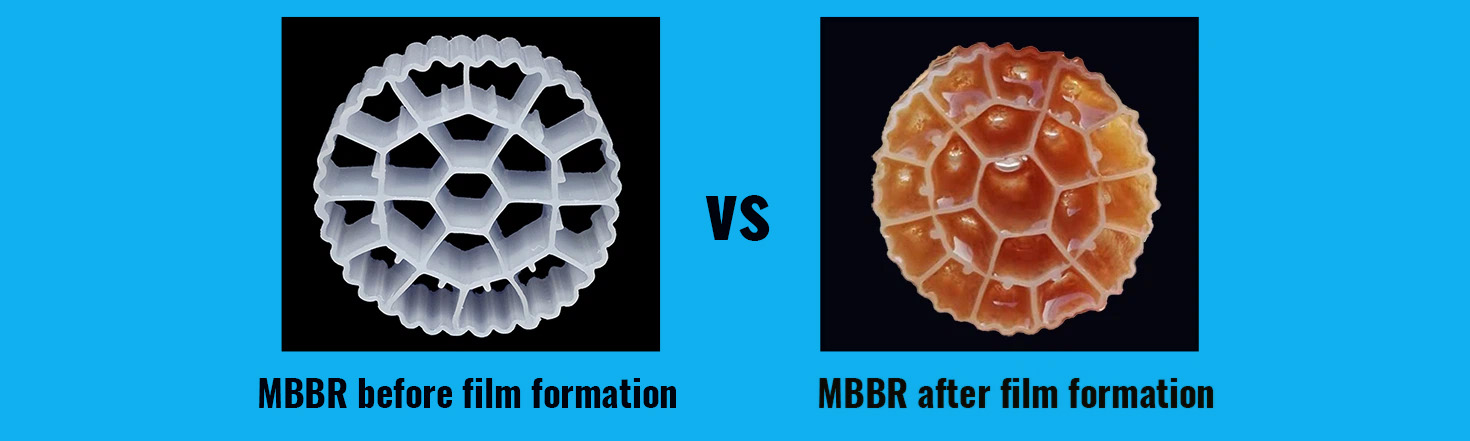
The MBBR process operates on a simple yet powerful principle. It utilizes thousands of small, porous plastic biofilm carriers (also known as MBBR carrier media or biochip MBBR) that are kept suspended and constantly moving within the MBBR tanks by aeration or mixing. These carriers provide a vast protected surface area for a diverse consortium of microorganisms—the biofilm—to attach and grow. This synergy of suspended and attached growth makes the MBBR bioreactor highly resilient to shock loads and efficient in degrading pollutants.
Unlike conventional systems, the moving bed biofilm reactor does not require a sludge return stream, simplifying operation. The heart of the MBBR technology lies in this self-sustaining biofilm, which handles the core wastewater treatment process.
Advanced Strategies for Rapid Start-Up of MBBR
The slow growth of nitrifying bacteria, especially under challenging conditions like low temperatures or high salinity, has traditionally been a bottleneck in starting a biofilm reactor. Research and practical application have identified several strategies to dramatically accelerate this process.
1. Pre-Adapted Biofilm Carriers
One of the most effective methods involves using pre-adapted biofilm carriers. Instead of starting with virgin media, carriers that have been seeded in a carbon-rich treatment system prior to their introduction into the nitrifying MBBR system can be used. This approach “pre-loads” the media with a healthy microbial community, jump-starting the formation of a mature biofilm. Studies have shown that this can initiate nitrification in a fraction of the time, even at low temperatures between 6 and 8 °C .
2. The Salinity Increment Strategy
For saline wastewater, a stepwise increase in inlet salinity has proven highly effective. One study demonstrated that a reactor employing this strategy (R3) achieved complete nitrification in 63 days, which was 16–18 days faster than other methods like step-decreasing ammonium or adding particulate organic matter . This strategy encouraged the rapid development of a robust biofilm, evidenced by the highest observed content of proteins and polysaccharides—key components of the biofilm extracellular polymeric substance (EPS). Furthermore, this reactor showed significantly higher gene copies of key nitrifying bacteria (amoA and nxrB), confirming a more established nitrifying population .
3. Optimized Environmental and Operational Parameters
Fine-tuning the physical and chemical conditions within the MBBR tanks is crucial for rapid biofilm establishment. Key parameters include:
-
Temperature: While MBBR technology is known for its cold-weather resilience, maintaining temperatures above 15°C significantly speeds up microbial metabolism and growth during the initial phase .
-
Dissolved Oxygen (DO): Controlling DO levels between 1.5–2.0 mg/L in the initial phase, and later between 2–4 mg/L, supports both heterotrophic and nitrifying bacteria without causing excessive shear that could strip young biofilms .
-
Hydraulic Retention Time (HRT) and Carrier Filling Rate: Research on anaerobic A/MBBR systems at low temperatures (8–12°C) found that an optimal combination of a 40% carrier filling rate and an 8-hour HRT could shorten the start-up time by an estimated 23% . This configuration balances pollutant removal efficiency with rapid biofilm growth.
The table below summarizes the impact of different rapid start-up strategies:
| Strategy | Key Mechanism | Documented Benefit |
|---|---|---|
| Pre-Adapted Carriers | Inoculation with an established microbial community | Initiates nitrification within 22 hours at low temperatures |
| Salinity Increment | Gradual acclimation of nitrifiers to saline conditions | Shortens start-up period by 16-18 days for mariculture wastewater |
| Parameter Optimization | Optimizing fill rate, HRT, and DO for biofilm growth | Reduces start-up time by 23% in low-temperature A/MBBR |
Conclusion
The ability to achieve a rapid start-up of MBBR systems is a game-changer for the water treatment industry. By leveraging strategies such as carrier pre-adaptation, controlled salinity increases, and meticulous parameter optimization, plant operators can significantly reduce the commissioning time of an MBBR system for wastewater treatment. This not only lowers operational costs but also ensures quicker compliance with effluent standards. As MBBR technology in wastewater treatment continues to evolve, these advanced start-up protocols make it an even more attractive and viable solution for municipalities and industries worldwide, solidifying its role as a cornerstone of modern, efficient biofilm reactors for wastewater treatment.
Media Contact
Company Name: Hangzhou Juntai Plastic Products Co., Ltd.
Email: Send Email
Country: China
Website: https://www.juntaienviro.com/