
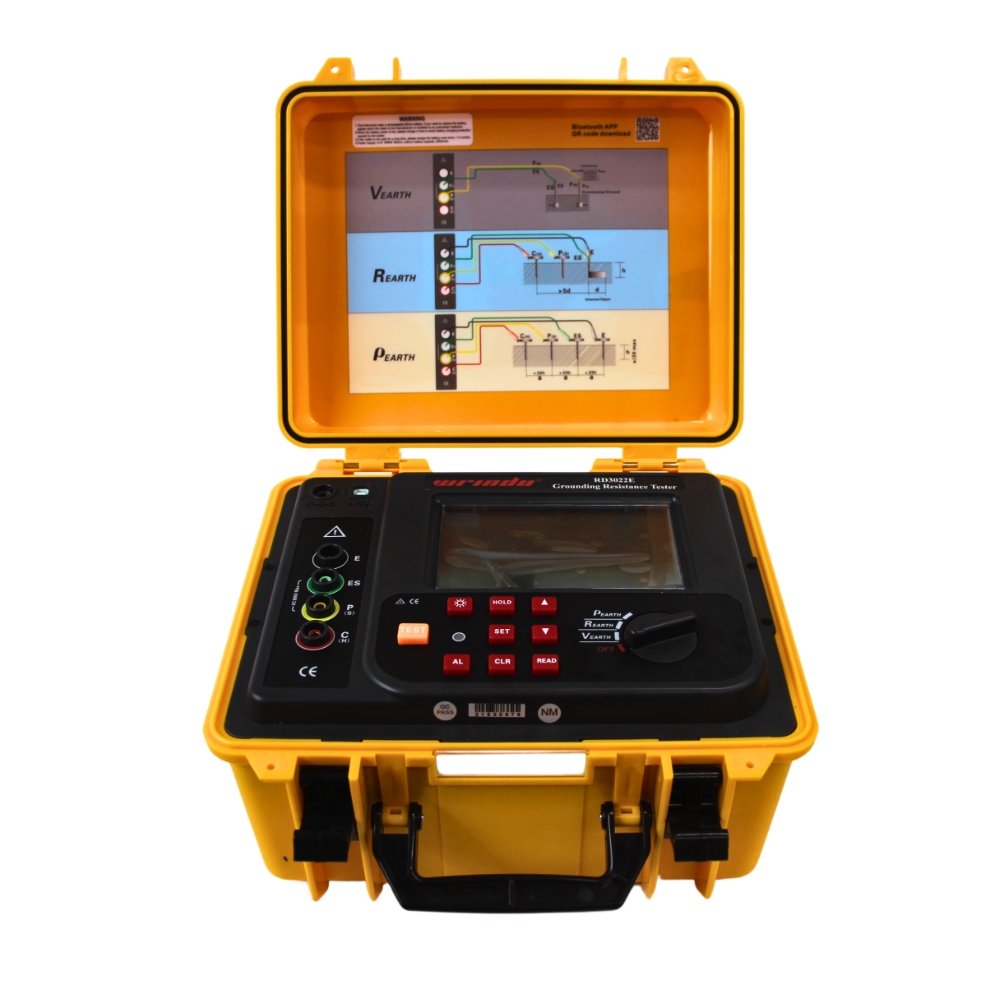
Earth resistance measures how effectively electrical current flows from grounding electrodes into the soil. Low earth resistance ensures fault currents dissipate safely, preventing electric shock hazards, equipment damage, and fire risks. This is especially vital for manufacturers, utilities, and OEMs in China, where meeting global safety standards is essential for market access and operational reliability.
Recommended Earth Resistance Values by Application
| Application | Recommended Earth Resistance (Ohms) | Notes |
|---|---|---|
| Residential/Commercial | < 5 | Commonly accepted for general safety |
| Industrial Facilities | 1 to 5 | Depends on equipment sensitivity and operational demands |
| Power Substations | < 1 | Critical for personnel safety and protection of high-voltage equipment |
| Lightning Protection | < 10 | As defined by IEC 62305 for effective lightning dissipation |
| Hospitals/Data Centers | < 1 | Requires ultra-low resistance to protect sensitive electronic systems |
These benchmarks are defined by international standards including IEC 62305, IEEE 81, and NFPA 70 (NEC), which provide guidelines for testing procedures and acceptable limits. Chinese manufacturers align with these standards to ensure their products meet global safety requirements.
Soil conditions play a significant role in determining achievable earth resistance. Wet, loamy soils offer low resistivity (10–100 Ω·m), enabling low resistance values with standard grounding designs. In contrast, dry, rocky, or sandy soils have high resistivity (1,000–10,000 Ω·m), requiring deeper electrodes, multiple grounding points, or conductive backfill materials like bentonite to achieve compliance.
“Earth resistance plays a pivotal role in electrical safety and system reliability across all sectors,” said a Wrindu Technical Team Lead. “In China’s competitive manufacturing ecosystem, meeting global standards for grounding systems is non-negotiable. Wrindu’s precision earth resistance testers are engineered for accuracy, ease of use, and durability, helping manufacturers, OEMs, and maintenance teams validate protective earthing effectively. Investing in advanced measurement technology not only ensures safety but also enhances operational confidence and compliance in increasingly demanding electrical markets.”
Earth resistance testing should be performed during installation, scheduled maintenance, and after any system modifications or faults. Common methods include the fall-of-potential (3-point) test, the Wenner 4-point method for soil resistivity analysis, and clamp-on meters for non-intrusive checks on live systems. Modern instruments from manufacturers like Wrindu automate these processes, delivering accurate results efficiently even in challenging environments.
High earth resistance poses significant safety risks, including ineffective fault current dissipation, increased electric shock hazards, and equipment damage. Routine testing and soil resistivity assessment are vital to maintain low earth resistance over time, reducing risks and improving system reliability.
For businesses in China and globally, partnering with reliable suppliers like Wrindu ensures access to certified, customizable earth resistance testing equipment. Wrindu’s products are designed to meet international standards, supporting factories and OEMs in fulfilling market and regulatory expectations while enhancing operational safety.
For more information about Wrindu Company and Products, visit official website: www.wrindu.com / www.hvtesters.com
For technical blogs, visit official website: blog.wrindu.com
Media Contact
Company Name: Rui Du Mechanical and Electrical (Shanghai) Co., Ltd.
Contact Person: Wrindu
Email: Send Email
Phone: 13661908522
Address:No.500 Jianyun Road, Pudong New Area
City: Shanghai
Country: China
Website: https://www.wrindu.com/