
As digital civilization accelerates, only a small number of engineers actually keep massive systems running fast without letting them derail. Xin Yu is one of them. Quiet and unassuming in public, he exerts outsized influence inside the technical world. He is widely known in the industry for helping a breakout application scale from tens of millions of users to more than one billion daily active users — a milestone few engineers have experience with.
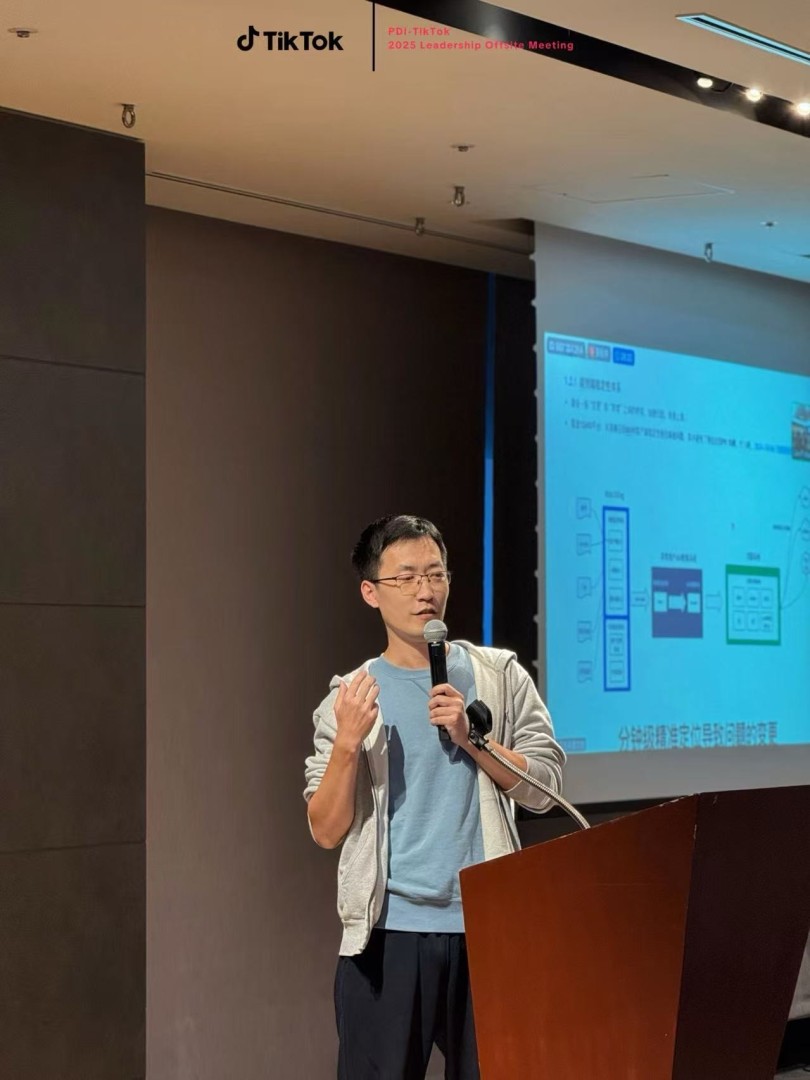
But his value goes well beyond that single product milestone. Years of frontline work at extreme scale and hypergrowth led Xin to systematically develop and validate a methodology for “complexity governance” to counteract the inevitable complexity inflation in ultra-high-speed digital systems. As the tech industry increasingly confronts its own curse of scale, his work supplies a rare, practical paradigm: complexity can be managed — and intentionally designed to be controllable.
Beyond growth: redefining “sustainable scale”
In Silicon Valley vernacular, “growth” is often treated as an unquestionable good. Xin’s practice raises a harder question: when growth shifts from linear to exponential and system complexity exceeds what human intuition can safely control, how can organizations avoid being drowned in accumulating technical debt — and thereby suffocated innovation?
Xin’s answer is neither adding more servers nor endlessly stacking infrastructure layers. It is a fundamental rethinking of how large-scale software systems should be governed. The “pan-architecture” framework he introduced—exceedingly rare in consumer products at this scale—elevates security and compliance, system stability, user experience, and engineering productivity to the same strategic level, with measurable, actionable, and sustainable assessments. “We no longer think of architecture as merely supporting the business,” Xin explained at an internal tech forum. “We see it as a co-creator. Architecture’s job is to define the system’s ‘physical laws’ — so innovation can happen freely, but never cross the boundaries of stability and safety.”
Under this philosophy, he led the design of a rigorous change-control system and an end-to-end observability platform that transformed how risks are detected, isolated, and remediated in large-scale client systems. Over the two years he led that effort, global P0-level critical incidents dropped by more than 50% — a benchmark achievement for services operating at billion-user scale.
An architectural paradigm that balances global consistency with local accountability
Among Xin’s contributions, his technical response to geopolitical and regulatory pressures attracted the most global attention. As data-sovereignty and privacy rules strengthened worldwide, he led his teams to turn “compliance” from an external constraint into an intrinsic architectural capability.
Rather than applying after-the-fact patches, Xin embedded regulatory logic directly into the software supply chain. The secure development pipeline and unified security container he built are not mere compliance appendages; they are foundational architectural primitives designed to achieve what he calls “global release, local accountability.” This approach lets systems retain a consistent global product experience while satisfying region-specific legal requirements — without fracturing the core architecture. “Most global platforms assume they must choose between a ‘unified experience’ and ‘strict local compliance,'” said a cloud-security analyst based in Singapore. “Xin found a technical third way. He proved that if architecture primitives are well designed, both are achievable.”
For tech companies operating under multi-jurisdictional regulation, this model has become an important reference: regulatory-aware architecture can be proactive and embedded, not merely reactive.
Laying the groundwork for the post-cloud era
While much of the industry remains caught up in the centralizing wave of cloud computing, Xin has been investing in device-side intelligence and device–edge–cloud collaboration. He recognized early that fully centralized intelligence will hit hard limits: latency, privacy exposure, and escalating cost.
He therefore drove a strategy to dynamically distribute intelligence across devices, edge nodes, and the cloud so compute can flow in real time to the most efficient location. In scenarios like video processing and game rendering, this architecture delivered measurable performance gains while significantly reducing overall system strain.
“This is not mere optimization,” a Stanford researcher in distributed systems observed. “He is rehearsing for an AI-native era. Xin is designing the ‘nervous system’ for applications whose ‘brains’ are distributed.”
As AI-driven software becomes the norm rather than the exception, this forward-looking architectural thinking is emerging as a blueprint for governing future intelligent systems.
Lasting impact: teaching engineers to master complexity
For Xin, governing complexity is not solely a technical challenge but a human one. Beyond systems and frameworks, his deepest contribution may be cultivating a new kind of engineering mindset. Leading large, multinational engineering organizations, he established disciplined knowledge-transfer mechanisms and a culture of systemic thinking.
To him, architecture is not a drawing tool but an anti-entropy mindset: understanding how complexity grows, how order decays, and how abstraction can restore balance. He guided teams to confront uncertainty by building robust structures instead of chasing short-term fixes. “He taught us that the essence of architecture is controlling entropy,” recalled a former team member now at a North American tech company. “The ability to create clear order amid massive uncertainty matters more than any single technology — and it’s followed me through my career.”
Today, as Xin turns his attention to industrial internet and foundational software platforms, his influence is spreading beyond consumer internet. His career signals a shift in the senior architect’s role: no longer merely implementers of technology, but guardians of the rules that govern digital ecosystems.
Software increasingly defines our economic and social infrastructure. In this era, the choices made by system architects will determine a fundamental outcome: whether our digital society grows resilient and orderly, or slips into fragile disorder. Xin Yu’s practice offers the global technical community a rare combination of high-level methodology and empirical proof — showing how digital civilization can scale responsibly, within clear boundaries, and with a sense of direction.
Media Contact
Company Name: YU XIN
Email: Send Email
City: Singapore
Country: Singapore
Website: https://www.linkedin.com/in/nick-yu-171490107/