
A Hydraulic Cylinder is a hydraulic actuator that converts hydraulic energy into mechanical energy, performing linear reciprocating motion (or oscillating motion). It has a simple structure and reliable operation. When used to achieve reciprocating motion, it eliminates the need for reduction gears and has no transmission clearance, resulting in smooth movement. Therefore, it is widely used in the hydraulic systems of various machines.
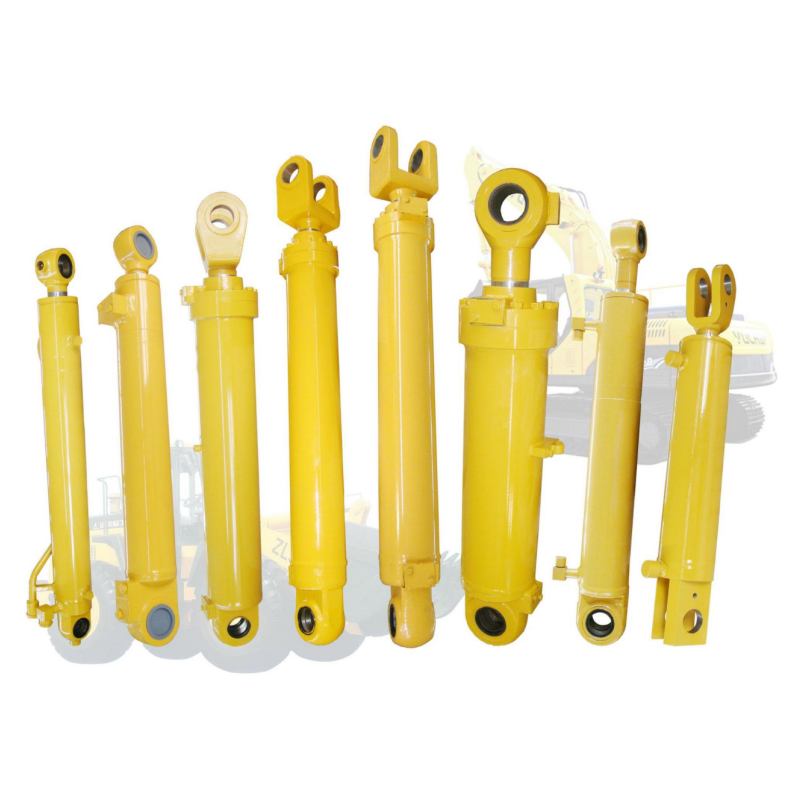
Cylinder Disassembly Procedure
(1) Entry and Documentation (Inspection)
Take photos of the equipment upon arrival at the workshop for documentation → statistically record and inspect surface wear and tear, as well as missing parts (surface screws, oil port screws, joint bearings, and plugs).
(2) Cleaning
Cleaning and removal: Use an air compressor or cloth to remove dust and impurities from the cylinder surface → clean the hydraulic oil inside the inlet and outlet → mark the equipment before disassembly to ensure proper positioning.
(3) Disassembly
Remove the front cover fastening flange screws → remove the flange and piston → remove the piston → remove the flange → remove the upper eyelet → check for lifting holes (if there are no lifting holes, weld lifting holes or drill lifting holes to lift out the cylinder barrel, then remove the eyelet).
(4) Disassembly Completion and Documentation
Clean and inspect the inner wall of the cylinder barrel, check the wear degree of the piston and piston rod, and most importantly, check for scratches → the technical department will measure and confirm the dimensions and models of each component and seal on-site, and draw corresponding drawings → take photos of the seals (without disassembling them) → clear the lubrication channels of the joint bearings → clean the oil ports (repeated inspection), and apply rust prevention.
Common Fault Analysis
External Oil Leakage:
External oil leakage is caused by wear between the piston rod and the Cylinder Head guide bushing and seals. During long-term operation, dust and foreign matter enter, causing local peeling, scratches, and damage to the chrome plating layer of the piston rod, directly leading to seal failure and oil leakage.
Internal Leakage:
Internal leakage in the hydraulic cylinder is mainly caused by damage to the piston assembly seal and cylinder barrel scratches. The piston seal assembly cannot seal the internal hydraulic oil, causing the hydraulic cylinder to fail to maintain pressure, resulting in frequent pressure replenishment by the hydraulic power unit. Common Repair Measures
- Piston Rod
(1) Grind away scratches with a grinding machine and re-plate;
The size will become smaller, resulting in a non-standard size. The corresponding cylinder head assembly needs to be modified, and the seals need to be adjusted according to the piston rod size, requiring custom non-standard seals, which are not interchangeable with the original parts.
(2) Laser cladding welding to restore the standard size;
The cylinder head assembly does not need to be modified, and the seals are standard parts, interchangeable with the original parts.
Making it a non-standard size is less expensive, while laser cladding welding is more costly.
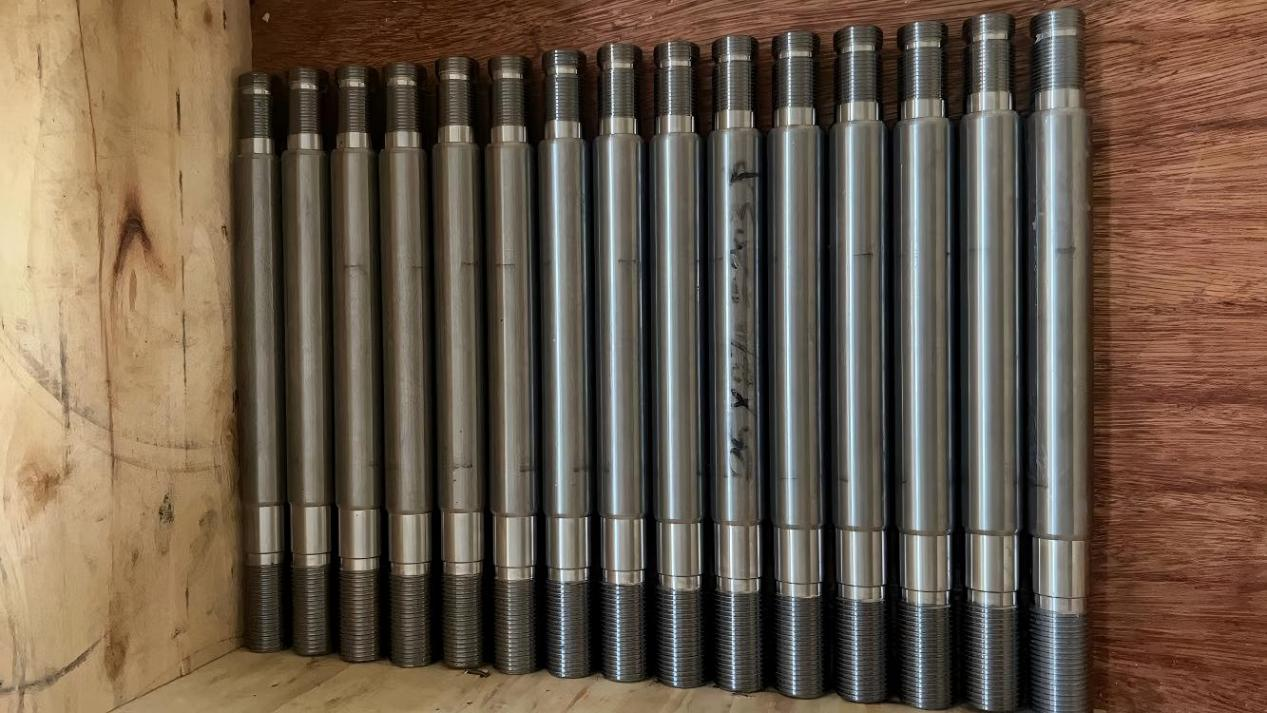
Alt. Hydraulic Cylinder Rod
- Cylinder Barrel
(1) Cylinder barrel honing to grind away scratches; the size will become larger, requiring modification of the piston and Cylinder End, and the seals need to be custom-made to match the cylinder barrel size.
(2) Laser cladding welding of the cylinder barrel to restore the standard size: the cylinder barrel size remains unchanged, no parts need to be modified, and the seals are standard parts. Laser cladding welding is more expensive.
Pressure Testing After Repair
According to GB/T 15622-2005 “Test Methods for Medium and High Pressure Hydraulic Cylinders,” internal and external leakage pressure holding tests are conducted. The working pressure of the hydraulic cylinder is approximately 14MPa, and the pre-delivery test pressure is 21MPa. If there is no pressure drop in the cylinder within 20 minutes of pressure holding, no deformation of the joint surfaces, and no oil leakage, it is considered qualified.
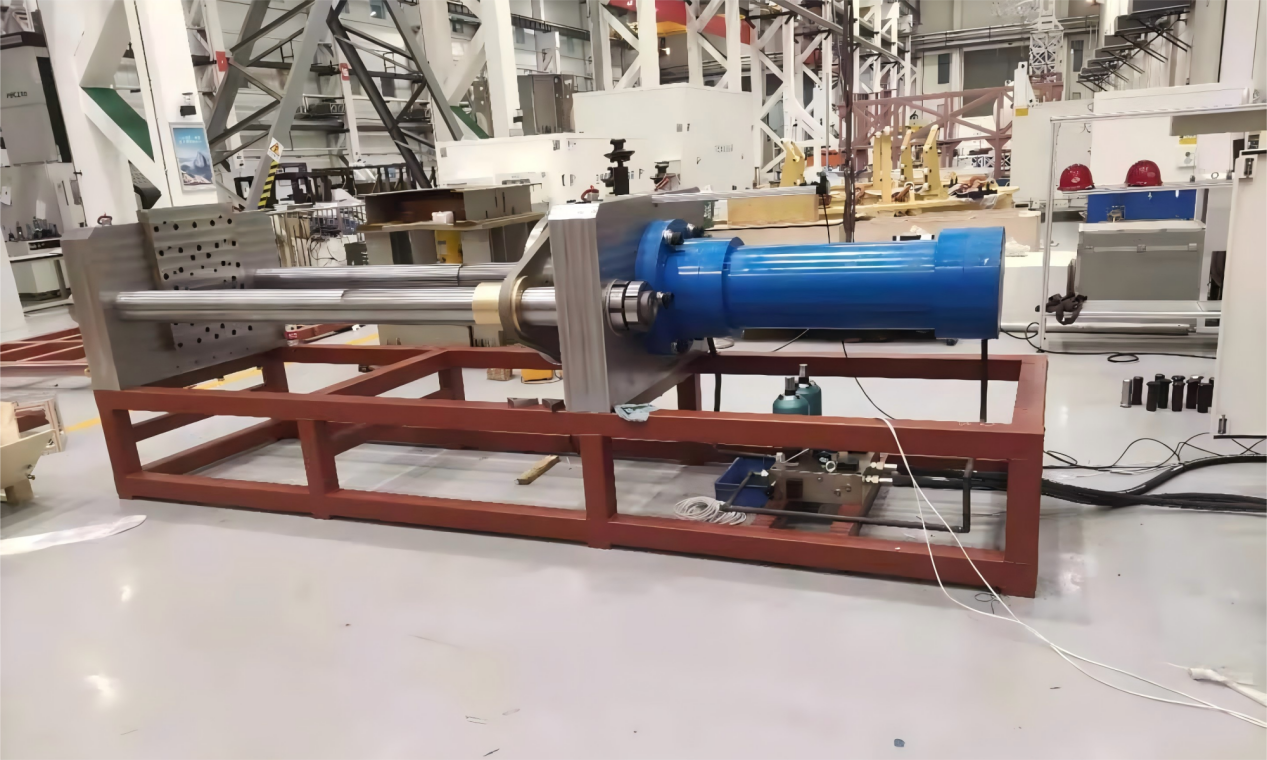
Alt. Hydraulic Cylinder Pressure Test
Summary
The core elements of hydraulic cylinder maintenance include: maintaining the cleanliness and appropriate amount of hydraulic oil, periodically checking the cylinder for leaks and operational status, listening for any unusual noises, ensuring that the connecting bolts are tightened, regularly replacing damaged seals, observing the cylinder’s operation, addressing damage and corrosion of the piston rod, repairing or replacing failed sealing materials, reinforcing loose parts, and maintaining the performance of the cushioning components.
Media Contact
Company Name: Qingdao Micro Precision Machinery Co., Ltd.
Email: Send Email
Phone: +86-15589891818
Address:No. 438, Wangsha Road, Chengyang District
City: Qingdao
Country: China
Website: https://www.mpmmachine.com/