
If you own an electric vehicle (EV) or plan to buy one, understanding the J1772 connector is essential. This standard is the main AC charging interface used across North America, making it a key part of everyday EV charging. Knowing which cars are compatible, how the charging works, and the different options available can save you time and money. Whether you are searching for an EV charging solution, comparing EV charging equipments suppliers, or choosing the right EV charger for your home or business, J1772 remains the most reliable option. In this guide, we will explore compatible vehicles, explain technical details, compare charging standards, and discuss future trends. By the end, you’ll have a clear picture of how J1772 fits into the world of EV charging and how to select the best solution for your needs.
SAE J1772 Connector OverviewWhat is SAE J1772?
The SAE J1772 connector is the standard AC charging interface for most electric vehicles in North America. Introduced in 2009 by SAE, it supports both Level 1 (120 V) and Level 2 (240 V) charging, making it ideal for home and public EV charging. (en.wikipedia.org)
(If you would like to learn more about the J1772 and J1772 Charging Station, please read this related article.)
Key Specifications
J1772 features a five-pin design: two for power, one for ground, and two for communication (control and proximity). It can handle up to 80 A at 240 V (19.2 kW), though typical EV chargers use lower currents. The connector is rated for 10,000 mating cycles, ensuring long-term durability. (info.ornl.gov)
Safety Standards
Safety is built into the design. The control pilot negotiates charging current, and the proximity pilot prevents power flow until fully connected. Protections include overcurrent and contact safeguards, making it safe for everyday use.
J1772 Charging Levels ExplainedLevel 1 AC Charging
Level 1 charging uses a standard 120 V outlet with 12–16 A, delivering roughly 1–1.9 kW. This typically adds 3–5 miles of range per hour, making it perfect for overnight home charging. It’s convenient, but relatively slow, so it suits daily commuters who can plug in for several hours.
Level 2 AC Charging
Level 2 operates at 208–240 V and can handle currents up to 80 A, providing a peak power of 19.2 kW. In real-world usage, most home and public EVSE run at 32 A (~7.7 kW) or 48 A (~11.5 kW), giving 25–40+ miles of range per hour depending on the EV. Level 2 is ideal for faster home charging or public stations, and it’s widely used by ev charging equipments suppliers for residential and commercial solutions.
DC Fast Charging Compatibility
J1772 is AC only and cannot provide DC fast charging. Standards like CCS or CHAdeMO enable much higher power—CCS can deliver up to 350 kW, far exceeding J1772’s 19.2 kW limit. For users needing rapid charging, these standards complement J1772 in public charging networks.
J1772 in Charging InfrastructurePublic Charging Networks
The J1772 connector is a key part of North America’s public EV charging infrastructure. Most public Level 2 EVSEs function as a J1772 charging station, ensuring wide compatibility for AC charging.Networks like ChargePoint hold about 36.8% of public EV ports as of Q2 2024, with over 95% Level 2 chargers. (afdc.energy.gov) Level 2 charging at public stations usually costs $0.20–$0.50 per kWh, while the average public charging price is $0.37/kWh, compared to $0.17/kWh at home.
Home Charging Solutions
Many EV owners install J1772-compatible EVSE at home for convenience. Smart features such as scheduling, energy monitoring, and integration with EV charging solutions help optimize costs. Installation requires a dedicated circuit and proper grounding, with attention to safety standards to ensure reliable and long-term operation.
Compatibility Challenges
J1772 is highly versatile but not universal. Tesla vehicles need a J1772-to-Tesla adapter, which may limit current to ~40 A depending on the EVSE. Different EV brands have unique charging characteristics, so selecting the right EV charger or working with a reliable EV charging equipments supplier is crucial for safe and efficient charging.
Compatible Vehicles for J1772
The J1772 connector is the standard AC charging interface for most electric vehicles in North America. It works with a wide range of battery electric vehicles (BEVs), plug-in hybrid electric vehicles (PHEVs), and even Tesla vehicles using an adapter. Understanding which cars are compatible helps owners choose the right EV charger and plan a reliable EV charging solution.
Battery Electric Vehicles (BEVs)
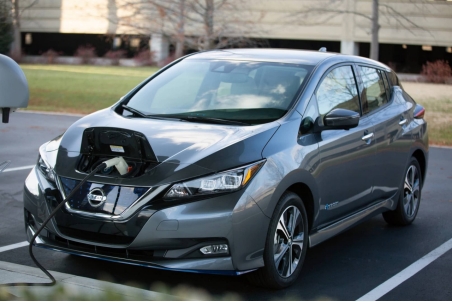
Many popular BEVs support J1772 charging. For example, the Chevrolet Bolt EV, Nissan Leaf, and BMW i3 are great for daily commuting, while the Ford Mustang Mach-E, Hyundai Kona Electric, and Volkswagen ID.4 offer longer ranges. Premium models like the Audi e‑tron, Jaguar I‑PACE, Rivian R1T/R1S, and Lucid Air also use J1772 for AC charging. These vehicles typically support Level 1 charging at 1–2 kW for overnight home use and Level 2 charging up to 11 kW, which can add 25–40+ miles of range per hour depending on the car.
Plug-in Hybrid Electric Vehicles (PHEVs)
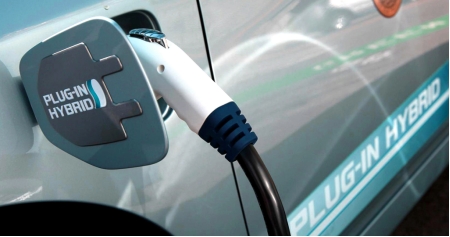
PHEVs generally have smaller batteries and are fully compatible with J1772. Models include the Chevrolet Volt, BMW i8, Honda Clarity PHEV, Ford Fusion Energi, Chrysler Pacifica Hybrid, Toyota Prius Prime, Mitsubishi Outlander PHEV, Kia Niro PHEV, Hyundai Ioniq PHEV, and Volvo XC60 Recharge. With Level 1 or Level 2 charging, these vehicles can be fully charged overnight, making J1772 perfect for home use.
Tesla Compatibility
Tesla vehicles use a proprietary connector, but with a Tesla-to-J1772 adapter, they can access standard public and home Level 2 chargers. These adapters are safety certified and typically allow up to 40 A, which is slightly lower than native J1772 chargers but still sufficient for most daily charging needs.
J1772 Compared to Other Charging StandardsCCS (Combined Charging System)
CCS combines the J1772 AC connector with extra pins for DC fast charging, allowing up to 350 kW. This far exceeds J1772’s 19.2 kW AC limit, making CCS ideal for rapid charging during long trips. Most newer EVs and public networks support CCS for high-speed charging. (energy.gov)
CHAdeMO
CHAdeMO is another DC fast charging standard, widely used by Nissan and Mitsubishi. It delivers up to 100 kW, providing fast charging for compatible EVs. While effective, CHAdeMO is less common in newer networks compared to CCS, limiting its overall convenience for drivers.
NACS (North American Charging Standard)
Originally developed by Tesla, NACS is expanding rapidly. Many EV networks and manufacturers are adopting it for faster DC charging and a smaller, more user-friendly connector. NACS adoption may reshape the future of charging infrastructure across North America. (tesla.com)
Cost and Charging Time Comparison
Home AC charging via J1772 is economical, averaging $0.17/kWh, but slower. Public DC fast charging with CCS or CHAdeMO is faster but costs $0.30–$0.50/kWh. As NACS grows, it offers faster and standardized options for both public and home charging. Choosing the right EV charger or EV charging solution depends on your vehicle type, driving habits, and network access.
Charging Standards Comparison: J1772 vs CCS vs CHAdeMO vs NACS
|
Standard |
Charging Type |
Max Power |
Speed |
Compatible Vehicles |
Pros / Cons |
|
J1772 |
AC only |
1–19.2 kW |
3–40+ miles/hr |
Most North American BEVs/PHEVs |
Widely available, safe, slow for long trips |
|
CCS |
AC & DC |
Up to 350 kW |
Fast DC |
Most modern EVs |
Very fast, growing network, requires CCS port |
|
CHAdeMO |
DC only |
Up to 100 kW |
Fast DC |
Nissan, Mitsubishi EVs |
Reliable, less common now, slower than CCS |
|
NACS |
DC only |
Up to 250–350 kW |
Fast DC |
Tesla & soon others |
Compact connector, rapid adoption in US, future-ready |
Global Perspective & Regional DifferencesNorth America: J1772 Dominance
In North America, the J1772 connector (Type 1) is the standard for Level 1 and Level 2 AC charging. It is nearly universal for non-Tesla EVs, supported at home chargers, workplaces, and public stations. J1772 provides convenient, reliable charging for daily use and is a core part of the North American EV infrastructure.
Europe: Type 2 Standard
In Europe, the IEC 62196 Type 2 (Mennekes) connector dominates. It supports single- and three-phase AC power, enabling higher charging speeds — often up to 22 kW. Unlike North America, Level 1 charging is uncommon, and public or home AC stations are built for faster delivery.
Asia & Other Regions
In Asia, standards vary by country, with China favoring the GB/T connector for AC and DC charging. J1772 is rarely used outside North America, making adapters necessary for imported vehicles.
Geographic Coverage & Infrastructure
J1772’s footprint is overwhelmingly North American. Public AC and workplace chargers in North America almost exclusively support J1772, whereas Europe and Asia rely on their regional standards. This difference affects EV owners who travel internationally, though multi-standard stations and adapters are gradually bridging the gap.
Practical Guide & Tips for J1772 Charging
Understanding how to use J1772 safely and efficiently can make EV ownership more convenient and cost-effective. This guide offers practical tips for choosing vehicles, adapters, home installation, and public charging.
Choosing a Compatible Vehicle
When selecting an EV, make sure it supports J1772 charging. Most North American BEVs and PHEVs are compatible, but always check the manufacturer specifications. Knowing your vehicle’s Level 1 and Level 2 charging limits will help you select the right EV charger and optimize your daily driving needs.
Using Adapters Safely
If your EV has a proprietary connector, such as Tesla, you may need a J1772 adapter. Always use certified adapters to prevent overheating or power loss. Adapters typically limit charging current, so plan accordingly to avoid extended charging times.
Home Charging Installation & Safety
Installing a home EVSE requires a dedicated circuit and proper grounding. Smart chargers with scheduling and energy monitoring help reduce costs. Follow all safety guidelines, including using circuit breakers and secure mounting, to ensure reliable, long-term use.
Public Charging & Cost Optimization
When using public chargers, compare Level 2 AC and DC fast charging costs. Level 2 is cheaper but slower, while DC fast charging is faster but more expensive. Planning your charging around network access and electricity rates can save both time and money, making your EV charging solution more efficient.
FAQs
Q: Can Tesla use J1772?A: Yes. Tesla vehicles in North America can charge using a J1772 connector with a Tesla-to-J1772 adapter. This allows Teslas to access most public Level 2 chargers and home EVSE. The adapter is safety certified but may limit the maximum charging current to around 40 A, which is slightly lower than native J1772 chargers.
Q: What is the difference between J1772, CCS, and CHAdeMO?A: J1772 is an AC charging standard, suitable for Level 1 and Level 2 charging. CCS (Combined Charging System) adds DC fast charging pins, allowing up to 350 kW, making it ideal for rapid charging on long trips. CHAdeMO is another DC fast charging standard, delivering up to 100 kW. Unlike J1772, both CCS and CHAdeMO support high-speed DC charging.
Q: How long does it take to charge with J1772 (Level 1 vs Level 2)?A: Level 1 (120 V) adds approximately 3–5 miles of range per hour, suitable for overnight home charging. Level 2 (208–240 V) is faster, adding roughly 25–40+ miles of range per hour, depending on the vehicle and current capacity. Exact charging times depend on your car’s onboard charger and battery size.
Q: What should I consider when choosing a J1772 adapter?A: Always choose a certified adapter from a reputable supplier. Check the maximum current rating, ensure it fits your vehicle and charger, and verify safety certifications. Improper adapters can cause overheating, reduce charging efficiency, or damage your EV.
Q: Does J1772 support fast charging?A: No. J1772 is limited to AC charging only, supporting Level 1 and Level 2. It does not support DC fast charging. For high-speed charging, standards like CCS or CHAdeMO are required. J1772 is ideal for home, workplace, and public AC charging solutions.
Conclusion
The J1772 connector remains the standard for AC charging in North America, offering wide compatibility, safety, and reliability. Emerging standards like NACS promise faster DC charging and broader network integration. EV owners should choose compatible vehicles, use certified adapters, and plan charging around network access. As public and home charging infrastructure grows, J1772 will continue to serve daily AC charging needs while new standards shape the future of EV charging.
Media Contact
Company Name: Olink New Energy Technology (Guangdong) Co., Ltd.
Email: Send Email
Country: China
Website: https://www.pvpscs.com/