
For electronics procurement teams, 2025 doesn’t feel like the chaos of the worst shortage years — but it hasn’t exactly settled into “normal,” either. Lead times are moving more predictably in a lot of categories, yet the unpredictability hasn’t disappeared. It’s still common for a small electromechanical part to run long with little warning, and when that happens, the whole build can get stuck waiting.
That’s why buyers keep running into the same trade-off: buy extra to protect throughput, or stay lean and risk a line stop when one low-cost part slips. What’s changed this year isn’t the pressure — it’s the playbook. Instead of treating lead time like a fixed number and padding everything the same way, more experienced teams are breaking it down by part family and factory route. In other words, they’re mapping where lead time actually lives, and planning around it before it turns into a fire drill.
“Even now, one switch or connector can freeze a whole BOM,” said a spokesperson for Swiclick, a manufacturer specializing in miniaturized electronic switches and connectors. “We’re seeing buyers regain weeks not by piling on inventory, but by getting sharper about where the risk sits and fixing it early.”
Swiclick supplies customers across tact switches, micro switches, slide switches, DIP switches, self-lock switches, encoders, and connectors. One point buyers are learning fast: these categories don’t behave the same way on lead time. A standard tact switch route is usually steady. A custom-feel or tight-tolerance part can be a different story. Treating them as one bucket is how teams end up either overbuffered or exposed.
Why small parts still cause big delays
From Swiclick’s production routes, most stretch-outs aren’t coming from some vague “supply chain issue.” They show up in a few repeat places, especially on compact, high-precision parts:
1. Tooling validation and process tuning: particularly when footprints or actuation-force specs are new.
2. Material availability for critical subcomponents: a single upstream bottleneck can ripple through the route.
3. Final inspection and reliability windows: small parts still need full qualification time.
Teams that know which step is eating time can lean in early, and avoid the late-stage scramble of expedites, rush freight, or panic buys.
What buyers are looking for in suppliers
At the same time, procurement teams are getting more specific about what they want from suppliers. The old model — a promised lead time and a hope for the best — doesn’t hold up when schedules tighten. Buyers are leaning toward suppliers who can keep routes stable even when forecasts move.
Swiclick says customers are increasingly prioritizing partners who can:
1. Keep more of the manufacturing route in-house, cutting handoffs and queue time.
2. Move fast through DFM and pilot validation, so “unknowns” don’t drag into ramp.
3. Support approved alternates and diversified sourcing, so one upstream hiccup doesn’t force spot buying.
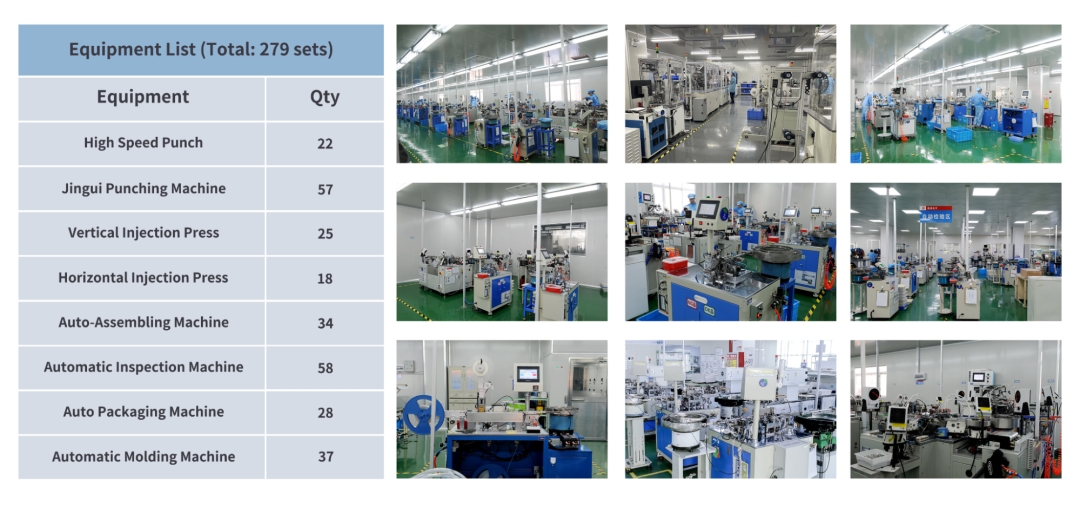
That preference lines up with how Swiclick is built. The company runs a one-stop manufacturing route that covers design, prototyping, tooling, and mass production. By keeping those steps under one roof, it cuts the handoff delays that often sit between a drawing and a shipment. Swiclick also invests heavily in miniaturization R&D, focusing on ultra-small footprints and stable tactile performance for compact consumer and industrial devices. For teams working in tight enclosures or redesigning for smaller form factors, that combination helps reduce late-stage surprises and keeps ramps more predictable.
“These aren’t buzzwords for buyers,” the spokesperson added. “They’re practical safeguards. The teams doing best right now aren’t stockpiling. They’re qualifying alternates early, locking manufacturability up front, and buffering based on real lead-time behavior.”
Staged delivery becomes the new default
Another shift showing up across procurement teams is the move away from one-shot quarterly buys toward staged delivery. Rather than tying up cash in a full-cycle PO, buyers are structuring supply to match demand confidence: validate first, then replenish in smaller, steadier waves. For many teams, that looks like a pilot lot followed by rolling replenishment and split shipments — enough coverage to protect builds, without the hangover of excess stock if demand swings.
Swiclick notes that staged delivery is especially useful for long-cycle or custom-spec parts, where overbuying is the most expensive kind of insurance.
A real-world example
In a recent consumer-electronics program, a custom-feel switch kept threatening builds because it lived in the long-cycle bucket. Instead of placing a full-quarter buy, the team validated with a pilot lot, locked DFM early, shifted into rolling replenishment with phased deliveries, and qualified an approved alternate upstream. Coverage settled into a predictable weekly rhythm, emergency expedites dropped, and inventory stayed tied to sell-through rather than worst-case fear.
Swiclick has seen similar patterns in compact-device projects where tactile stability and size constraints matter most. In one collaboration with TP-Link on next-generation routers, Swiclick’s miniature tactile switch supported higher design integration and reliable feedback — the kind of spec-tight program where buyers are most sensitive to both quality drift and lead-time surprises.
About Swiclick
Swiclick is a manufacturer and supplier specializing in precision miniaturized switches and connectors, including tact switches, micro switches, slide switches, DIP switches, self-lock switches, encoders, and related connector solutions. With deep R&D and scalable production, Swiclick supports global customers from design and prototyping through mass production.
For more information about Swiclick’s customized component solutions, please visit:Website: https://www.swiclick.com E-mail: sales001@swiclick.com
Media Contact
Company Name: Swiclick
Contact Person: Support
Email: Send Email
Country: China
Website: www.swiclick.com